
Your car starts a little rough. The gas mileage is quietly getting worse. And sometimes, you feel a strange shake when the engine is just sitting at a red light. These are not random problems. These are classic carbon buildup engine symptoms — and most people miss them until real damage is done.
What Is Carbon Buildup in an Engine?
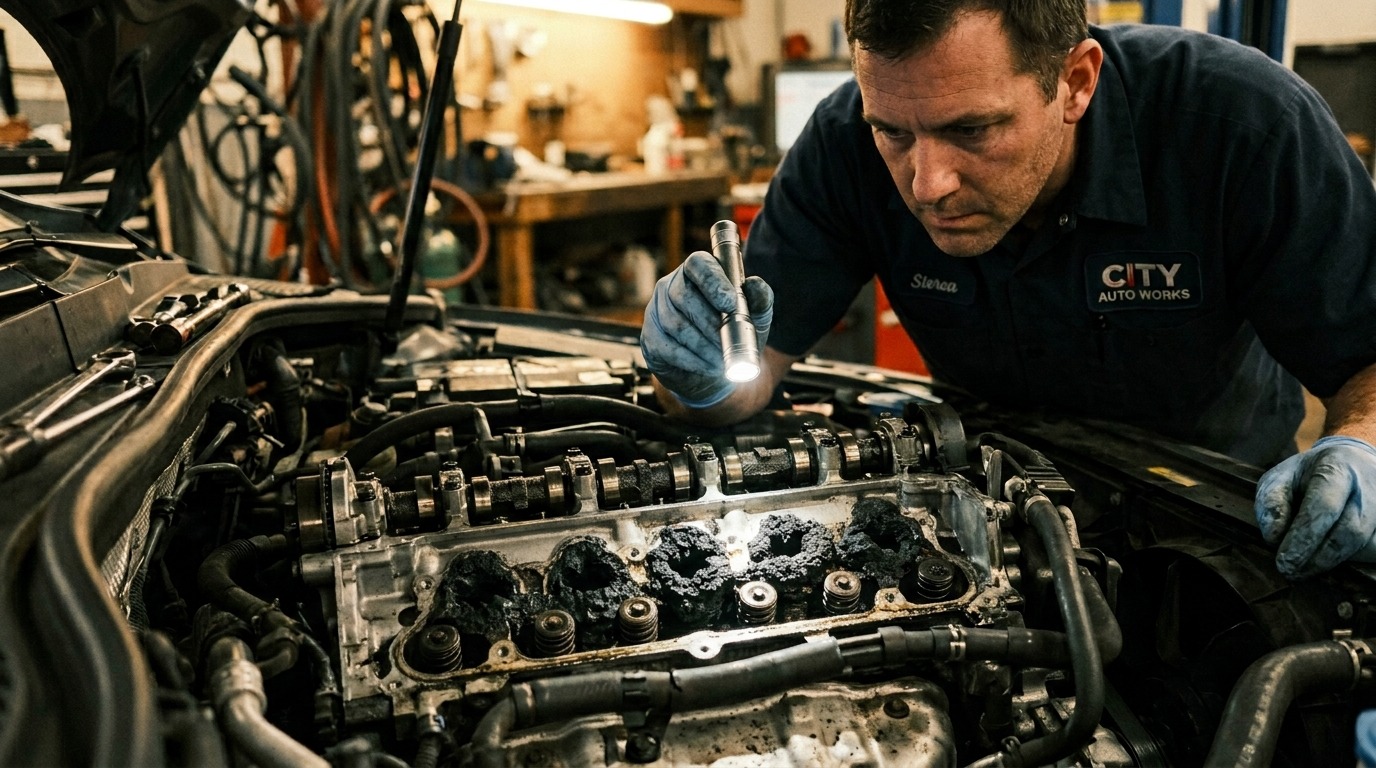
Carbon buildup is exactly what it sounds like. It is a layer of hard, black, crusty deposits that forms inside your engine over time. These deposits are made of unburned fuel, oil residues, and combustion byproducts that stick to engine parts instead of burning away cleanly.
Think of it like soot inside a chimney. Every fire leaves a little bit behind. Your engine is the same way. Every time it burns fuel, it leaves tiny particles. Over months and years, those particles build up into something that actually blocks airflow and hurts engine performance.
Where Do Carbon Deposits Form?
Carbon deposits do not just settle in one spot. They spread to several key areas inside your engine. The most common places are the intake valves, combustion chamber, piston crowns, cylinder walls, fuel injectors, and spark plugs.
In direct injection engines, the intake valves get hit especially hard. That is because fuel goes straight into the combustion chamber without ever washing over the valves. So the valves never get cleaned, and carbon soot just keeps piling up on them.
Why Does Carbon Buildup Happen?
Incomplete combustion is the main reason. When fuel does not burn all the way, it leaves particles behind. But there are other reasons too. Oil breakdown inside the engine creates sticky residues. A bad PCV valve or a faulty EGR system can push oil vapors and exhaust gases back into the intake, making things worse.
I once noticed my own car running a little rough after a long stretch of city driving, mostly short trips under ten minutes. Turns out, short trips are one of the biggest causes. The engine never gets hot enough to burn off deposits naturally. That was a lesson I learned the hard way.
Carbon Buildup Engine Symptoms You Should Not Ignore
The tricky thing about carbon buildup engine symptoms is that they start small. You might think it is nothing. But the longer you wait, the worse it gets. Here are the signs to watch for.
Rough Idle and Engine Misfire
A rough idle is one of the earliest and most common signs. If you feel the car shaking or vibrating when it is just sitting still — not moving, not accelerating — that is your engine telling you something is wrong.
Carbon deposits on the intake valves or inside the combustion chamber interrupt the smooth flow of the air-fuel mixture. The engine cannot fire consistently, and you get an engine misfire. You might notice the RPM needle jumping up and down, or hear a small stumble in the engine sound. Cold start misfires are especially common when carbon buildup is involved, because cold engines have an even harder time burning fuel cleanly through clogged parts.
Power Loss and Sluggish Acceleration
You press the gas pedal and the car just does not respond the way it used to. This is power loss caused by carbon deposits restricting airflow through the intake valves and disrupting the correct air-fuel ratio.
When the engine cannot breathe properly, it cannot make full power. Your car feels slow and heavy even when you push hard. According to a technical overview from Hot Shot’s Secret, carbon deposits can disrupt airflow and cause the engine to operate outside OEM specs, forcing it to run on both rich and lean fuel mixtures — neither of which produces good power.
Honestly, sluggish acceleration is the symptom that gets most people to finally visit a mechanic. It is hard to ignore when your car used to feel quick and now feels like it is dragging.
More Symptoms That Point to Carbon Deposits
There are a few more signs that often get blamed on other problems — but carbon buildup is actually the real cause.
Engine Knock or Pinging Sounds
Engine knock — also called pinging — is a sharp, metallic sound you might hear when you accelerate. It sounds like someone is tapping on metal inside your engine. This happens because carbon deposits in the combustion chamber create hot spots. These hot spots cause the fuel-air mixture to ignite at the wrong time, before the spark plug fires.
This condition is called pre-ignition or detonation, and it puts serious stress on engine components like pistons and cylinder walls. If you hear engine knock and ignore it, you could end up with much bigger damage down the road.
Black Smoke, Bad Fuel Economy and Check Engine Light
Three more symptoms often show up together. First, black smoke from the exhaust system — this is unburned carbon being pushed out of the engine. Second, a drop in fuel economy with no obvious reason. When the air-fuel mixture is off because of carbon deposits on injectors or intake valves, the engine burns more fuel than it should.
Third, the check engine light comes on. This usually comes along with misfire codes stored in the car’s computer. If your scanner shows misfires and you also notice rough idling or black smoke, carbon buildup should be near the top of your suspect list.
As noted by Bell Performance, a drop in fuel economy without any clear reason is a reasonable sign that carbon deposits on injectors or intake valves are responsible — especially in diesel engines.
What Causes Carbon to Build Up So Fast?
Direct Injection Engines and Short Trips
Direct injection engines (also called DI engines) are built into most modern cars. They spray fuel straight into the combustion chamber, which is very efficient. But there is a catch. Because fuel bypasses the intake valves, the valves never get washed by fuel. Over time, carbon soot sticks to them with nothing to clean it off.
Short trips make this worse. When you only drive for five or ten minutes, the engine never fully warms up. It cannot reach the right operating temperature to burn off deposits naturally. Stop-and-go driving in heavy traffic has the same effect. The engine works harder but never gets to clear itself out. In diesel cars, the DPF (diesel particulate filter) cannot even complete its regeneration cycle during short trips, which leads to carbon buildup there too.
Poor Fuel Quality and Faulty EGR or PCV Systems
Low-quality fuel is a big culprit. Cheap fuel often carries impurities that do not burn cleanly. They leave sticky carbon residues on engine components that are very hard to remove later.
A faulty EGR (exhaust gas recirculation) system or a worn PCV (positive crankcase ventilation) valve also speeds up carbon buildup by pushing oil vapors and dirty exhaust gases back into the intake manifold. When this dirty air mixes with fuel in the combustion process, it adds even more carbon deposits to an already struggling engine. Skipping oil changes or using low-quality engine oil makes it worse, since old oil loses its ability to clean the engine from the inside.
How to Fix and Prevent Carbon Buildup
Chemical Cleaning and Fuel Additives
The easiest starting point is using a fuel additive or intake system cleaner. These products contain strong detergents that break down carbon deposits while you drive. They work well for mild to moderate buildup.
You can also use a throttle body cleaner spray to clean the intake manifold area without taking the engine apart. Switching to high-quality fuel from a well-known brand helps a lot too, since better fuel has more cleaning agents built in. Changing your engine oil on time with a quality oil also keeps oil residue from turning into varnish deposits on engine parts.
The best approach is prevention. Take your car on longer highway drives occasionally, change your air filter and fuel filter on schedule, and never skip oil changes.
Walnut Blasting and Professional Cleaning
If carbon buildup is already severe, you need a professional. The most popular method today is walnut blasting. A mechanic removes the intake manifold and blasts the intake valves with crushed walnut shells at high pressure. It is safe for metal, and it removes even the hardest deposits without scratching the valves.
For the worst cases, a full engine teardown or cylinder head removal may be needed to clean everything by hand. This is more expensive and time-consuming, but it is the only way to fix extreme carbon buildup that has gone untreated for years. After cleaning, regular maintenance keeps things clean going forward.
Conclusion
Carbon buildup engine symptoms are easy to miss at first. A little rough idle, a slight drop in power, a slight increase in fuel use. But left alone, these small signs turn into big, expensive problems like engine knock, misfires, and even engine failure.
The good news is that catching it early makes fixing it simple. Know the symptoms. Take care of your engine with regular oil changes, quality fuel, and occasional longer drives. And if you spot the signs early, a bottle of fuel additive might be all you need. If you have questions or want to share what symptoms you noticed first, I would love to hear your experience in the comments.
Frequently Asked Questions
What are the first signs of carbon buildup in an engine?
The earliest carbon buildup engine symptoms are usually a rough idle, slight engine vibration at a stop, and a small drop in fuel economy. You might also notice cold start misfires or a hesitation when you first press the gas pedal. These symptoms are easy to miss because they start mild, but they get worse over time if not addressed.
Can carbon buildup damage my engine permanently?
Yes, it can. If carbon deposits are left to grow for a long time, they can cause serious damage to intake valves, pistons, cylinder walls, and spark plugs. Engine knock from hot spots in the combustion chamber can crack pistons and ruin bearings. In the worst cases, it can lead to complete engine failure and a very costly repair or replacement.
How do I know if my car has carbon buildup or another problem?
Carbon buildup shares some symptoms with other engine issues, like bad spark plugs or a faulty sensor. The best way to know for sure is to have a mechanic use a diagnostic scanner to check for misfire codes, and then do a visual inspection of the intake valves using a scope camera. Symptoms like rough idle, black smoke, power loss, and a check engine light all together make carbon buildup<span style=”font-weight: 400;”> a strong suspect.
How often should I clean my engine to prevent carbon buildup?
Most mechanics suggest using a quality fuel additive or intake cleaner every 15,000 to 20,000 miles as a preventive step. For direct injection engines, a professional walnut blasting service is often recommended every 40,000 to 60,000 miles. Regular oil changes, good fuel quality, and occasional longer highway drives also help keep carbon deposits from forming in the first place.
Does carbon buildup affect diesel engines differently than gasoline engines?
Yes. Diesel engines face carbon buildup in the DPF (diesel particulate filter) and EGR system on top of the usual intake valve and combustion chamber deposits. Short trips are especially harmful to diesel engines because the DPF cannot reach the temperature needed to complete its cleaning cycle, called regeneration. The symptoms are similar — rough idle, black smoke, power loss — but the cleaning methods and affected parts are somewhat different.