
That little amber light just turned on. Your heart skips a beat. But then you listen to the engine and it sounds totally normal. You press the gas and the car moves just fine. So what is going on? If your check engine light is on but your car runs fine, you are not alone. This is one of the most common things drivers worry about and honestly, it usually has a simple reason behind it.
What Is the Check Engine Light and Why Does It Come On?
The check engine light is part of your car’s onboard diagnostics system, also called OBD-II. This system is like a small computer inside your car. It watches over your engine, fuel system, emissions system, and ignition system all the time.
When something is even a little bit outside the normal range, the computer stores a diagnostic trouble code and turns on the light. It is not always a big problem. Sometimes it is just a small sensor reading something slightly off.
Honestly, the first time I saw that light pop on in my car, I panicked and pulled over immediately. Turns out it was a loose gas cap. Five seconds to fix. So before you stress, take a breath and keep reading.
Solid Light vs. Flashing Light: What Is the Difference?
This is the most important thing to know right away.
A solid check engine light usually means the car found a fault that is not urgent. You can still drive, but you should get it checked soon. A flashing check engine light is a completely different story. It almost always means there is an active engine misfire that can seriously damage your catalytic converter if you keep driving.
If the light is flashing, slow down right away and pull over safely. Do not keep driving at highway speed. Get it looked at that same day.
Top Reasons Your Check Engine Light Is On But Car Runs Fine
Loose or Bad Gas Cap
This is the number one cause. Your car’s EVAP system (evaporative emissions control system) captures fuel vapors to keep them from going into the air. If your gas cap is loose, cracked, or missing, the system detects a vapor leak and turns on the light.
Your car will still drive completely fine. You might smell a little fuel near the back of the car, or notice a tiny drop in fuel economy. Just tighten the gas cap until it clicks a few times. If it looks cracked or worn, replace it. They cost about five to ten dollars.
Keep in mind, the light may not turn off right away. Your car needs a few drive cycles to recheck the system and clear the code on its own.
Faulty Oxygen Sensor
Your car has oxygen sensors in the exhaust system. They measure how much oxygen is in the exhaust and tell the engine computer how to adjust the air fuel mixture. When an O2 sensor gets old and slow, it still lets the engine run smoothly, but the computer logs a fault.
You may notice your fuel economy drops a little. Over time, a bad oxygen sensor puts extra stress on the catalytic converter. According to the U.S. Department of Energy, a faulty oxygen sensor can lower your gas mileage by as much as 40% over time (source).
Small EVAP System Leak
Even if the gas cap is fine, there are other parts in the EVAP system that can leak. Small cracks in hoses, a stuck purge valve, or a problem with the charcoal canister can all trigger the light without affecting how the car feels.
You might only notice a faint fuel smell on a hot day or right after filling up the tank. A mechanic can do an EVAP smoke test to find the exact leak spot.
Catalytic Converter Efficiency Code (P0420)
The P0420 code is one of the most common codes out there. It means the catalytic converter is not cleaning exhaust gases as well as it should. Your car can still drive fine at first. But left alone, this code often means the converter is wearing out.
Sometimes a tired upstream oxygen sensor or a small exhaust leak near the manifold is the real cause. A good mechanic will check those first before replacing the converter itself, which is an expensive part.
Weak Spark Plugs or Ignition Coil
Old spark plugs or a failing ignition coil can cause a brief misfire, especially when the engine is cold or under load. Sometimes the car misfires once and then settles back to normal. But the computer already stored the code and turned on the light.
I remember this happening to a friend’s older Honda. The car felt totally normal after the first morning start, but the light stayed on for weeks. Turns out one spark plug had a hairline crack. Cheap fix, easy to ignore, but important to catch early.
Mass Air Flow Sensor Problem
The MAF sensor measures how much air comes into the engine. If it gets dirty from oil on the air filter or just wears out, it can send wrong readings to the computer. In the early stages, the car usually still runs fine. But over time a bad mass airflow sensor can cause rough idling, stumbling, or poor acceleration.
Vacuum Leak
A small vacuum leak from a cracked hose or a bad PCV valve can tilt the air fuel ratio just enough to store a code. The engine compensates for a while, so you may not feel anything. But the computer is working harder than it should. According to the National Institute for Automotive Service Excellence (ASE), vacuum leaks are a common hidden cause of lean fuel codes.
Battery or Charging System Issue
Low battery voltage or a weak alternator can trigger strange codes in the computer. The car might start and drive fine right now. But if the voltage keeps dipping, you could soon see slow cranking or dim headlights. Watch for those signs alongside the check engine light.
What to Do When the Check Engine Light Is On But Car Runs Fine
Quick Things to Check Yourself
First, tighten the gas cap until it clicks. That alone fixes a lot of cases.
Then just pay attention. Listen for new sounds. Feel for any vibration or rough idling. Check if there is a smell of fuel or burning. Look at your temperature gauge to make sure the engine is not running hot.
If everything feels normal and the light is solid, not flashing, you have time to plan your next step calmly. You do not need to panic.
Use an OBD-II Scanner to Read the Code
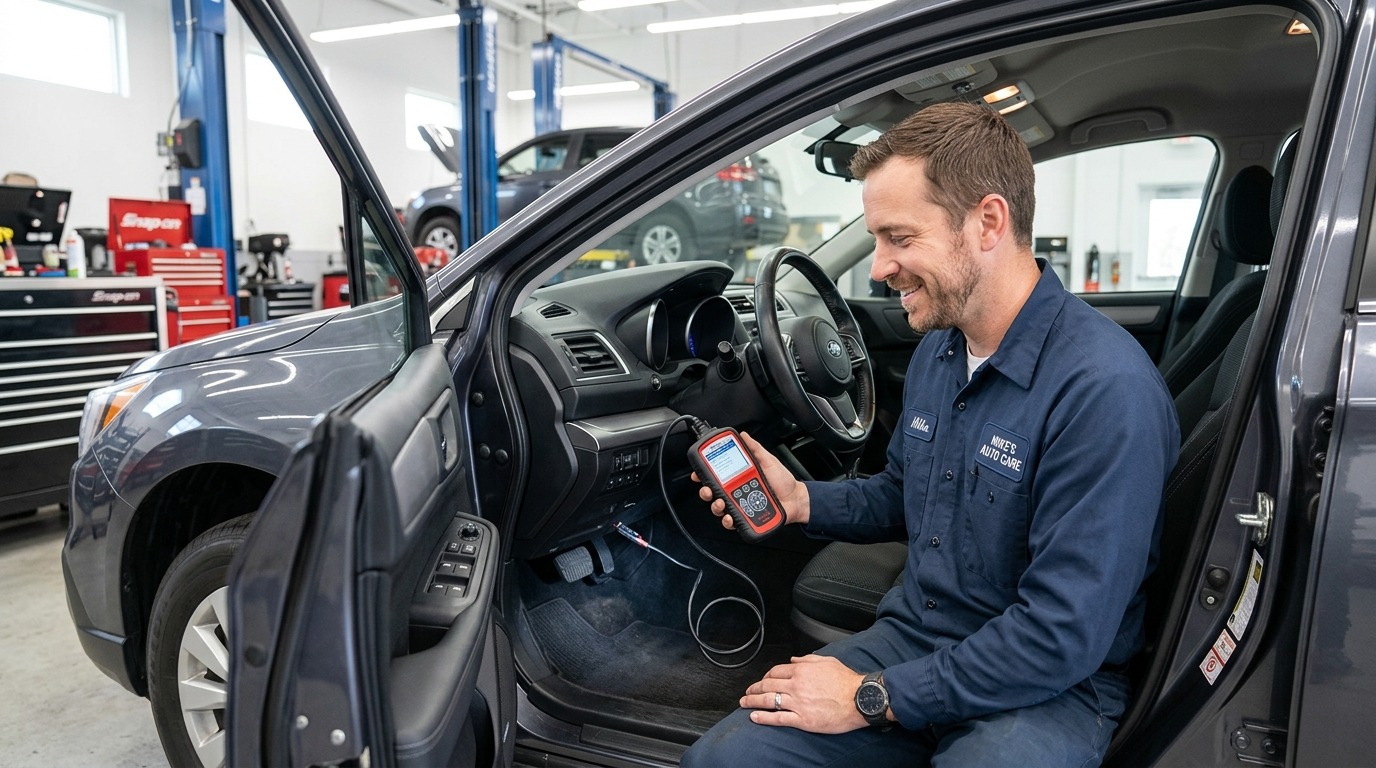
An affordable OBD-II scanner plugs into a port under your dashboard. Turn the key to the on position without starting the engine, plug it in, and it will read any stored diagnostic trouble codes. Write down the exact code, like P0420 or P0441.
Many auto parts stores like AutoZone or O’Reilly will read your codes for free. The code does not tell you exactly which part to replace. It tells you which system needs attention. From there, a mechanic can do a proper diagnosis.
When Is It Safe to Drive With the Check Engine Light On?
Times It Is Usually Okay to Drive
You can usually keep driving short distances if the light is solid, the car starts and idles smoothly, there are no strange smells or smoke, and the oil and temperature gauges look normal.
But please, do not go on a long road trip until you know what the code is. A small problem on the highway can become a very big one.
When You Should Stop Driving Right Away
Stop driving and call for help if the check engine light is flashing, the engine feels rough or is misfiring, you see steam or smoke, there is a strong fuel smell, the oil pressure warning comes on, or you hear loud knocking or grinding.
These signs mean something serious is happening. Keep driving and you could cause damage that costs thousands of dollars to fix.
Conclusion
A check engine light on but the car runs fine is almost never a reason to panic on the spot. Most of the time it points to something in the emissions system or a sensor that needs attention, not an engine that is about to break down. But ignoring it is never a smart move either.
Small problems grow into big ones. A loose gas cap can become a clogged charcoal canister. A weak oxygen sensor can wear out a catalytic converter. The light is your car talking to you early, and that is actually the best time to listen.
Get the code read, check the easy things first, and take it to a trusted mechanic if the light stays on. Your future wallet will thank you.
Frequently Asked Questions
Can I drive my car if the check engine light is on but it runs fine?
Yes, usually you can drive short distances if the light is solid and the car feels normal. Avoid heavy loads, high speeds, and long highway trips until you know the cause. If the light is flashing, stop driving as soon as it is safe.
What is the most common reason for the check engine light to come on?
The most common reason is a loose or faulty gas cap. It causes an EVAP system leak code and turns on the light without affecting how the car drives. Tighten the cap and the light may go off on its own after a few drive cycles.
How long can I ignore the check engine light?
It depends on the cause. A loose gas cap can wait a day or two. But an oxygen sensor problem or catalytic converter issue should be fixed within a few weeks to avoid bigger damage. Never ignore a flashing check engine light.
Does a check engine light always mean something serious?
No. Many times it points to small issues like a sensor, a vapor leak, or a software calibration. But it can also point to serious problems. The only way to know is to read the diagnostic trouble code with an OBD-II scanner.
Will the check engine light turn off on its own?
Sometimes, yes. If the issue was something temporary like a brief misfire or a gas cap that was loose and is now tightened, the light may turn off after a few drive cycles once the car confirms the problem is gone. But if the issue is still there, the light will stay on.