
What Is an Engine Rebuild?
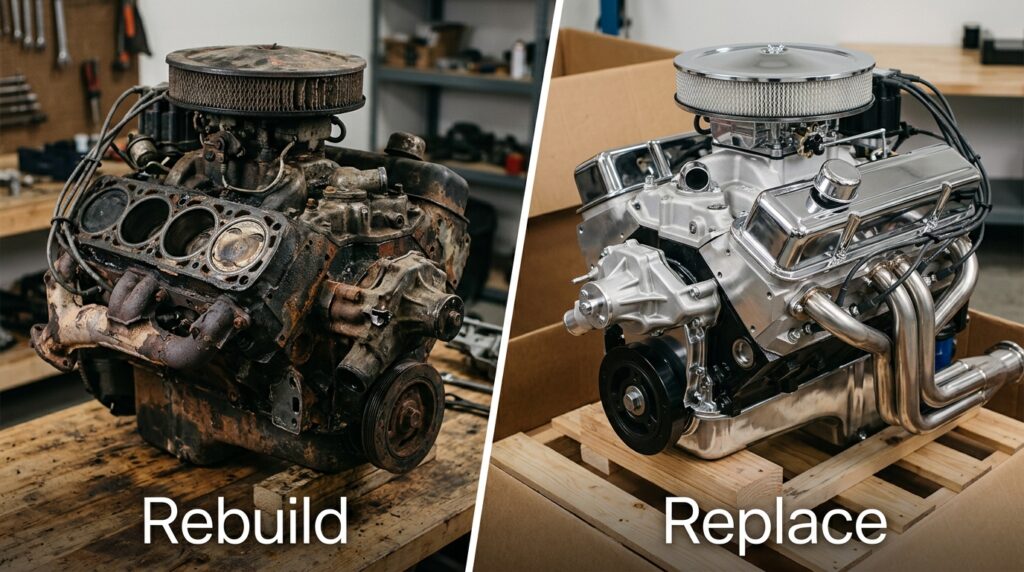
An engine rebuild means a mechanic takes your old engine out of the car. They break it apart piece by piece. They look at every single part. They clean everything. Then they throw away the broken or worn-out parts and put in new ones. The big pieces, like the engine block and the cylinder head, usually stay in. But smaller parts like piston rings, bearings, gaskets, seals, and valve springs get replaced with fresh ones.
After all that, they put the engine back together and put it back in your car. Honestly, when it is done right, a rebuilt engine can feel almost like new. The key words there are “done right”, because the quality really depends on the mechanic doing the work and the parts they use.
What Is an Engine Replacement?
An engine replacement means your old engine comes out, and a completely different engine goes in. That new engine can be brand new from the car maker, a remanufactured engine built to factory standards, or even a used engine pulled from another car at a salvage yard. The whole job is faster than a rebuild in most cases. You basically get a fresh start under the hood.
A remanufactured engine is a step above a simple used engine. It goes through a full factory-level process where every part gets replaced or re-machined to meet the original OEM standards (that means original equipment manufacturer, the same specs the car left the factory with). Many mechanics say a good remanufactured engine is just as reliable as a brand-new one.
Signs Your Engine Needs a Rebuild or Replacement
Warning Signs You Should Never Ignore
I want to be clear here, some of these signs can mean smaller problems too. But if you are seeing more than one at the same time, that is when you need to take it seriously.
- Loud knocking or rattling sounds under the hood (often means worn-out bearings or broken piston rings)
- Check engine light that stays on no matter what
- Loss of power or the car struggles to start
- Too much oil consumption, you keep adding oil but it keeps disappearing
- White or blue smoke from the exhaust
- Metal shavings in the oil. This is a very bad sign
- Low engine compression leading to misfires and poor fuel economy
- Rough idle or the car shaking at a stoplight
Important: Metal shavings in your oil or a cracked engine block almost always mean replacement is your only real option. A rebuild will not fix structural damage to the block itself.
When Replacement Is the Only Option
There are times when even the best mechanic will tell you a rebuild simply will not work. If the engine block is cracked, if there is damage to the crankshaft or connecting rods that cannot be fixed, or if the car has gone well past 150,000 miles and the engine is just too far gone, replacement is the smarter move.
I once talked to a shop owner in Texas who said something that stuck with me: “Rebuilding a dead horse just gives you a dead horse with new shoes.” His point was that if the engine has too much wear in too many places, putting money into a rebuild is throwing good money after bad.
Engine Rebuild vs Replace Cost: The Real Numbers for 2025
How Much Does an Engine Rebuild Cost?
The engine rebuild cost is usually lower than a full replacement — but it is still not cheap. According to data from ConsumerAffairs (2025), a full engine rebuild typically costs between $2,500 and $4,000, depending on your car type and where you live. A professional rebuild at a good shop can go up to $6,000 for complex engines like V8s or turbocharged motors.
Labor is a huge part of that bill. Most rebuilds take 20 to 40 hours of work. At $95 to $170 per hour, that alone can add $2,850 to $5,100 before you even count the cost of parts.
How Much Does an Engine Replacement Cost?
A full engine replacement costs more upfront. According to Airtasker US (2025), the average cost of engine replacement in the US ranges from $6,287 to $12,878, depending on the car make, model, and local labor rates. In cities like New York or Philadelphia, labor alone can push the cost higher.
Here is a simple breakdown to help you compare:
| Option | Average Cost (US 2025) | Time Needed | Warranty Typical? |
| Engine Rebuild | $2,500 – $6,000 | Days to weeks | Limited or none |
| Used Engine Replacement | $1,500 – $5,000 | 1 – 3 days | Rarely |
| Remanufactured Engine | $4,000 – $8,000 | 1 – 3 days | Yes, often strong |
| New OEM Engine | $8,000 – $12,878+ | 1 – 2 days | Yes, manufacturer warranty |
Sources: ConsumerAffairs 2025 | Airtasker US 2025
Pros and Cons of Engine Rebuild vs Replace
Advantages and Disadvantages of Rebuilding Your Engine
The biggest reason people choose a rebuild is cost. You can save a lot of money compared to buying a new or remanufactured engine. And if your mechanic already knows your car’s history, they might catch hidden problems that a replacement would leave behind.
Another thing I really like about rebuilding is that it keeps your original engine in the car. This matters for older or rare vehicles where engine control unit (ECU) compatibility can be a real headache. Putting a different engine in sometimes means fighting with the car’s computer, and that is a whole other bill waiting to happen.
But rebuilding has real downsides too. It takes a long time, sometimes several weeks. If the shop uses low-quality parts or mixes new parts with old, worn parts, the rebuilt engine might not last as long as you hoped. And the warranty on a rebuilt engine, if there is one at all, is usually very limited.
Advantages and Disadvantages of Replacing Your Engine
Replacing your engine, especially with a remanufactured engine, gives you something that is very close to a brand-new engine at a lower price. Many remanufactured engines have been machined to restore proper tolerances and come with solid warranties, sometimes covering 100,000 miles or more. That is real peace of mind.
Replacement is also faster. Instead of waiting weeks for a rebuild, you could have your car back in a day or two. If you depend on your car for work every day, that speed matters a lot.
The downside is cost and compatibility. A new OEM engine can cost twice as much as a rebuild. And if the replacement engine is from a different year or trim level, the shop might need to do extra work to make everything fit and talk to each other correctly. Always ask your mechanic about ECU connectivity before you agree to a replacement.
Engine Rebuild vs Replace: Which One Is Better for Your Situation?
When You Should Choose a Rebuild
Rebuilding makes the most sense when the engine problems are specific and fixable. If you have compression loss, excessive oil consumption, or worn valve seals, a rebuild can fix those exact problems without replacing the whole engine. It is also a great choice if your car has sentimental value and you want to keep the original engine inside it.
Also, rebuilding is often smarter for classic cars or vehicles where finding a matching replacement engine is very hard. For those cars, the rebuild is not just cheaper, it might be the only real option that keeps the car authentic.
When You Should Choose a Replacement
If your car has more than 150,000 miles, a cracked engine block, or damage that goes too deep for a rebuild to fix, replacement is the way to go. Replacement also wins if you need your car back fast and you cannot afford to wait weeks for a rebuild to be done.
Here is my personal take on this: most guides tell you that cost is the only thing that matters. But from what I have seen, the condition of the rest of your car matters just as much. If your car’s body, transmission, and other systems are in good shape, spending money on a quality engine makes sense. But if the car has lots of other problems too, putting a brand new engine in it is like buying an expensive suit for a day at the beach.
Quick Rule of Thumb: If the engine repair cost (rebuild or replace) is more than 50% of the car’s current market value, you should seriously think about buying a different car instead.
Conclusion
Choosing between an engine rebuild vs replace is one of the biggest decisions you will make as a car owner. A rebuild saves money and keeps your original engine alive. A replacement gives you a fresh start and often a better warranty. Neither one is always the right answer.
The smartest thing you can do is get a full engine diagnosis from a trusted mechanic before you decide anything. Ask them to check the engine block, measure compression, and look for any structural damage. Then use the cost comparison to decide what makes financial sense for your specific car and situation.
I would love to hear your thoughts. Have you gone through an engine rebuild or replacement? What was your experience? Drop your story — it might help someone else make the right call.
Frequently Asked Questions: Engine Rebuild vs Replace
Is it cheaper to rebuild or replace an engine?
In most cases, rebuilding is cheaper. An engine rebuild typically costs between $2,500 and $6,000, while a full replacement with a new or remanufactured engine can cost $6,000 to $12,000 or more in the US. However, if your rebuild needs a lot of expensive parts, the price difference can get smaller. Always get quotes for both options before deciding.
How long does a rebuilt engine last?
A well-done rebuilt engine can last between 100,000 and 150,000 miles, sometimes more. It all depends on the quality of the parts used, the skill of the mechanic, and how well you take care of it after the rebuild. Following the break-in instructions your shop gives you, like changing the oil early and avoiding hard driving at first, can help the engine last much longer.
What is the difference between a rebuilt and a remanufactured engine?
A rebuilt engine has worn parts replaced, but it is done by a local shop and the quality can vary. A remanufactured engine goes through a factory process where every major part is inspected, re-machined, or replaced to meet original OEM standards. Remanufactured engines usually come with stronger warranties and more consistent quality than rebuilt ones.
Does engine replacement affect car value?
Yes, it can go both ways. Replacing an old, failing engine with a quality new or remanufactured one can actually increase your car’s resale value, especially if the rest of the car is in good shape. But if the replacement engine has lower specs than the original, some buyers might see it as a red flag. Always keep documentation of the work done — invoices, parts lists, and warranty papers — so future buyers can see what was done.
Can I drive my car after an engine rebuild?
Yes, but you need to follow the break-in period rules your mechanic gives you. This usually means avoiding very high speeds or heavy loads for the first few hundred miles. Many shops recommend changing the oil early after a rebuild, sometimes after just 500 miles, to get rid of any leftover metal particles from new parts wearing in. After that, treat it like a new engine and maintain it properly.