
Your car feels different lately. Maybe it shakes when you stop at a red light. Or you hear a weird bang when you shift gears. These small changes might seem normal, but they could be telling you something important about your engine mounts.
I learned this the hard way when my old Honda started making clunking sounds. I thought it was just getting old, but it turned out the engine mounts were bad. That small problem almost cost me my transmission because I waited too long.
In this guide, you will learn the most common engine mount replacement signs so you can catch problems early and save money on repairs.
What Are Engine Mounts and Why Do They Matter
How Engine Mounts Work in Your Car
Think of engine mounts as the rubber cushions that hold your engine in place. Your engine is heavy and moves around a lot when you drive. Without these mounts, the engine would bounce all over the engine bay and hit other parts.
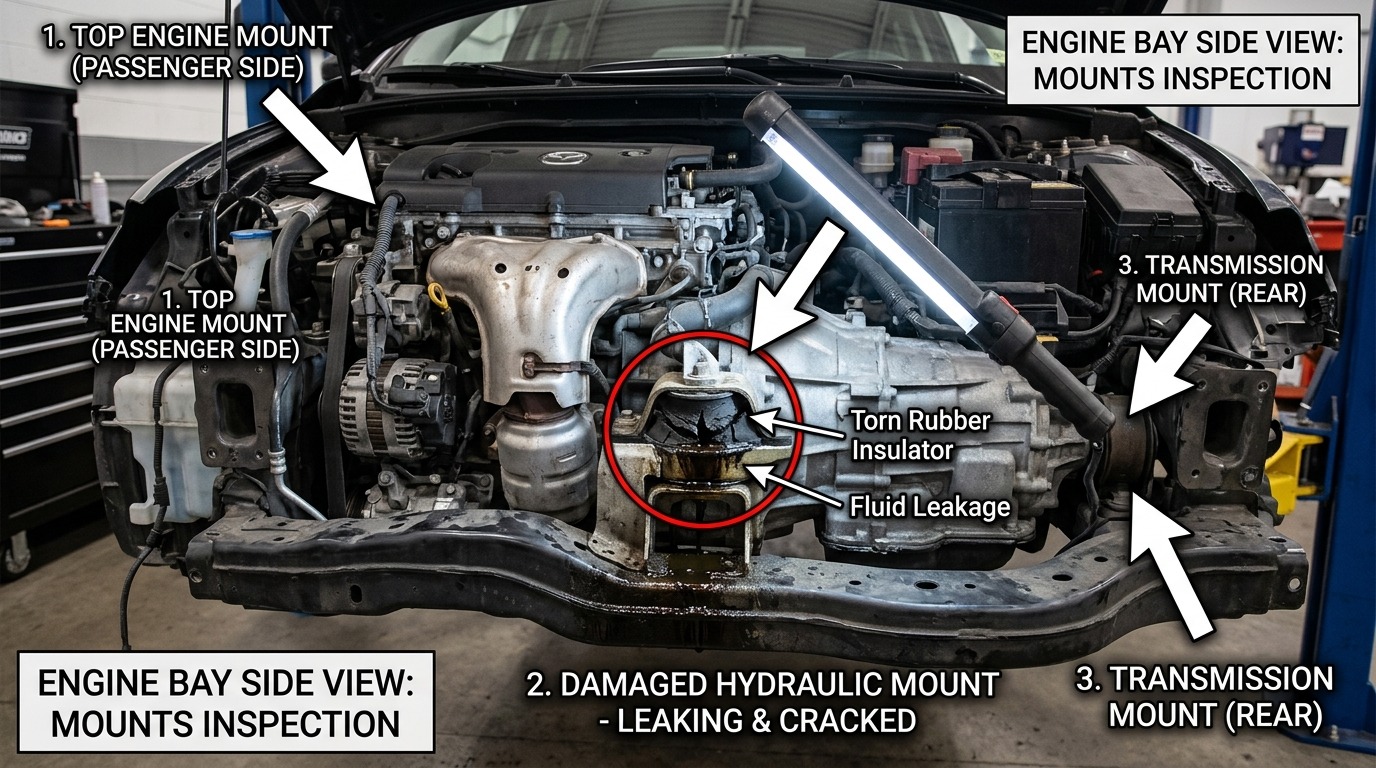
Most cars have 3 to 4 motor mounts. Each mount has two metal pieces with rubber or special fluid in the middle. This setup keeps the engine secure while soaking up all the vibrations and bumps.
The rubber part is what does most of the work. It bends and flexes so the engine can move a little bit without shaking the whole car. According to a study published by the Society of Automotive Engineers, proper engine mounting reduces cabin vibration by up to 80 percent.
The Job of Engine Mounts Every Day
Every time you start your car, the engine mounts go to work. They handle the engine torque when you step on the gas. They stop vibrations from reaching your steering wheel and seat. They even help keep other parts like your exhaust system and transmission lined up correctly.
When the mounts are fresh and working right, you barely notice them. But when they start to fail, you will feel it fast.
Top Engine Mount Replacement Signs to Watch For
Your Car Shakes More Than Usual
This is the biggest warning sign. If your car suddenly feels like it is shaking more than before, your engine mounts might be worn out.
The rubber in the mount loses its bounce over time. When this happens, the mount can’t soak up engine vibrations anymore. You will feel strong shaking in the cabin when you sit at a stoplight. The vibrations get worse when you turn on the air conditioner because that makes the engine work harder.
I once helped a friend check her car because she said it felt like sitting on a washing machine. We popped the hood and had someone start the engine while we watched. The whole engine was rocking back and forth like crazy. That was a clear sign the mounts were done.
Strange Clunking or Banging Noises
Bad engine mounts make noise. You might hear clunks, bangs, or knocking sounds from the engine bay.
These sounds happen because the engine is moving too much and hitting other parts. The noise is usually loudest when you shift from Park to Drive or when you step on the gas hard. According to research from the National Highway Traffic Safety Administration, loose engine components cause over 15 percent of reported vehicle noise complaints.
The funny part is, some people think these noises mean their engine is broken. But often it is just the mounts letting the engine bounce around.
When You Feel a Jolt While Driving
Rough Shifting Between Gears
When you change gears and feel a hard jolt or thump, that could be your motor mounts telling you they need help.
Good mounts keep the engine steady when the transmission shifts. Bad mounts let the engine move too much, which makes gear changes feel rough and bumpy. You will notice this most when you go from Drive to Reverse or when you speed up on the highway.
This happens because worn engine mounts cannot handle the engine torque anymore. The engine tilts and shifts with each gear change instead of staying in one spot.
Engine Moves When You Start the Car
Here is an easy test you can do at home. Open your hood and watch the engine while someone starts the car.
If the engine jumps or tilts a lot when it starts, your mounts are probably bad. A good mount will let the engine move just a tiny bit. A bad mount will let it lurch forward or to the side.
You might also feel this lurch inside the car when you turn the key. The whole car might shake for a second before settling down. According to AutoCare Center data from 2024, excessive startup movement is the second most reported engine mount symptom after vibration.
Visual Signs Your Engine Mounts Are Worn Out
Cracks and Tears in the Rubber Part
Sometimes you can see the problem with your own eyes. If you look at your engine mounts and see cracks, tears, or pieces of rubber hanging off, they need to be changed.
The rubber breaks down over time. Heat from the engine, oil leaks, and just normal use all make the rubber weaker. Small cracks turn into big tears. When that happens, the mount cannot do its job.
Flaking rubber is another bad sign. If you touch the mount and pieces come off in your hand, the rubber has lost its strength.
Leaking Fluid from the Mount
Some newer cars use fluid-filled or hydraulic mounts. These have special liquid inside that helps absorb vibrations even better than regular rubber.
But if this liquid leaks out, the mount stops working right. You will see wet spots or puddles under the mount. The mount might look saggy or deflated.
Once a hydraulic mount starts leaking, you have to replace it. You cannot fix the leak. The mount will just get worse and cause more vibrations and noise.
What Causes Engine Mounts to Fail Early
Age and Daily Wear on Your Mounts
Most engine mounts last between 5 and 7 years. Some can go longer if you drive gently and keep up with car care.
But rubber does not last forever. Think about a rubber band that sits in a drawer for years. It gets hard and brittle. The same thing happens to motor mounts.
Every time you drive, the mounts flex and bend. After thousands of trips, the rubber gets tired. Add in engine heat, cold winter weather, and bumpy roads, and you can see why mounts wear out.
According to data from the Automotive Maintenance and Repair Association, most vehicles need at least one engine mount replaced by 80,000 miles.
Oil Leaks Damage the Rubber
This is a big one that many people miss. If your car has an oil leak and that oil drips onto the engine mounts, it will kill the rubber fast.
Engine oil makes rubber soft and weak. A small slow leak might not seem like a big deal, but it can ruin your mounts in just a few months. I have seen mounts that looked like they were melting because oil had been dripping on them for so long.
The same thing happens with transmission fluid leaks. Any kind of liquid that is not supposed to be there will hurt the rubber.
How Long Do Engine Mounts Actually Last
Average Lifespan of Different Mount Types
Regular solid rubber mounts usually last about 60,000 to 100,000 miles. These are the basic kind found in most older cars and budget vehicles.
Hydraulic mounts can last longer, sometimes up to 120,000 miles. They cost more but they work better at stopping vibrations. You see these in nicer cars and newer models.
Polyurethane mounts are even tougher. Some performance cars use these because they hold up better under hard driving. But they cost more and can transfer more vibration to the cabin.
According to a 2025 study by J.D. Power, the average engine mount lifespan has increased by 20 percent over the past decade due to improved materials.
When to Check Your Mounts During Service
You should have a mechanic look at your engine mounts every time you get your oil changed. It only takes a minute for them to check for cracks, leaks, or other problems.
If you notice any of the warning signs we talked about, get them checked right away. Do not wait for your next routine maintenance.
Most shops will include a mount check as part of a bigger inspection. If one mount looks bad, ask them to check all of them. Remember, if one is worn out, the others are probably getting close too.
Can You Drive with Bad Engine Mounts
Safety Risks of Ignoring the Problem
Yes, you can drive with bad engine mounts for a little while. But should you? No way.
Bad mounts let the engine move around too much. In really bad cases, the engine can tilt so far that it hits other parts. I have heard stories of engines breaking hoses, snapping belts, and even damaging the radiator.
The worst part is what can happen if you need to stop fast. If the engine is loose and you hit the brakes hard in an emergency, the engine can shift forward and mess up your brake lines or other important parts under the hood.
According to National Safety Council guidelines, any component failure that affects vehicle stability should be addressed immediately.
Damage That Happens to Other Car Parts
When motor mounts go bad, they do not just hurt themselves. They hurt other parts too.
The transmission takes a big hit. When the engine bounces around, it puts extra stress on the transmission mount and can even cause harsh shifting or transmission damage.
Your exhaust system can get bent or cracked. The driveshaft can get knocked out of line. Fan belts can break because the engine is not in the right spot anymore.
All of this adds up to way more money than just fixing the mounts when you first notice a problem.
Should You Replace One Mount or All of Them
Why One Bad Mount Strains the Others
When one engine mount fails, the other mounts have to work harder. They take on extra weight and movement that they were not designed to handle.
Think of it like a table with four legs. If one leg breaks, the other three have to hold up the whole table. They will break faster because of the extra load.
This is why mechanics often suggest replacing all the mounts at once, even if only one looks really bad. It saves you from having to come back in a few months when the next one fails.
Cost Savings of Replacing All at Once
Replacing engine mounts costs money. A single mount might run you $150 to $400 when you add in the part and labor.
But here is the thing about labor. The hardest and most expensive part is lifting the engine and getting access to the mounts. Once the mechanic has the engine supported, changing extra mounts does not add much time.
So you might pay $600 for one mount with labor, but only $900 or $1,000 to do all three or four. That is way cheaper than paying for labor three separate times. According to RepairPal’s 2025 cost data, bundling mount replacements saves an average of 30 percent on total labor costs.
Conclusion
Bad engine mounts are not something you should ignore. The warning signs are clear: extra vibrations, strange noises, rough shifting, visible cracks, and fluid leaks.
When you catch these problems early, you save money and keep your car running smooth. Wait too long and you risk damage to your transmission, exhaust, and other expensive parts.
If your car is showing any of these engine mount replacement signs, get it checked soon. A simple inspection can tell you if the mounts are still good or if it is time for new ones.
FAQs
How much does engine mount replacement cost
The cost depends on your car and how many mounts need replacing. One mount typically costs $150 to $400 including parts and labor. If you replace all 3 to 4 mounts at once, expect to pay $600 to $1,200 total. Luxury vehicles and cars with hard to reach mounts cost more.
Can I replace engine mounts myself
You can if you have good tools and know how to support an engine safely. You will need a jack, jack stands, and maybe an engine support bar. But for most people, it is safer and faster to let a mechanic do it. One mistake can drop the engine and cause serious damage.
What happens if I ignore bad engine mounts
Ignoring bad mounts leads to more vibrations, which can damage your transmission, exhaust system, and other parts. The engine might shift so much it breaks hoses or belts. In extreme cases, loose engine parts can create a safety risk while driving.
How do I know which engine mount is bad
A mechanic can test each mount by watching the engine move while someone shifts gears or revs the engine. They look for extra movement, cracks in the rubber, or fluid leaks. Some shops use special tools to measure how much each mount has worn out.
Do all cars have the same number of engine mounts
No. Most cars have 3 to 4 engine mounts, but some have only 2 and others have 5 or more. Bigger engines and heavier vehicles usually need more mounts to hold everything steady. Check your owner’s manual or ask a mechanic how many your car has.