
Low oil consequences on your engine are no joke. One day your car sounds fine. Next, you hear a horrible knocking sound and your dashboard lights up like a Christmas tree. That is usually when people start asking, “How bad is it really?” Honestly, it can be very bad. Running your engine on low oil is one of the fastest ways to destroy it.
What Does Engine Oil Actually Do?
The Real Job of Oil Inside Your Engine
Your engine has hundreds of moving metal parts. They spin, slide, and rub against each other thousands of times every minute. Without engine oil, all those parts would grind together, create massive friction, and burn up in minutes.
Engine oil does four big things at once. It lubricates parts so they move smoothly. It cools the engine by carrying heat away from hot spots. It cleans the engine by picking up tiny metal bits and dirt. And it protects metal from rust and corrosion. Think of it like a shield your engine wears 24/7.
According to a study published by the Society of Automotive Engineers (SAE), the lubrication system of an engine performs critical functions including lowering friction, cooling, supporting load, and cleaning debris from moving parts. When that system fails even slightly, every single part inside suffers.
Why Low Oil Levels Are a Big Problem
How Fast Things Go Wrong Without Enough Oil
Here is the thing most people don’t realize. You don’t need to be completely out of oil for damage to start. Even a little too low can cause big problems. When the oil level drops, the oil pump has less to work with. It cannot send enough lubrication to every part of the engine fast enough.
I once made the mistake of ignoring my oil warning light for about three days. The car was running fine, or so I thought. By the time I checked, the oil was so low it barely showed on the dipstick. The engine had already started making a faint ticking sound. That ticking was my engine telling me, very politely, that it was in trouble.
The oil that remains when levels are low also gets hotter much faster. Hot oil breaks down more quickly. Broken-down oil turns into a thick, dark sludge that blocks oil passages and stops fresh oil from reaching critical parts.
The Real Consequences of Low Oil on Your Engine
Increased Friction and Accelerated Wear
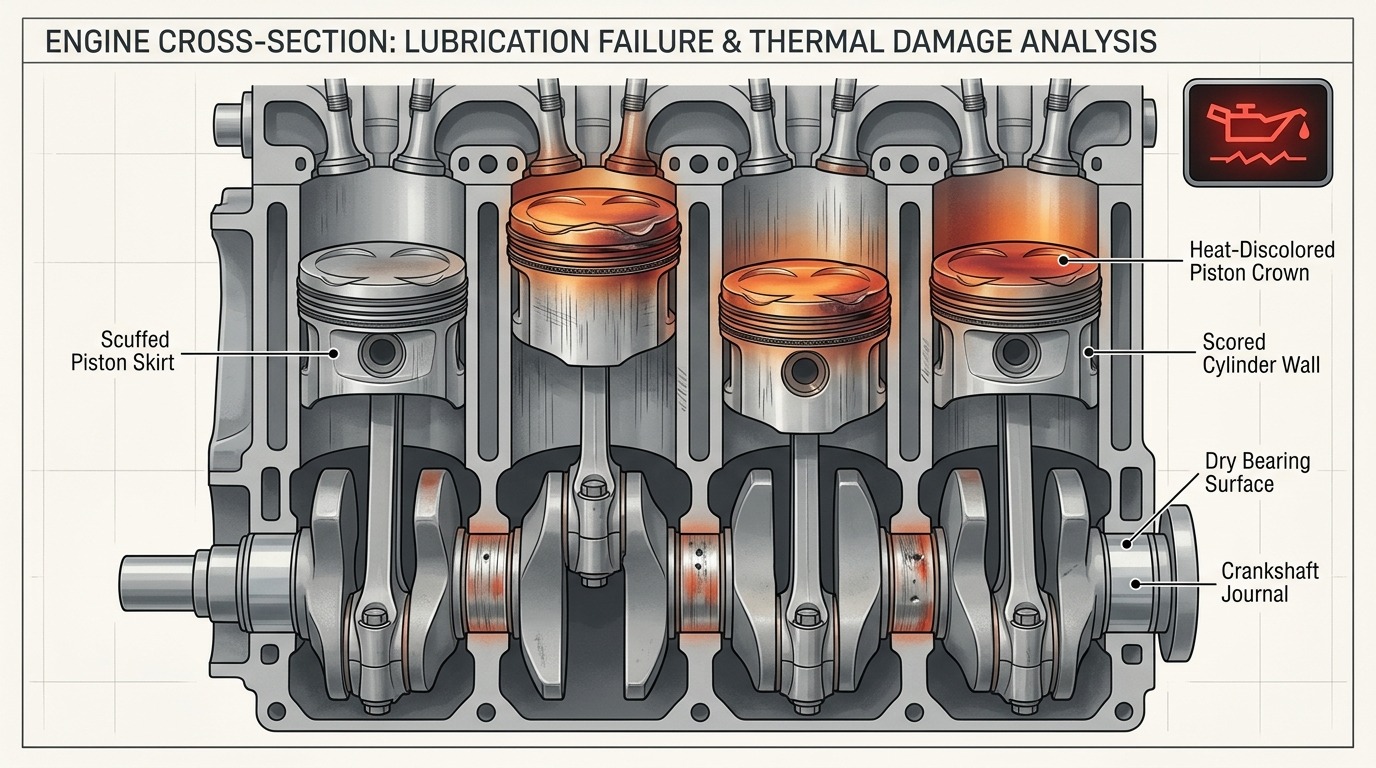
This is the first and most direct low oil consequence. When oil drops too low, the pistons, crankshaft, camshaft, and bearings start rubbing metal against metal. This causes accelerated wear on parts that should last for years. The damage builds up quietly, and by the time you notice something is wrong, the engine components are already badly worn.
The cylinder walls get scratched. The piston rings lose their seal. The crankshaft bearings start to flatten and break apart. Once metal-on-metal contact begins, you are on a countdown to a much bigger repair bill.
Engine Overheating and Heat Damage
Oil does not just lubricate. It helps regulate engine temperature too. When oil levels fall, the engine cannot cool itself properly. Friction heat builds up fast and pushes the engine temperature way beyond safe limits.
When the engine overheats, very bad things happen. Cylinder heads can warp because they are made of aluminum, which is soft and bends under extreme heat. A warped cylinder head causes head gasket failure, which lets coolant and oil mix together. Once that happens, your engine is in serious danger of complete engine failure.
The funny part is that your car’s temperature gauge might not even show danger levels right away. The overheating can happen in specific spots inside the engine that the gauge cannot track.
Oil Sludge and Blockage
Low oil also means the small amount of oil left in your engine works overtime. It gets dirty fast. It cannot pick up and carry away metal particles and contaminants like it should. Over time, those contaminants turn the oil into a thick, sticky sludge.
This oil sludge is terrible. It clogs the tiny oil passages that carry oil to every corner of your engine. When those passages get blocked, some parts get zero lubrication. Zero lubrication equals zero protection. And that means total engine damage can happen very fast.
Engine Seizure and Total Failure
This is the worst low oil consequence of all. If the engine runs long enough without proper lubrication, the pistons can actually fuse to the cylinder walls. The engine literally seizes and stops turning. When this happens, the engine is done. You are looking at either a full engine rebuild or a brand new engine.
According to data from Ascot Automotive, a complete engine replacement can cost anywhere between $5,000 and $10,000 on average, with some newer vehicles costing up to $14,000. That is a lot of money that could have been avoided with a $30 bottle of engine oil.
Warning Signs Your Engine Is Suffering from Low Oil
Sounds and Lights You Should Never Ignore
Your car will try to warn you before the damage gets too serious. The most common warning is the oil pressure warning light on your dashboard. If that light comes on, stop driving as soon as it is safe and check your oil level immediately. Do not assume it will be fine if you keep going.
Strange engine noises are another big sign. A loud knocking sound or a ticking noise that was not there before usually means your engine bearings or valve train are not getting enough oil. Grinding sounds are even more serious. These sounds mean metal is already touching metal inside.
Performance Changes That Signal Trouble
If your car feels sluggish, uses more fuel than usual, or the engine seems to lose power, those are signs of low oil damage happening slowly. Reduced engine performance does not always come on suddenly. It can creep up over weeks as the wear inside gets worse.
You might also notice a burning oil smell, or even see white or blue smoke coming from your exhaust. White smoke can mean coolant is mixing with oil because of a failed head gasket. Blue smoke usually means the engine is burning oil directly. Both are serious signs you need a mechanic right away.
Common Causes of Low Engine Oil
Why Your Oil Levels Drop in the First Place
There are a few main reasons oil levels get low. The most common is simple neglect. People skip oil changes for too long, and the oil breaks down, burns off, and drops below safe levels. According to data from Cox Automotive reported by Empower, the average repair shop visit already costs around $838. Missing a simple oil change can lead to bills many times higher.
Oil leaks are another cause. Worn engine gaskets or seals let oil drip out slowly. You might see dark spots under your parked car. That is a sign you have a leak that needs fixing before it causes bigger problems.
Some engines also consume oil, meaning they burn small amounts during normal operation. Older engines or high-mileage engines tend to burn oil faster. If your car does this, you need to check your oil level more often, not just wait for the oil change schedule.
How to Protect Your Engine from Low Oil Damage
Simple Habits That Save You Thousands
The best way to avoid low oil consequences is to check your oil regularly. Pull out the dipstick, wipe it clean, dip it back in, and check the level. Do this every few weeks or before a long drive. It takes less than two minutes and costs nothing.
Follow your car maker’s recommended oil change interval. For most modern cars, that is every 5,000 to 7,500 miles with conventional oil, or every 10,000 miles with synthetic oil. Always use the right oil viscosity for your engine, which you can find in your owner’s manual.
If your oil warning light comes on, take it seriously. Do not wait until tomorrow or the weekend. Stop safely, check the oil, and top it up if needed. If the light stays on even after topping up, get to a mechanic. It could mean your oil pump has a problem or there is an internal leak.
I started keeping a small bottle of the right engine oil in my trunk after the incident I mentioned earlier. It sounds overly cautious, I know. But it has saved me twice when the oil was low on long road trips and I was miles from a gas station.
Conclusion
Low oil consequences can range from annoying wear and tear all the way to a completely destroyed engine. The damage starts quietly, builds fast, and ends up being very expensive. A simple habit like checking your oil level once a month and never skipping an oil change can save you from thousands of dollars in repairs and the headache of being stranded on the road.
Your engine works incredibly hard every time you drive. Give it the oil it needs. It will take care of you in return.
Frequently Asked Questions
Can low oil damage an engine permanently?
Yes, it can. If your engine runs on very low oil for too long, parts like pistons, crankshaft bearings, and cylinder walls can wear down beyond repair. In the worst cases, the engine seizes completely and needs to be fully replaced.
How long can an engine run with low oil?
There is no safe answer here because it depends on how low the oil is, the engine type, and driving conditions. Some engines show damage within minutes of severe oil starvation. Even slightly low oil causes slow wear over time. It is always best to top up the oil before driving.
What does a low oil engine sound like?
A knocking sound, ticking, or grinding noise from the engine are all signs of low oil. The knocking usually comes from rod bearings that are not getting enough lubrication. If you hear this, stop driving right away.
How often should I check my engine oil?
Check your oil at least once a month and before any long trip. If your car is older or known to consume oil, check it every two weeks. It is a quick check that can prevent very expensive repairs.
What should I do if my oil light comes on while driving?
Pull over safely as soon as you can. Turn off the engine and check your oil level with the dipstick. If it is low, add the right engine oil until it reaches the correct level. If the light stays on after adding oil, call a mechanic. Do not keep driving with the light on.