
Your car feels slow. It takes a few extra seconds to start. You notice the gas tank getting empty faster than before. These small things might seem normal, but they could mean your spark plugs need changing.
I learned this the hard way when my car started acting up last year. The engine made weird sounds and felt weak when I tried to speed up. Turns out, I had ignored the warning signs for too long.
Spark plugs are small but very important parts of your car. They help your engine start and run smoothly. When they get old or dirty, your whole car suffers. In this guide, you will learn when to replace spark plugs, what signs to watch for, and how to keep your car healthy.
How Long Do Spark Plugs Last?
The life of your spark plugs depends on what type you have. Not all plugs are the same. Some last longer than others because they are made from different materials.
Your owner’s manual will tell you exactly when to change your plugs. Each car is different, so always check your manual first. But here is a general idea of how long different types last.
Copper Spark Plugs Lifespan
Copper spark plugs are the most basic type. They cost less money but they don’t last as long as other types.
Most copper spark plugs need changing every 30,000 to 50,000 miles. Some older cars from before 1996 might need new plugs even sooner, around 20,000 miles.
I had copper plugs in my first car. They worked fine but I had to change them more often. If you drive mostly short trips and your engine doesn’t warm up fully, copper plugs can wear out faster.
The copper material wears down quicker because it is softer than other metals. Heat and constant firing make the electrodes round and weak over time.
Platinum and Iridium Spark Plugs Lifespan
Platinum spark plugs and iridium spark plugs last much longer than copper ones. They cost more but you don’t need to replace them as often.
These plugs can last anywhere from 60,000 miles to 150,000 miles, depending on your car and how you drive. According to a study by the National Institute for Automotive Service Excellence, modern long-life spark plugs help cars run better for longer periods (https://www.ase.com).
Iridium is even harder than platinum, so iridium spark plugs often last the longest. Some newer cars come with these plugs from the factory.
My current car has platinum spark plugs. I have driven over 80,000 miles and they still work great. The difference in performance and how long they last is worth the extra cost.
Even though these plugs last longer, you should still check them at regular service visits. Sometimes other problems like oil leaks can make even good plugs fail early.
Clear Signs You Need New Spark Plugs
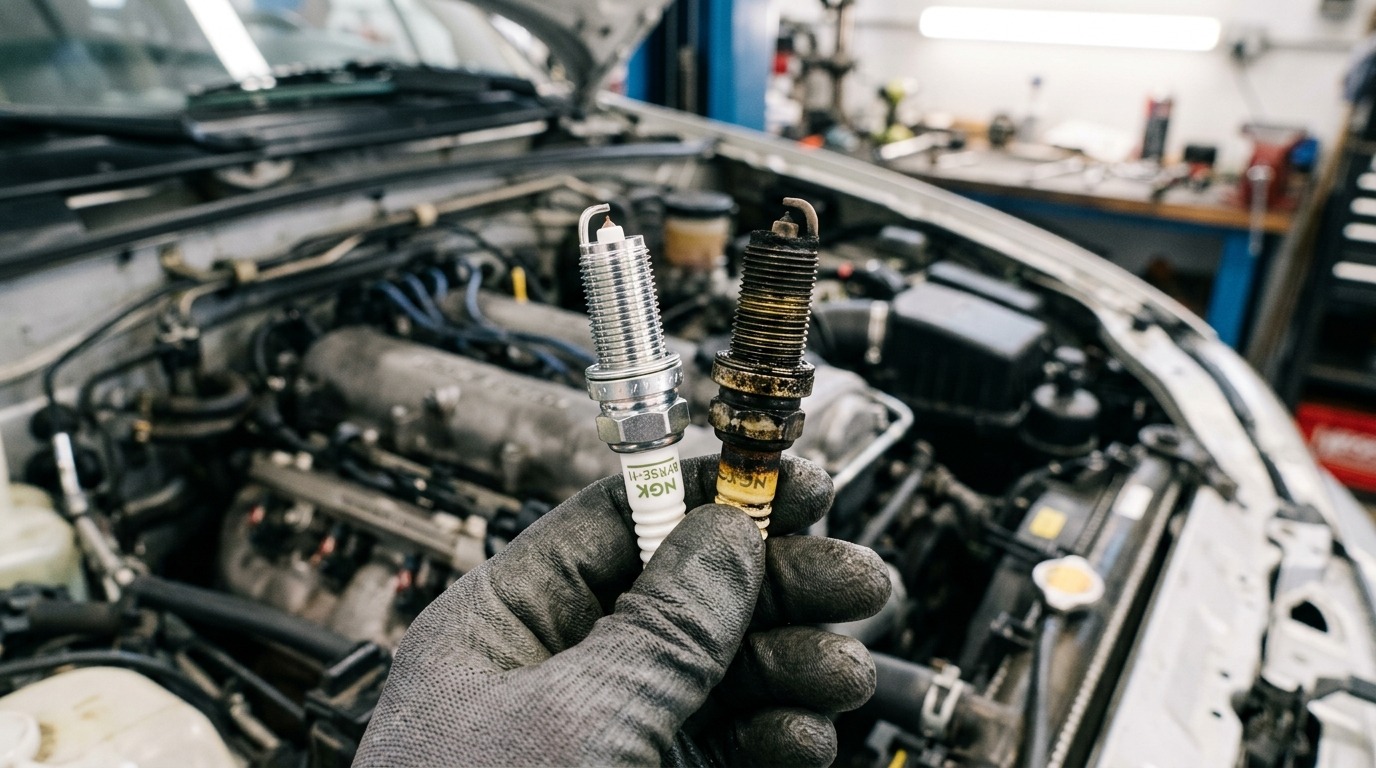
Your car will tell you when something is wrong. You just need to know what to look for. Here are the most common signs that your spark plugs are getting old and need changing.
Your Car Takes Longer to Start
When you turn the key or push the start button, your car should start quickly. If it takes a few extra tries or the engine cranks slowly, bad spark plugs might be the problem.
I remember one cold morning my car took forever to start. I thought it was the battery at first. But after checking, the mechanic told me the spark plugs were too worn out to create a strong spark.
Spark plugs need to fire at the right moment to ignite the air-fuel mixture in your engine. When they are old or dirty, they can’t make a strong enough spark. This makes starting harder, especially in cold or wet weather.
If your car hesitates before starting, don’t ignore it. This is one of the earliest warning signs. Getting new plugs can make your car start smoothly again.
Engine Runs Rough or Makes Strange Sounds
A healthy engine should run smoothly and quietly. If you hear knocking, rattling, or pinging sounds, or if you feel weird vibrations while driving, your engine might be misfiring.
Misfires happen when the spark plug doesn’t fire at the right time or doesn’t fire at all. This makes the engine shake and run rough. You might notice it most when your car is sitting at a stoplight or when you first start driving.
Last summer, my friend’s car started making a loud knocking sound. She felt the whole car shake when stopped. After replacing the spark plugs, the noise went away completely.
According to the Environmental Protection Agency, engine problems like misfires can increase air pollution and waste fuel (https://www.epa.gov). Fixing these problems helps your car and the environment.
Strange sounds mean your combustion chamber is not working right. The fuel is not burning the way it should. This puts stress on your engine and can cause bigger problems if you wait too long.
Your Car Uses More Gas Than Before
One sign that many people miss is poor fuel economy. If you are filling up your gas tank more often than usual, worn spark plugs could be the reason.
You Fill Up More Often
Think about how often you used to visit the gas station. Now compare that to how often you go today. If you are going more often but driving the same amount, something is wrong.
I noticed this with my old car. I used to fill up once a week. Then suddenly I needed gas every five days. I didn’t think much of it at first. But when I finally got new spark plugs, my fuel efficiency went back to normal.
When spark plugs get old, they don’t burn fuel as well as they should. Your engine has to work harder and use more gas to give you the same power.
Poor Fuel Efficiency Means Worn Plugs
The National Institute for Automotive Service Excellence says that spark plug misfiring can cut your fuel efficiency by up to 30 percent (https://www.ase.com). That is a huge waste of money and gas.
Faulty spark plugs make your engine work harder for no reason. The air-fuel mixture doesn’t burn completely, so you need more fuel to get the same power. This is bad for your wallet and bad for the environment.
Replacing worn spark plugs can give you better gas mileage right away. You will notice the difference the next time you fill up.
If you want to save money on gas, check your spark plugs. It is one of the easiest and cheapest ways to improve fuel economy.
Check Engine Light Turns On
The check engine light is your car’s way of telling you something is wrong. Many people ignore this light, but you should never do that. It could be warning you about bad spark plugs.
What the Warning Light Means
Your car has a diagnostic system that watches how the engine runs. When something goes wrong, the system turns on the check engine light to warn you.
Misfires are one of the most common reasons the light turns on. When a spark plug can’t fire properly, the diagnostic system notices right away.
I once drove for weeks with my check engine light on. I kept thinking it would go away on its own. Big mistake. When I finally took the car to a shop, the mechanic said I had damaged my catalytic converter because of the bad spark plugs.
Misfires and Engine Codes
When you take your car to a mechanic, they can read the trouble codes from your diagnostic system. These codes tell them exactly what is wrong.
Misfire codes are very common. They usually point to problems with spark plugs or ignition coils. If you catch the problem early, you can fix it before it causes bigger damage.
The check engine light is there to help you. Don’t ignore it. Get your car checked as soon as the light turns on. Most auto parts stores will read the codes for free.
Slow or Weak Acceleration
If your car feels slow or weak when you press the gas pedal, worn spark plugs might be holding you back. This is one of the most frustrating signs because it makes driving feel unsafe.
Car Feels Sluggish When Speeding Up
Good spark plugs help your engine respond quickly when you need power. When they are worn out, your car feels sluggish and slow.
You press the gas pedal and nothing happens right away. The car takes a long time to speed up. This can be dangerous when you are trying to merge onto a highway or pass another car.
I had this problem with my car last year. Every time I tried to speed up, the car would hesitate and sputter. It felt like the engine was struggling. After changing the spark plugs, the car felt like new again.
Climbing Hills Feels Harder
Worn spark plugs have the most trouble when your engine needs extra power. Climbing hills is a good test. If your car struggles going uphill, the plugs might be too weak to fire properly under pressure.
When you go up a hill, your engine works harder. It needs more fuel and a stronger spark to keep going. Old plugs can’t give that strong spark, so the car feels weak and slow.
This is not just annoying. It also puts extra stress on other parts of your engine. The ignition coil has to work harder to help the weak plugs. Over time, this can cause the coil to fail too.
Replacing your spark plugs on time helps your car stay strong and responsive. You will notice better acceleration right away.
When to Replace Spark Plugs Based on Mileage
Even if your car seems fine, you should still replace spark plugs based on mileage. Following a schedule helps you avoid problems before they start.
Follow Your Owner’s Manual
The best guide for when to replace spark plugs is your vehicle owner’s manual. Car manufacturers test their engines and know exactly when parts need changing.
Your manual will tell you the recommended replacement interval for your specific car. This is usually based on miles driven, not how many years you have owned the car.
I always keep my owner’s manual in the glove box. It has saved me from making bad decisions about maintenance. If you lost your manual, you can usually find it online on the manufacturer’s website.
Don’t just guess when to change your plugs. Follow the manual. It is there to help you keep your car running smoothly.
Different Plug Types Last Different Times
As we talked about earlier, different spark plug types have different lifespans. Your maintenance schedule depends on what type of plugs your car uses.
Conventional spark plugs (copper) need changing every 30,000 to 50,000 miles. Long-life spark plugs like platinum or iridium can last 60,000 to 150,000 miles or more.
Some newer cars even have ruthenium spark plugs, which last the longest of all. These can go beyond 150,000 miles in some cases.
According to AutoZone, following the right replacement interval for your spark plug type helps prevent engine damage and keeps your car running at its best (https://www.autozone.com).
Even if your plugs are supposed to last 100,000 miles, you should have them checked during regular tune-ups. Sometimes plugs fail early because of other problems like oil leaks or carbon deposits.
What Happens If You Don’t Replace Spark Plugs
Ignoring bad spark plugs might seem like a way to save money. But waiting too long can cost you a lot more in the end. Here is what can happen if you don’t replace them.
Engine Damage and Expensive Repairs
When spark plugs don’t fire correctly, your engine has to work much harder than it should. This puts extreme stress on many parts of the engine.
Misfires create uneven pressure inside the cylinders. Over time, this can damage pistons, valves, and other important parts. What starts as a simple plug problem can turn into thousands of dollars in engine repairs.
I knew someone who waited too long to fix his misfiring engine. He thought he was saving money by not replacing the plugs. A year later, he had to rebuild the whole engine because the damage was so bad.
Don’t let this happen to you. Replacing spark plugs is cheap and easy compared to fixing a damaged engine.
Catalytic Converter Problems
Your catalytic converter is a very expensive part. It helps reduce harmful emissions from your car. When spark plugs misfire, unburned fuel goes into the exhaust system and can damage the catalytic converter.
A damaged catalytic converter can cost over $1,000 to replace, sometimes even more. All because you didn’t change $30 worth of spark plugs on time.
The EPA explains that proper engine maintenance, including spark plug replacement, helps reduce air pollution and protects important parts like the catalytic converter (https://www.epa.gov).
Taking care of your spark plugs protects your wallet and helps keep the air clean. It is a win for everyone.
Conclusion
Spark plugs might be small, but they play a huge role in how your car runs. Knowing when to replace spark plugs helps you avoid problems and keep your car running smoothly.
Watch for warning signs like hard starting, rough idling, poor fuel economy, strange sounds, and the check engine light. Don’t ignore these signals.
Follow your owner’s manual for the right replacement interval. Copper spark plugs need changing every 30,000 to 50,000 miles. Platinum and iridium spark plugs can last 60,000 to 150,000 miles or more.
Replacing spark plugs on time saves you money. It prevents engine damage, protects your catalytic converter, and keeps your car running at its best. It is one of the easiest and most important things you can do for your car.
Take care of your spark plugs and they will take care of you. Your car will start better, run smoother, and use less gas. That is a promise you can count on.
FAQs
How often should spark plugs be replaced?
Most spark plugs should be replaced every 30,000 to 100,000 miles, depending on the type. Copper spark plugs last about 30,000 to 50,000 miles. Platinum and iridium spark plugs can last 60,000 to 150,000 miles or more. Always check your owner’s manual for the exact replacement interval for your car.
Can I drive with bad spark plugs?
You can drive with bad spark plugs, but you should not. Your car will run poorly and use more gas. Misfires can damage your engine and catalytic converter over time. It is much cheaper to replace the plugs now than to fix bigger problems later.
How much does spark plug replacement cost?
The cost depends on what type of spark plugs you need and how many cylinders your engine has. Copper spark plugs cost about $3 to $10 each. Platinum and iridium spark plugs cost $15 to $30 each. Labor costs can be $50 to $200 if you have a mechanic do the work. Doing it yourself saves money on labor.
Do I need to replace all spark plugs at once?
Yes, you should replace all spark plugs at the same time. Even if only one plug is bad, the others are probably close to failing too. Replacing them all at once saves you time and money. It also helps your engine run evenly and smoothly.
What causes spark plugs to wear out fast?
Several things can make spark plugs wear out faster than normal. Driving mostly short trips where the engine doesn’t warm up fully can cause carbon deposits. Oil leaks can foul the plugs. Using the wrong type of plugs or poor fuel quality can also shorten their life. Regular maintenance and using the right plugs help them last longer.