
Every week, someone walks into our shop and says, “I already bought the part online — can you just put it in?” Honestly, I get it. Car repairs are expensive. But every time I say no, it’s not about money or being difficult. It’s because I’ve seen what happens when a used part, a low-quality component, or an unverified replacement makes it into a car — and the results are never pretty. This is our story, and here’s why we stand firm.
What Does “Used Parts” Actually Mean?
The Difference Between New, Used, and OEM Parts
A new part comes straight from a factory. It has never been on another car. An OEM part (Original Equipment Manufacturer) is made by the same company that built your vehicle — it fits perfectly and works the way it was designed to. A used part, on the other hand, has already lived a life somewhere else. It came off a wrecked car, a junked vehicle, or someone’s old ride. Nobody really knows how hard that car was driven, what kind of roads it saw, or how many more miles that part has left in it.
Some people also confuse aftermarket parts with used ones. Aftermarket parts are new, just made by a different company. Used parts are second-hand, and that’s a big difference when it comes to vehicle safety and repair quality.
Why Customers Often Think Used Parts Are Fine
Here’s where I have some real sympathy. The internet makes it very easy to find cheap parts. You search for your car model on eBay or a salvage marketplace, see a $40 part versus a $150 OEM version, and the decision feels simple. I once had a customer who had done lots of research, printed out specs, and was fully convinced the used part he found was “just as good.” He wasn’t trying to cause trouble — he just didn’t know what he didn’t know.
The truth is, a used auto part might look exactly like a new one. Same size, same color, same shape. But what you can’t see is the wear inside — the metal fatigue, the tiny cracks, the seal that’s been compressed too many times. These things don’t show up until the part fails, and by then you’re stuck on the highway.
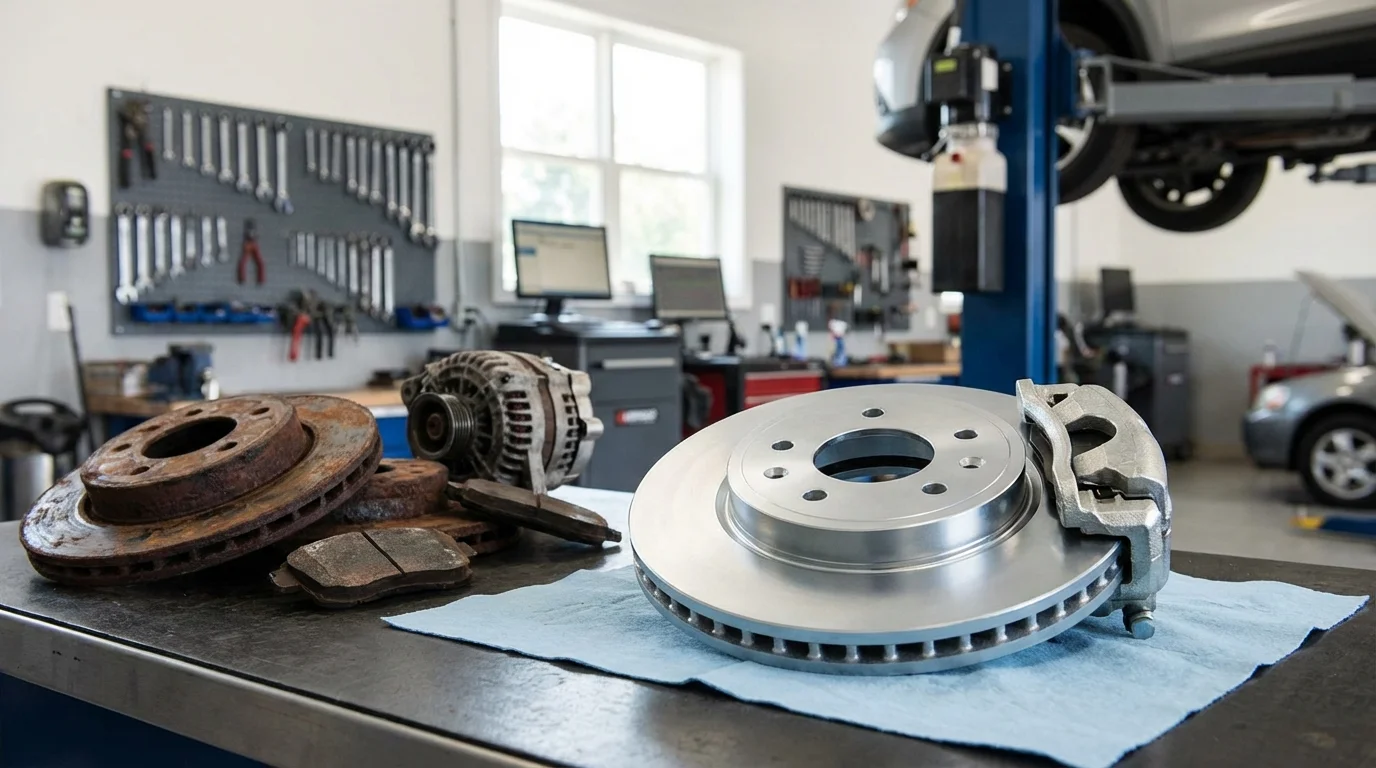
Why We Don’t Accept Used Parts: Our Battle for Quality Repairs
Warranty Protection Is Non-Negotiable
One of the biggest reasons we won’t install customer-supplied parts or used components is our warranty policy. We offer a 3-year or 36,000-mile warranty on all parts and labor. That’s our promise to you. But that promise only works when we control every piece of the puzzle.
If we install a part you brought in and it fails after two months, we can’t cover it. We didn’t source it. We don’t know its history. We can’t stand behind something we have no record of. The repair warranty breaks down completely when we lose control of the parts quality. And honestly, that’s not fair to you — you’d end up paying twice for the same fix.
“A warranty isn’t just a sticker on a box. It’s a promise that the whole repair holds up — every bolt, every seal, every component we put our name on.”
Liability and Insurance: The Real Risk Nobody Talks About
Here’s something most customers don’t think about: legal liability. Our shop runs under a strict liability insurance policy. If we install a part that fails and causes an accident or further damage, our insurance won’t cover a customer-supplied part. We’d be facing the fallout alone — and so would you.
I’ve spoken to other shop owners who got sued over a failed part a customer brought in. Even when it was clearly the part’s fault, the court still held the shop accountable because the mechanic did the installation. According to AutoLeap’s industry guide on customer-supplied parts, in many states, liability cannot be transferred — meaning the repair shop carries the risk even when the customer chooses the part. That’s a risk we simply can’t take. It protects both of us.
The Hidden Dangers of Unverified Parts
Quality Control We Can’t Skip
When we order parts, we use trusted suppliers with strict quality control standards. We know the part fits your exact make and model. We know it passed testing. We know its history because it has none — it’s brand new.
Used parts have no quality check. They might have been sitting in a junkyard for three years. They might have hidden corrosion, worn bearings, or stretched belts that aren’t obvious from looking at them. Even parts that claim to be OEM-quality or direct fit when ordered online often arrive incorrect, incomplete, or poorly manufactured. We return wrong or defective parts from suppliers all the time — and those are new parts. Imagine the headache with used ones.
Did you know?
A report by the U.S. Federal Trade Commission highlighted that consumers face significant challenges around part quality and repairability, making quality-controlled repair shops more critical than ever for vehicle safety and consumer protection.
When a Bad Part Causes More Damage
This is the part that really gets me. I had a customer once — nice guy, trying to save some cash — who wanted us to install a used brake caliper he’d pulled from a friend’s old car. We talked him out of it. A month later, he called to thank us. His friend’s car had the same issue we’d flagged — the caliper was failing. If we’d installed that part, we might have been looking at brake failure on the highway.
A failed part doesn’t just mean inconvenience. It can mean additional vehicle damage, a tow bill, and in the worst cases, a safety risk on the road. The cost of a repair gone wrong is always more than the cost of doing it right the first time. According to the Consumer Reports survey on repair quality, most consumers believe authorized and quality-controlled repair locations provide better parts and workmanship — and that trust is everything.
How We Source Our Parts and Why It Matters
Our Trusted Parts Suppliers and Standards
We don’t just grab parts from the first supplier who picks up the phone. We work with vetted suppliers we’ve tested over years. Our parts sourcing process checks for fitment accuracy, manufacturer certification, and reliability ratings. When a part arrives at our shop, our techs inspect it before it ever goes near your vehicle.
This process takes time and costs more than clicking “buy” on eBay. But it’s the only way to guarantee that what goes in your car is actually going to keep you safe. Every part we install is logged in our system — make, model, part number, supplier, install date. That’s how we back up our repair guarantee with real accountability.
OEM vs Aftermarket: What We Actually Use
We’re not strict “OEM only” people. There are quality aftermarket parts that perform well and are significantly cheaper. The key word is quality. We choose aftermarket parts only when we know the brand, when we’ve seen the part perform well over time, and when the specifications match exactly.
What we never do is guess. A part that’s “close enough” is not the same as a part that fits perfectly. Your car was engineered with tight tolerances — even a millimeter of difference in a brake pad or a suspension component can change how the car handles. That’s not dramatic; that’s just physics.
What This Policy Really Means for You as a Customer
You’re Getting Real Value, Not Just a Bill
I know our policy can feel frustrating, especially when you’ve already bought a part and just want it installed. But here’s what you’re actually getting when you bring your car to us: a full inspection of the repair, the right part sourced for your specific vehicle, professional installation by trained techs, and a warranty that means if something goes wrong — we handle it.
The value isn’t just in the repair. It’s in peace of mind. You drive away knowing the job was done right. You’re not wondering if that used part will hold. You’re not calling us in three weeks because something failed. That’s what quality repair service looks like in practice.
We’d Rather Lose a Sale Than Lose Your Trust
Honestly, some customers walked out when we explained this policy. And that’s okay. We’ve never chased someone down the street begging them to let us do a bad repair. Our shop reputation is built on doing right by the cars and the people we serve — not on booking as many jobs as possible.
Every car that leaves our shop is something we’re proud of. We put our name on it. That’s not a small thing. When you trust us with your vehicle, we feel that responsibility every single day. I’d love to hear from you — have you ever been offered a repair with used parts? What was your experience? Drop your thoughts below.
Conclusion
So there you have it — the full honest reason why we don’t accept used parts or customer-supplied components. It’s not about squeezing money out of you. It’s about liability protection, maintaining our repair warranty, upholding safety standards, and delivering repairs we can genuinely stand behind.
The next time any repair shop tells you they won’t install your used part, they’re probably not being difficult. They’re being professional. And in this industry, those two things look the same from the outside — but they feel very different when your car is safe on the road six months later.
Quality isn’t just a word we put on our sign. It’s the battle we fight every single day — one repair, one part, one customer at a time.
Frequently Asked Questions
Can I bring my own new part to your shop for installation?
Most quality repair shops, including ours, do not install customer-supplied parts — even if they are new. The reason is simple: we can’t verify the part’s quality, confirm it’s the correct fit, or include it in our warranty coverage. If the part fails, you’d be responsible for the repair cost again. We source all parts from trusted suppliers so we can back every repair with our full guarantee.
Are used parts ever safe to use in a car?
In rare cases, a used part in excellent, verified condition from a low-mileage vehicle might be acceptable. However, without proper quality control and inspection, it’s impossible to know a used part’s real history. Hidden wear, metal fatigue, or internal damage can cause the part to fail without warning. We don’t take that chance with your safety.
Why are repair shops responsible if a customer’s part fails?
This is about legal liability. In many states across the U.S., the mechanic who installs a part is legally responsible for the result — even if the customer supplied that part. Our insurance policy does not cover failures from customer-supplied parts, which means both you and our shop could be left without protection if something goes wrong.
Does using shop-supplied parts really cost more?
It might seem that way upfront. But when you factor in the warranty coverage, the correct fitment guarantee, and the cost of a repeat repair if a cheap or used part fails — shop-supplied parts almost always save you money in the long run. A repair done once, done right, is cheaper than the same repair done twice.
What’s the difference between aftermarket and used parts?
Aftermarket parts are brand new components made by a company other than your vehicle’s original manufacturer. They are new and often come with their own warranty. Used parts are second-hand pieces taken from another vehicle. The quality and remaining lifespan of used parts are unknown, which is why we only use new parts — OEM or quality-certified aftermarket — in every repair we perform.