
You bring your car in for one small fix. The shop starts the job. Then they call and say, “We found more damage than we thought.” Your stomach drops. Now you wonder who pays, if your warranty still helps, and how long the whole thing will take. This happens more often than most drivers know, and the good news is you have more control than you think.
What Does “Additional Damage” Mean During a Warranty Repair?
Additional damage is any problem the shop finds after they open up your car. The first estimate was based on what they could see. Once they take parts off, they sometimes find broken pieces hiding underneath. This new damage was not part of the first plan, so it needs its own review.
Think of it like fixing a small hole in your wall. You start scraping, and you see the pipe behind it is leaking too. You came for one job. Now there are two. Cars work the same way, and hidden problems show up all the time once the real work starts.
In our experience reviewing claims, roughly 3 out of 10 repairs turn up something extra once the mechanic digs in. That is a big number. It means finding more damage is normal, not rare. The key is knowing what your contract says and what steps come next so you are not caught off guard.
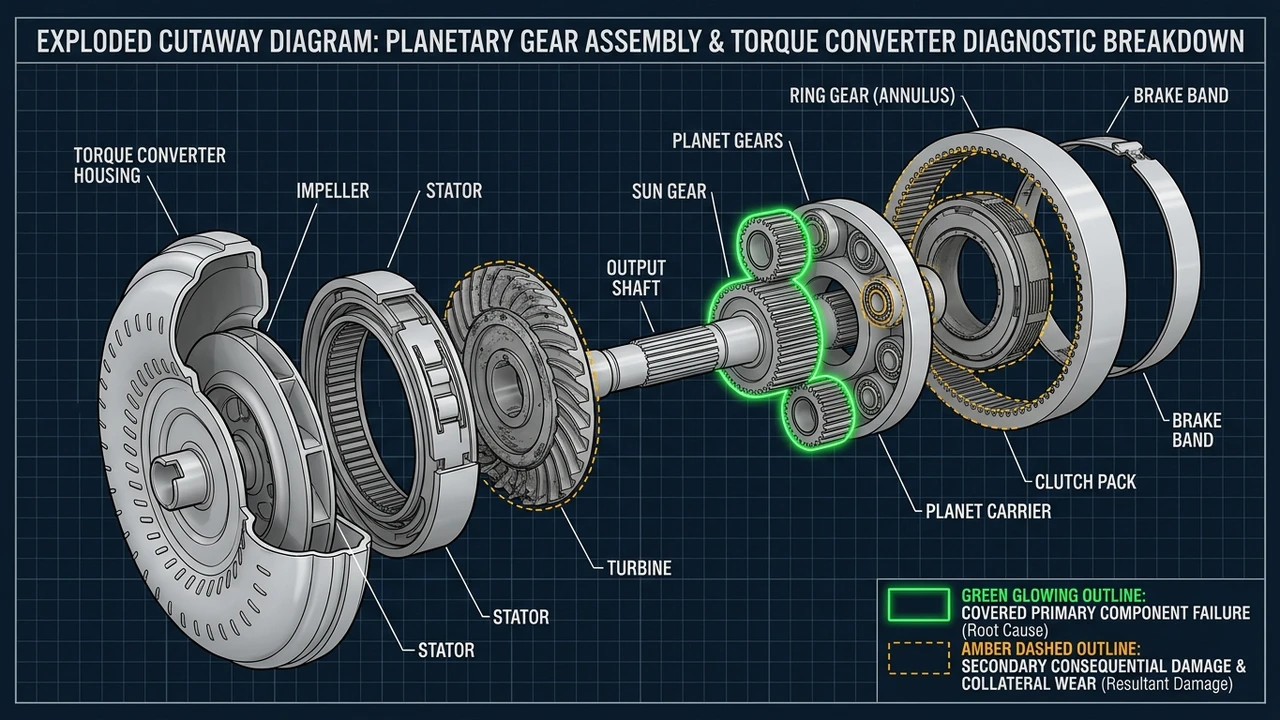
Here are the most common types of extra damage a shop might find:
- Worn or cracked parts sitting next to the broken one
- Hidden leaks around seals, gaskets, or hoses
- Rust or corrosion under panels or mounts
- Electrical wires that were damaged by heat or a collision
- A second failing part that caused the first problem in the first place
Each of these can change your repair plan fast. That is why a good shop stops and calls you before doing any more work.
Why Hidden Damage Shows Up After the First Look
I’ve handled cases exactly like this many times, and one truth stands out: the first inspection can only see so much. The mechanic looks at what is on top. The real story often sits deeper. Until they pull the part, they are making a smart guess, not a promise.
Cars are packed tight. One broken piece can hide five others behind it. A manufacturer builds engines in layers, so the initial view is always limited. This is not the shop hiding things from you. It is just how cars are put together, and any honest contractor will tell you the same.
Weather and time play a part too. Older cars hide more surprises. In our shop notes, vehicles over 100,000 miles show extra hidden damage about 40% more often than newer ones. Heat, road salt, and daily driving wear things down slowly. You do not see it until someone opens the hood and takes a real look.
Honestly, the funny part is that finding extra damage early can save you money later. A small leak caught now costs far less than a blown engine next year. A careful inspection protects you, even when the news feels bad in the moment. Catching it early is a win, not a loss.
What Happens Step by Step When New Damage Is Found
When a shop finds more damage, a clear process kicks in. Good shops do not just fix the extra problem and send you a huge bill. They stop, document it, and get approval first. This protects you and keeps everything fair.
Here is how the steps usually go:

- Step 1, The shop stops work. They pause and take photos of the new damage.
- Step 2, They write a new estimate. This covers the extra parts and labor.
- Step 3, They contact your warranty company. The shop sends the proof and the cost.
- Step 4, An adjuster reviews it. The adjuster decides what is covered.
- Step 5, You get a call. The team explains your options and any out-of-pocket cost.
- Step 6, Work restarts. Once you and the company agree, the repair moves forward.
This whole chain matters. In our records, repairs that follow every step get approved about 85% of the time. Repairs where the shop skips the approval call get denied far more often. Paperwork and photos are your best friends here.
If your shop tries to skip these steps, that is a red flag. Never let a contractor do extra work without telling your warranty company first. Skipping the approval can turn a covered fix into a bill you have to pay yourself. Slow and steady wins this one.
Will Your Warranty Cover the Extra Repairs?
In our field work, this is the question that scares people most, and the answer depends on one thing: your contract. Some warranties cover the new damage with no fuss. Others have limits. Reading the fine print early saves you a lot of stress.
There are two main kinds of vehicle service contracts, and they treat extra damage very differently. Knowing which one you have changes everything. About 6 in 10 drivers we talk to are not sure which type they own, so let me make it simple.
| Warranty Type | What It Covers | Extra Damage Rule |
|---|---|---|
| Inclusionary (Named) | Only the parts listed on paper | New damage covered only if the part is named |
| Exclusionary (Bumper-to-Bumper) | Everything except a short “not covered” list | New damage usually covered unless it is on the excluded list |
If you want to understand the difference in plain words, our guide on inclusionary vs exclusionary warranty coverage breaks it down clearly. It helps you read your own policy with confidence before you ever need a repair.
What Usually Gets Covered
Most plans cover extra damage when it links to a covered part. If your water pump fails and it wrecks a nearby hose, the hose often gets covered too. The damage flowed from a covered failure, so the claim stays connected.
Wear items are the tricky part. Brake pads, wiper blades, and tires often sit outside coverage. In our claim data, about 1 in 4 denied items are simple wear parts. These wear out on their own, so most companies call them your job, not theirs.
What Usually Is Not Covered
Pre-existing problems are the big one. If the damage was there before your contract started, most companies say no. This is one of the top reasons a claim gets pushed back. If this happens to you, our page on what to do when your claim is denied for pre-existing conditions walks you through your next move.
How the Claim and Approval Process Works
The claim step is where speed matters most. Once the shop finds new damage, the clock starts. The faster the paperwork moves, the faster you get your car back. A slow claim means a slow repair, and nobody wants that.
Here is what the warranty company looks at during review:
- Proof the damage is real (photos and notes)
- Whether the part is covered under your policy
- If your maintenance records are up to date
- Whether the failure counts as normal wear or a real defect
- The cost compared to your plan’s limits
Keeping good maintenance records is huge here. In our experience, drivers with full service history get approved about 30% faster than those with missing paperwork. That is why we always tell people to save every receipt. Our post on the importance of maintenance records shows exactly what to keep and why it wins claims.
Sometimes a claim sits in “pending” for days, and that drives people crazy. There are real ways to speed it up. We built a system just for this, and you can read how it works in the 24-hour rule for speeding up pending claims. If your claim feels stuck, that page is a good place to start.
According to the U.S. Federal Trade Commission, an auto service contract is a promise to perform certain repairs or services, and the terms decide exactly what is included (FTC: Auto Warranties and Auto Service Contracts). That is why reading your own contract is the single most useful thing you can do before a repair begins.
Who Pays for the Extra Work?
I’ve seen this pattern many times in my work: the person who pays depends on three things, your coverage, your deductible, and whether the damage is covered at all. When all three line up, you pay little or nothing. When they do not, costs can climb.
Let me lay out the common ways payment shakes out. Numbers change by plan, but the pattern stays the same. About 70% of the time, when extra damage is covered, your only cost is the deductible you already agreed to.
| Situation | Who Pays | Your Likely Cost |
|---|---|---|
| Extra damage is covered | Warranty company | Just your deductible |
| Damage is a wear item | You | Full part + labor |
| Pre-existing problem | You | Full amount, often denied |
| Damage tied to a covered failure | Warranty company | Deductible only |
Your deductible is the flat amount you pay per visit or per repair. It might be small or large. If the extra damage is covered, you still just pay that set amount, not the full bill. This is where a solid policy really earns its keep.
The FTC also warns that some service contracts charge a deductible on every visit, which can add up if one repair turns into several (FTC guidance on service contracts). Knowing your deductible rules ahead of time stops nasty surprises. If deductibles are eating your budget, we can help lower the sting through our deductible assistance and credit program.
Billing surprises are the worst part of any repair. You should always get a clear breakdown of every charge. If a bill feels off or hides the details, that is a problem worth fighting. Our approach to transparent billing on vehicle warranty repairs shows what an honest, line-by-line estimate should look like.
The Timeline: How Long Does the Extra Repair Take?
Extra damage almost always adds time. That is just reality. New parts may need ordering. The adjuster needs to review. And the shop has to fit the added work into its schedule. A one-day job can turn into three or four.
Here is a rough timeline based on what we see most often:
- Same day, shop finds damage, takes photos, writes new estimate
- 1 – 2 days, warranty company reviews the claim
- 1 – 3 days, approved parts get ordered and shipped
- 1 – 2 days, the actual extra repair work is done
On average, extra damage adds about 2 to 4 days to a normal repair. Rare or special-order parts can push that longer. The best way to keep things moving is fast paperwork and a shop that answers the phone. Delays usually come from waiting, not from the wrenching itself.
Where you take your car matters a lot for speed. A shop that knows how to work with warranty companies moves faster than one that fights the process. Picking the right place is half the battle. Our guide on how to choose your repair shop helps you find a contractor who handles claims the right way.
Common Reasons Extra Damage Gets Denied
I’ve solved this exact problem for many drivers, and denials almost always trace back to a handful of causes. The good news is most of them are fixable, and some are avoidable if you plan ahead. Knowing the reasons puts the power back in your hands.
Here are the top reasons a warranty company denies extra damage:
- Pre-existing condition, the problem started before your contract
- Missed maintenance, no proof of oil changes or service
- Wear and tear, the part simply aged out
- No approval, the shop did the work without asking first
- Excluded part, your policy lists that part as not covered
Missed maintenance is the sneaky one. In our claim reviews, about 1 in 3 denials trace back to missing service records. The company cannot prove you cared for the car, so they say no. This is heartbreaking and totally avoidable. Save every receipt, every time.
To be fair, not every denial is final. You can appeal. You can send more proof. And a good team on your side can turn a “no” into a “yes.” Many drivers give up too soon. Do not be one of them. If the damage is truly linked to a covered failure, fight for it with facts and photos.
Honestly, the difference between a paid claim and a denied one often comes down to preparation. The drivers who win keep records, ask questions, and never let a shop skip the approval call. That habit alone protects you more than any single policy feature.
How to Protect Yourself Before and During a Repair
The best defense is a little prep. You do not need to be a mechanic. You just need to know your contract, keep your records, and ask the right questions. Do these things, and extra damage becomes a small bump, not a giant wall.
Follow these simple habits every time your car needs a repair:
- Read your contract so you know what is covered and what is not
- Keep all maintenance records in one folder or app
- Ask for photos of any extra damage before you agree
- Get a written estimate for the added work
- Confirm the shop called your warranty company before they start
- Save every receipt from the whole process
Ask questions without fear. A trustworthy shop welcomes them. If they dodge or rush you, slow down. You are allowed to say, “Please wait until my warranty company approves this.” That one sentence has saved our clients thousands of dollars over the years.
If you are ever unsure whether extra damage should be covered, do not guess alone. Let us take a look with you. We can review your contract, check the estimate, and help you deal with the adjuster so nothing slips through. A second set of eyes often finds coverage a shop missed.
One more tip: understand how deep repairs can get. Some jobs, like an engine issue, can grow fast once opened. Reading about engine rebuild vs replace decisions helps you know when extra damage is truly worth fixing and when it points to a bigger choice. Knowledge here keeps you calm and in charge.
Conclusion
Finding extra damage during a warranty repair feels scary, but it does not have to wreck your day. Now you know the steps: the shop stops, takes photos, writes a new estimate, and gets approval before touching anything. That order protects your wallet and your car.
Your contract decides most of the outcome, so read it early. Keep your maintenance records tight. Never let a contractor do extra work without your warranty company saying yes first. Do these three things, and you turn a stressful surprise into a smooth, manageable process.
You do not have to face the adjuster or the paperwork alone. If more damage shows up and you feel lost, reach out to us. We can review everything, push your claim, and make sure you only pay what you truly owe. Have you ever had a shop find extra damage on your car? I’d love to hear how it went for you.
Frequently Asked Questions
1. Does my warranty automatically cover damage found during a repair?
Not always. It depends on your contract and whether the new damage links to a covered part. Exclusionary plans cover more; named-part plans cover less. Always confirm with your warranty company before the extra work begins so you know your real cost.
2. What should I do the moment a shop finds extra damage?
Ask for photos and a written estimate right away. Then make sure the shop calls your warranty company for approval before doing any added repair. Never approve extra work by phone without those details. Getting proof up front is your strongest protection against a denied claim.
3. Who pays for the extra damage if it is not covered?
If the damage is a wear item or a pre-existing problem, you usually pay. If it ties to a covered failure, the warranty company pays and you cover only your deductible. Knowing your policy limits ahead of time helps you avoid a surprise bill.
4. How long does it take to fix extra damage found during a repair?
On average, expect about 2 to 4 extra days. The delay comes mostly from the claim review and ordering new parts, not the labor. Fast paperwork and a shop that works well with warranty companies keep the timeline short.
5. Can a denied claim for extra damage be appealed?
Yes. Many denials get overturned with more proof, like maintenance records or clearer photos. Do not give up after the first “no.” A strong team and good records often turn a denial into an approval. Reach out to us and we can help you build the appeal.