Why you can choose your repair shop is something most car owners never find out until they overpay for years. You buy a car, the dealer smiles and says “bring it back here for everything,” and you do. Because you are afraid of losing your warranty. But the truth is, federal law is completely on your side. You do not have to go back to the dealer. And knowing this one fact could save you hundreds of dollars every single year.
The Big Myth Dealers Are Counting On
Here is what a lot of dealers quietly hope you never find out: in most situations, you do not need them at all.
The myth goes like this. If your car is still under warranty, you must take it to the dealer for oil changes, tire rotations, brake jobs and every other service. If you go anywhere else, your warranty is gone. Poof.
This is not true. But dealers do very well when car owners believe it.
I have a friend who paid dealer prices for four years on a car she thought she had no choice about. Oil changes at twice the price of a local shop. Brake pads are nearly double. She had no idea she was free to go anywhere the whole time. When I told her, she was genuinely upset. Not at me. At the system that kept her uninformed.
What Car Owners Are Really Afraid Of
The fear behind all of this is simple and very reasonable. Nobody wants to spend $400 on a warranty claim and then get told it is not covered because they went to the wrong shop.
New cars are not cheap. A powertrain warranty or a full manufacturer’s warranty feels like a safety net you cannot afford to lose. So when a dealer hints that using another shop might cost you that safety net, you stay in line.
But fear based on misinformation is just that. Once you see the real law, the fear disappears.
The Federal Law That Gives You the Right to Choose
This is the part that changes everything. There is an actual federal law protecting your right to choose any repair shop you want. It has been around for fifty years. And it is actively enforced today.
What the Magnuson-Moss Warranty Act Actually Says
The Magnuson-Moss Warranty Act was signed into law by the U.S. Congress in 1975. It was created specifically to stop manufacturers from using unfair warranty terms against regular buyers like you and me.
Under this law, a manufacturer or dealer cannot void your warranty simply because you had your car serviced at an independent repair shop. They also cannot avoid it just because you chose quality aftermarket parts instead of the dealer’s own parts.
The key rule is this: the dealer must prove that the independent shop or the aftermarket part directly caused the failure they are refusing to cover. They cannot point at a shop stamp on your receipt and say that is enough reason. The burden is on them, not you.
This is confirmed directly by the Federal Trade Commission (FTC), which enforces the law. According to FTC, it is illegal for any company to void your warranty just because you used a third-party service or part.
What the FTC Confirms About Your Rights
The FTC is not quiet about this. In July 2024, the agency sent formal warning letters to eight companies for practices that were hurting consumer repair rights. The FTC’s Director of the Bureau of Consumer Protection stated clearly that “restricting consumers’ right to repair violates the law.”
The FTC has gone further than just letters. They have taken legal action against major companies for illegal warranty restrictions, including well-known motorcycle and outdoor equipment brands.
So this is not a gray area. It is a settled, enforced law. You have the right to choose your repair shop. Full stop.
When You Actually Do Need the Dealer
Okay, let’s keep it real. There are times when going to the dealer is absolutely the right move. Knowing when those times are makes you a smarter car owner.
Recalls and Warranty-Covered Repairs
If your car has an open safety recall, the dealer is the only right answer. Recall repairs are 100% paid by the manufacturer. They cost you nothing. There is simply no reason to pay for something the manufacturer owes you for free.
The National Highway Traffic Safety Administration (NHTSA) keeps this database updated, and it takes about 30 seconds to check.
Also, if something breaks that is clearly covered under your active new car warranty, go to the dealer and use it. That is exactly what it is there for. Don’t let pride or habit make you pay for something you are already entitled to for free.
Software Updates and Manufacturer Campaigns
Some newer vehicles need programming that only the dealer can access. This includes things like immobilizer modules, locked electronic control units (ECUs) and specific manufacturer software campaigns that require direct access to the brand’s own systems.
A good independent shop will tell you honestly when a job needs the dealer’s tools. Most reputable shops are upfront about this. It is not a weakness to say “this one needs the dealer.” It is actually a sign of a trustworthy shop that puts your car first.
Why Independent Repair Shops Are Often the Better Choice
Once you know you are free to choose, the next question is obvious: why would you choose an independent shop over a dealer for regular maintenance and repairs?
They Usually Charge Less for the Same Work
The difference in price is real. Dealership service departments carry high overhead costs. They pay for large buildings, big staffs, loaner car programs and brand-name marketing. Those costs go into your service bill.
A local ASE-certified mechanic or a trusted independent repair shop runs leaner. Their pricing reflects that. For routine jobs like oil changes, tire rotations, brake pad replacements, belt replacements and fluid checks, you will almost always pay less at a good independent shop.
And the quality? According to Car Talk, there is no routine maintenance job that a skilled mechanic at a good shop cannot do just as well as a dealer. The work is the same. The price is not.
You Often Get More Personal Service
There is a real difference in how you are treated. Independent repair shops depend on repeat customers and personal referrals. If they do poor work or treat you badly, word spreads and they lose business. They have a strong reason to take care of you.
At a dealership, you are often just a service ticket number in a queue. At a good local shop, the mechanic may come out to your car, point to the issue themselves and explain what happened in plain everyday language. That kind of personal attention is rare at a busy dealership. Honestly, once most people experience it, they don’t want to go back.
How to Keep Your Warranty Safe at Any Shop
Using an independent repair shop is absolutely your right. But you want to do it in a way that fully protects you if a dealer ever challenges a warranty claim. These two steps do the job.
Keep Records of Every Service
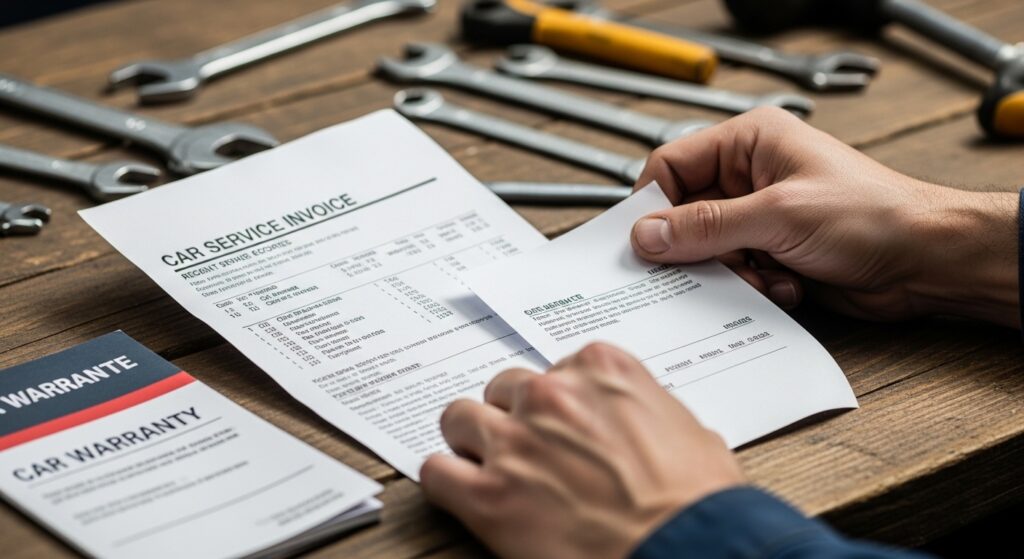
This is the single most important thing you can do. Every time your car gets serviced, anywhere, keep the receipt. Keep the invoice. Note the date and the mileage driven.
If a dealer ever tries to refuse a warranty claim, your service records prove you maintained the car properly. A printed invoice from an independent shop showing the date, mileage and work performed is completely valid documentation.
The FTC itself advises keeping all service records no matter who does the work. This includes oil changes, tire rotations, belt replacements and inspections.
Use Quality Parts and Ask for Documentation
You do not need OEM parts from the dealer. Quality aftermarket parts are fully protected under the Magnuson-Moss Warranty Act. Just make sure the parts used are good quality. Ask the shop to note the part brand on your invoice.
This matters because if a dealer ever claims a part caused a problem, you want proof that proper quality parts were installed. An invoice with specific part brands listed is strong evidence in your favor.
Also, look for shops with ASE-certified technicians. The National Institute for Automotive Service Excellence (ASE) certifies mechanics who pass tough skill-based tests. Choosing a certified shop is smart and gives you one more layer of protection and peace of mind.
Conclusion
Why you can choose your repair shop is no longer a question without an answer. The Magnuson-Moss Warranty Act gives you clear legal protection. The FTC enforces it. And the law has been around for fifty years for exactly this reason.
You do not have to stay loyal to your dealer out of fear. You can save money. You can find shops that treat you with real care and respect. You just need to keep smart records, use quality parts and know the handful of situations where a dealer visit truly makes sense.
Your car is yours. Your choice of where to fix it is yours. The law agrees with you completely.
Frequently Asked Questions
Can a dealer really void my warranty if I use an independent shop?
No. Under the Magnuson-Moss Warranty Act, a dealer cannot void your warranty just because you used a different shop. They can only deny a specific repair claim if they can prove that the independent shop or a part it used directly caused the problem. The burden of proof is on them.
Do I need to use OEM parts to keep my warranty valid?
No. You can use quality aftermarket parts and your warranty stays in place. The law says the manufacturer must show that the aftermarket part directly caused the failure before they can deny a claim. Simply using non-dealer parts is not enough reason to deny coverage.
When should I go back to the dealer instead of an independent shop?
Go to the dealer for safety recalls since these are free repairs paid by the manufacturer. Also use the dealer for repairs clearly covered under your active new car warranty and for jobs that need manufacturer-specific software or locked programming that independent shops cannot access.
What records do I need to keep when using an independent shop?
Keep every receipt and invoice from every service visit. Make sure each one notes the date, the mileage and the specific work performed. Also note the parts used and their brand. These records protect your warranty rights if a dealer ever questions your maintenance history.
What can I do if a dealer tries to void my warranty unfairly?
Start by speaking to a supervisor at the dealership. Then contact the vehicle manufacturer directly. If they still refuse to honor a valid claim, you can file a complaint with the Federal Trade Commission (FTC). The FTC takes these complaints seriously and has taken legal action against companies that violate this law.