
You buy a car, sign a stack of papers, and get handed a warranty. You think you’re covered — until something breaks and the repair shop tells you it’s not on the list. That moment of confusion is exactly why understanding the difference between an inclusionary warranty and an exclusionary warranty matters so much. Let’s break it all down in plain, simple language so you never get caught off guard again.
What Is an Inclusionary Warranty?
How Inclusionary Coverage Actually Works
An inclusionary warranty also called a stated component warranty or listed component coverage only covers the parts that are written down in your contract. That’s it. If a part is not on that list, it is not covered. Simple as that.
Think of it like a menu at a restaurant. You only get what’s on the menu. If you want something that’s not listed, you’ll have to pay for it yourself.
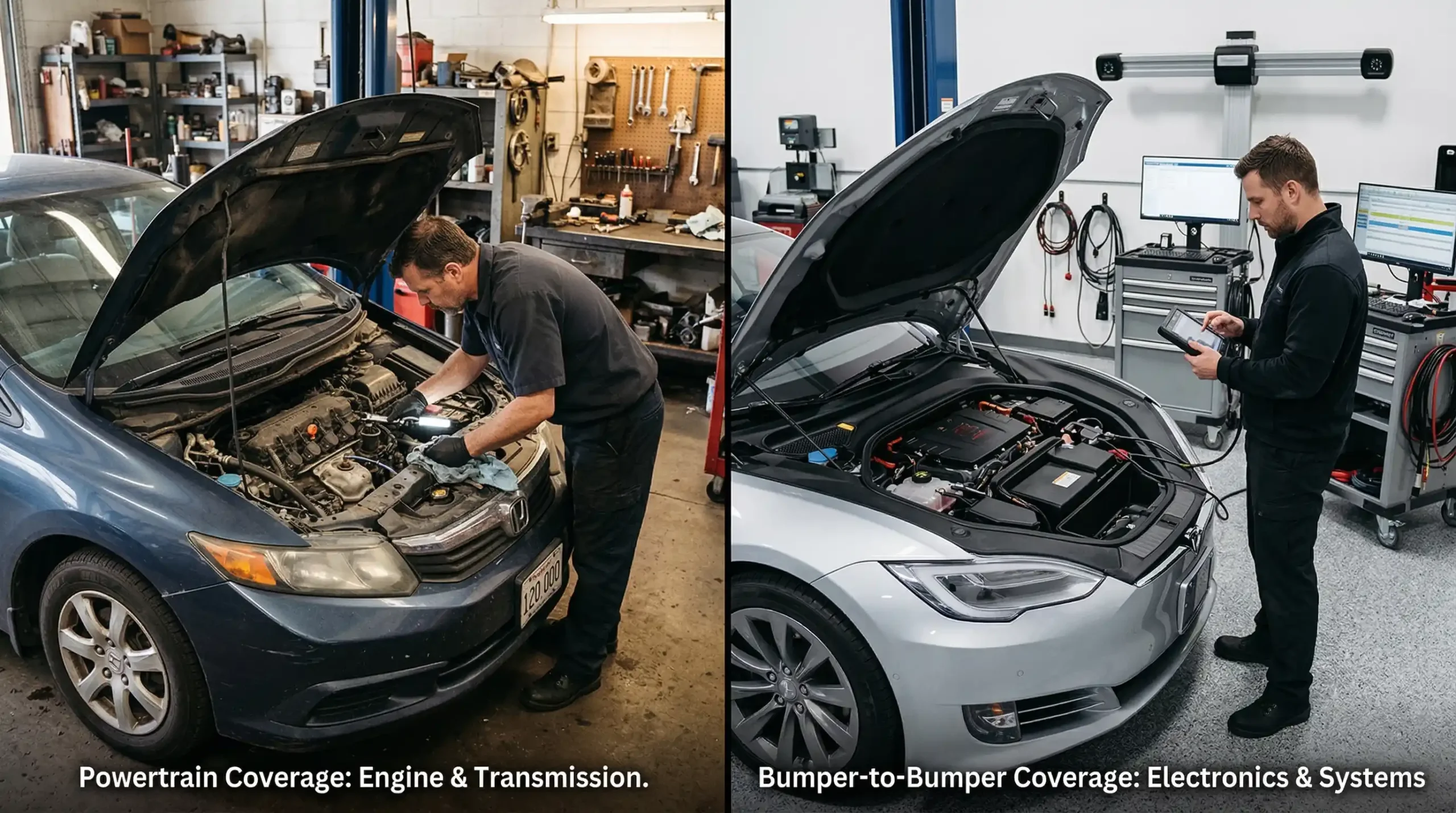
The most basic type of inclusionary coverage is a powertrain warranty. This covers the big parts that make your car move the engine, transmission, and driveshaft. There are also powertrain-plus and comprehensive stated component plans that cover a little more, but they still work the same way: only listed parts are protected.
Who Should Choose an Inclusionary Plan?
Honestly, if you drive an older car with high mileage, an inclusionary plan might make more sense for your wallet. These plans are almost always cheaper than exclusionary warranties. I’ve seen people in their 60s paying for exclusionary coverage on a 15-year-old car and that math rarely works out.
If you just need basic peace of mind on a used vehicle and don’t want to spend a lot each month, stated component coverage can do the job. Just read that list very carefully before you sign.
According to ConsumerAffairs, powertrain warranties typically cost around $600 to $750 per year much less than a full exclusionary plan.
What Is an Exclusionary Warranty?
The “Cover Everything Except” Approach
An exclusionary warranty works the other way around. Instead of listing what is covered, it lists what is not covered. Everything else? Covered.
This is sometimes called a bumper-to-bumper warranty because it covers almost everything from the front bumper to the back bumper of your car. You might also see it called a comprehensive warranty, a Platinum plan, or a Diamond plan depending on the company.
I once had a friend who got a huge repair bill because her air conditioning compressor died. She had an inclusionary plan that only covered her engine and transmission. If she had an exclusionary policy, that fix would have been covered with no questions asked.
What Gets Left Out of Exclusionary Plans?
Even the best exclusionary warranty doesn’t cover everything. The parts that are typically left out are things like:
Routine maintenance items oil changes, filter replacements, wheel alignments. These are things you’re expected to do yourself as a car owner.
Wear-and-tear parts brake pads, tires, wiper blades, clutch discs. These parts wear out over time, and that’s considered normal use.
Cosmetic damage scratches, dents, or torn seat fabric. Warranties are for mechanical failure, not looks.
Accident or weather damage that’s what your auto insurance is for.
Inclusionary vs. Exclusionary Warranty: Key Differences
A Side-by-Side Comparison
Here’s a quick look at how the two types of vehicle service contracts compare:
| Feature | Inclusionary Warranty | Exclusionary Warranty |
| What’s covered | Only listed parts | Everything except listed exclusions |
| Cost | Lower (~$600–$750/year) | Higher (~$1,000+/year) |
| Best for | Older or high-mileage cars | Newer or valuable vehicles |
| Coverage depth | Basic to moderate | Comprehensive |
| Easy to understand? | Can be confusing (long lists) | Simpler (short exclusion list) |
The two biggest differences are cost and scope of coverage. Both types of plans cover breakdowns and give you peace of mind, but how much they cover is very different.
Reading the Fine Print: What to Look For
This is where most people get confused and honestly, it’s not their fault. Warranty contracts are full of legal words and long sentences. But there are a few things you should always check before signing anything.
First, look for the exclusion list. If it’s a short list, you likely have an exclusionary plan. If it’s a long list of specific covered parts, it’s inclusionary coverage.
Second, check if the warranty company pays the mechanic directly or if they reimburse you later. Being reimbursed means you have to pay out of pocket first and then wait which is not always easy to handle.
Third, look at whether you can go to any certified auto shop or only to certain authorized repair facilities. Some dealership warranties tie you to specific locations, which can be a problem if you break down far from home.
Powertrain vs. Bumper-to-Bumper: Real-World Scenarios
When an Inclusionary Plan Is the Smarter Pick
Let me paint you a picture. Say you have a 2013 sedan with 120,000 miles on it. You paid $7,000 for it. Does it make sense to spend $1,200 a year on an exclusionary extended warranty? Probably not.
In a case like that, a basic powertrain coverage plan at $650 a year covers the most expensive parts to fix your engine and transmission. If either of those breaks, you’re looking at thousands of dollars. The inclusionary plan makes financial sense here.
When an Exclusionary Plan Is Worth Every Penny
Now imagine a newer car say a 2021 model with lots of electronic systems, sensors, and tech features. If the fuel injection system fails or the electrical system acts up, repairs can cost $2,000 to $4,000 easily. An exclusionary warranty would cover all of that.
According to a study published by Consumer Reports, car owners who buy extended warranties for newer vehicles often get more value from their plan when those vehicles have complex electronic components that are expensive to repair.
The funny part is most people I know skip the warranty section when buying a car. Then six months later, they’re calling me asking how to fight a repair bill. Don’t be that person. Read it now.
Tips for Choosing the Right Warranty Coverage
Questions to Ask Before You Buy
Before you sign a vehicle service contract, ask these simple questions:
Is this an exclusionary or inclusionary plan? Always ask this directly. Some salespeople use fancy words like “comprehensive” or “premium” without telling you which type it is.
What is on the exclusion list? Get the full list in writing. Don’t accept vague answers.
Who administers the plan? If the company selling the warranty is not the one paying out claims, they’re a middleman. That can cause delays and problems when you make a warranty claim.
Can I pick my own repair shop? Third-party extended warranty providers usually let you go anywhere. Dealer warranties often don’t.
How to Avoid Common Warranty Traps
One of the biggest traps is buying a plan and then doing something that voids the warranty like getting work done by an uncertified mechanic or skipping scheduled maintenance. Most warranty contracts are very strict about this.
Another trap is not checking if the company pays the mechanic directly. If you have to pay $3,000 upfront and wait 30 days for reimbursement, that’s a cash flow problem even if you’re eventually paid back.
Also, always check if the company offers add-ons like roadside assistance, rental car reimbursement, towing coverage, and trip-interruption benefits. These extras can make a big difference when something goes wrong at the worst possible time.
Conclusion
Understanding the difference between an inclusionary warranty and an exclusionary warranty is not just useful it can save you real money. An inclusionary plan lists what it covers and keeps costs low. An exclusionary plan covers almost everything except a short list, giving you more protection but at a higher price.
The right choice depends on your car’s age, your budget, and how much risk you’re willing to take. If you have a newer, more complex car and want real peace of mind, go with an exclusionary plan. If you have an older car on a tight budget, an inclusionary powertrain plan might be all you need.
Whatever you choose, read the fine print. All of it. That contract is your protection, and the words in it matter more than the salesperson’s pitch. I’d love to hear your thoughts. Have you ever had a surprise repair that your warranty didn’t cover? Drop a comment below.
Frequently Asked Questions (FAQs)
What is the main difference between an inclusionary and exclusionary warranty?
An inclusionary warranty only covers the parts that are specifically listed in your contract. An exclusionary warranty covers almost everything except the parts that are listed as exclusions. In short, one tells you what it covers; the other tells you what it doesn’t cover.
Is an exclusionary warranty better than an inclusionary one?
An exclusionary warranty usually offers more comprehensive coverage, making it better for newer or more valuable vehicles. But “better” depends on your situation. If you have an older, cheaper car, an inclusionary plan may save you money while still covering the most important parts.
How much does an exclusionary warranty cost compared to an inclusionary one?
Exclusionary warranties can cost $1,000 or more per year. Inclusionary plans like powertrain coverage are typically around $600 to $750 per year. The price difference reflects the much wider scope of coverage in an exclusionary plan.
What does an exclusionary warranty not cover?
Even an exclusionary warranty has limits. It usually does not cover routine maintenance (like oil changes), wear items (like brake pads and tires), cosmetic damage, or damage caused by accidents, weather, or misuse. Always check the exclusion list carefully.
Can I switch from an inclusionary to an exclusionary warranty?
That depends on your warranty provider. Some companies allow you to upgrade your vehicle service contract before it expires. It’s worth calling your provider and asking directly. Just make sure any new plan is clearly written, reviewed in full, and that you understand what changes in your coverage level.