
Your car starts acting strangely. Maybe it feels slow. Maybe the gas runs out faster than before. Or you hear a rough sound when it idles. You wonder, “Do I need a tune-up?” But then you ask yourself, what does an engine tune-up actually include? That one question stops a lot of people from knowing when to go to the shop and what to expect when they get there.
What Is an Engine Tune-Up? (And What It Used to Mean)
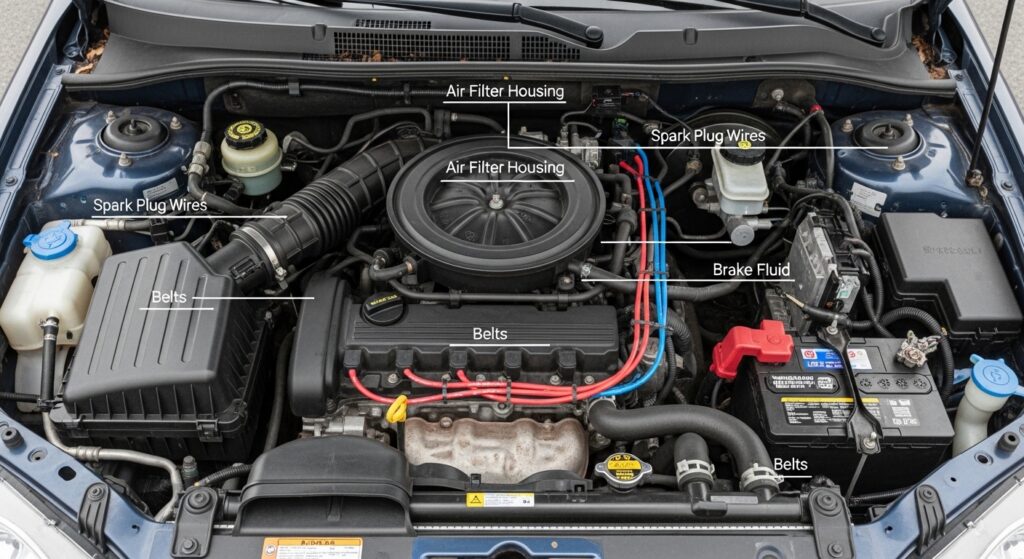
A long time ago, a tune-up was a big deal. Mechanics had to adjust the carburetor, set the ignition timing by hand, and swap out the distributor cap, rotor, and breaker points every few thousand miles. It was almost like tuning a musical instrument, where everything had to be perfectly in sync.
Today, cars are much smarter. Modern vehicles have onboard computers that handle most of that work automatically. So when someone says “engine tune-up” now, they really mean a set of routine checks and part replacements that keep your car running its best.
Honestly, the word “tune-up” is kind of a holdover from the old days. But walk into any auto shop and say you need a tune-up, and the technician will know exactly what to do.
How the Modern Tune-Up Changed Over Time
Back in the 1950s and 1960s, cars needed tune-ups every 5,000 miles or so. That was just the reality of older mechanical ignition systems.
Then electronic ignition arrived in the 1970s. Fewer parts to replace. Longer gaps between services. By the 1990s, fuel injection and computer-controlled engines took over. Now, a modern car with iridium spark plugs can sometimes go up to 100,000 miles before needing major ignition work.
The tune-up did not go away. It just changed shape.
The Core Parts Checked in Every Engine Tune-Up
So what does an engine tune-up actually include? Here is what most shops will look at during a standard service.
Spark Plugs
This is the heart of any tune-up. Spark plugs create the tiny spark that ignites the fuel inside your engine. Over time, they wear down, get coated in carbon deposits, or simply stop firing correctly. When that happens, you get engine misfires, rough idling, and poor fuel economy.
I remember when a friend of mine kept complaining his car felt “lazy.” Turns out, his spark plugs had not been changed in over 80,000 miles. One plug replacement session later, he said his car felt brand new. That is what a worn spark plug can hide from you.
Depending on your vehicle, you may have copper, platinum, or iridium spark plugs. Copper plugs may need replacing every 20,000 to 30,000 miles. Iridium plugs can last up to 100,000 miles or more.
Ignition Wires and Coil Boots
Spark plug wires carry the electrical signal from the ignition coil to each spark plug. If these crack or break down, the spark gets weak. Weak sparks mean wasted fuel and sluggish acceleration.
Many newer cars use coil-on-plug setups, which means there are no traditional wires. Instead, there are coil boots sitting right on top of the plug. These still need to be checked for damage during a tune-up.
Air Filter
Your engine needs clean air to run. The engine air filter keeps dust, dirt, and debris out of the engine. A clogged filter cuts off airflow and makes the engine work harder than it should.
This one is simple and cheap to replace. Yet many people skip it. A dirty air filter alone can drop your fuel efficiency noticeably.
Fuel Filter and Fuel System
The fuel filter keeps dirt and rust out of your fuel before it reaches the engine. Over time, it gets clogged and chokes the fuel flow.
During a tune-up, a technician may also clean the fuel injectors and the throttle body. Built-up grime in these parts makes the engine stutter, hesitate, or idle roughly.
PCV Valve
The PCV (Positive Crankcase Ventilation) valve controls pressure inside the engine. A bad PCV valve can cause oil leaks and pressure buildup. It is a small part but one that matters a lot.
Belts and Hoses
Drive belts and serpentine belts power your air conditioning, power steering pump, water pump, and alternator. If a belt snaps while you are driving, your car stops working fast.
Hoses carry coolant and other fluids through the engine. Cracks or soft spots in hoses can lead to leaks and overheating.
A tune-up is a good time to check these before they fail on you.
Fluids Checked During a Tune-Up
A tune-up is also a good moment to check all your engine fluids. These include engine oil, coolant, power steering fluid, brake fluid, and transmission fluid. Low or dirty fluid can cause serious engine damage over time.
Some shops will top these off. Others will flag them and let you decide if you want to go ahead with a change. Either way, you want to know where your levels stand.
Signs Your Car Needs an Engine Tune-Up Right Now
You do not always have to wait for a set mileage number. Sometimes your car tells you it needs help. Here are the signs to watch for.
This is the most obvious signal. Your car’s OBD (on-board diagnostics) system turns on the check engine light when something is wrong. Do not ignore it. Take it to a shop for a diagnostic scan.
Rough Idle or Misfires
If your car shakes or vibrates when it is parked and running, that is called a rough idle. It often means worn spark plugs or bad ignition coils.
Poor Fuel Economy
Are you stopping for gas more often? A worn engine running on dirty parts burns more fuel to do the same job. That means more money spent at the pump every week.
Hard Starting
If your engine cranks for too long before starting, or struggles in cold weather, the ignition system may need attention.
Sluggish Acceleration
Does your car feel slow or unresponsive when you press the gas? That “lazy” feeling often comes from clogged fuel injectors, bad spark plugs, or a dirty air filter.
How a Diagnostic Scan Fits Into a Tune-Up
Modern cars have so many sensors and computers that a diagnostic scan has become part of a good tune-up. The technician plugs a scanner into your car’s OBD port and reads any stored fault codes.
These codes do not always mean something is broken. Sometimes they point to a sensor that is reading wrong, or a system that just needs cleaning. But they give the mechanic a clear starting point instead of guessing.
According to AAA Automotive, a technician may run a diagnostic scan as part of any tune-up for vehicles with on-board diagnostics. This step alone can save you money by pinpointing exactly what needs attention.
How Often Does Your Car Actually Need a Tune-Up?
This is where a lot of people get confused. There is no single answer for every car.
As noted by AAA, older vehicles with non-electronic ignitions need servicing every 10,000 to 12,000 miles or once a year. Newer cars with electronic ignition and fuel injection can go anywhere from 25,000 to 100,000 miles between tune-ups depending on the make and model.
The best place to look is your owner’s manual. It has a manufacturer’s maintenance schedule specific to your car. Do not guess based on what your neighbor does with his truck.
Your driving conditions matter too. Stop-and-go city traffic wears parts faster than steady highway driving. Extreme heat or cold puts extra strain on belts, hoses, and fluids. If you drive in tough conditions, plan for more frequent service.
How Much Does an Engine Tune-Up Cost?
A basic tune-up that includes new spark plugs can cost between $50 and $150. A more complete service with an oil change, new filters, fuel system cleaning, and other parts typically runs between $200 and $800, depending on your vehicle and where you go.
That might sound like a lot. But think about it this way. A $400 tune-up today can prevent a $3,000 repair later. A misfiring engine left alone long enough can destroy a catalytic converter, which is one of the most expensive single parts on a car.
To be fair, the cost varies a lot by vehicle. A compact sedan is easier to work on than a large truck or a luxury car with a tight engine bay.
What a Tune-Up Will NOT Fix
People sometimes expect a tune-up to fix everything. It will not. A tune-up focuses on your engine, ignition, and fuel systems. It will not fix your brakes, alignment, transmission problems, or a broken air conditioning compressor.
If your car pulls to one side when you drive, that is an alignment issue. If your brakes grind, that needs separate attention. A good mechanic will tell you what the tune-up covers and what else your car might need.
Tips to Get the Most Out of Your Next Tune-Up
To make your tune-up count, try these simple things before you go.
Write down any problems you notice. Odd sounds, warning lights, changes in how the car starts or accelerates. Give that list to your mechanic. It gives them a head start.
Ask for a printout of what was inspected and what was replaced. A good shop will always give you one. It also helps you track your car’s history for future service.
Use quality fuel whenever you can. Top-tier gasoline has cleaning additives that help keep your fuel injectors cleaner between services. This is one of those small habits that pays off over time.
And do not skip the tune-up just because your car seems fine. The funny part is, most cars drive quietly until something breaks in a big way. Regular maintenance is how you stay ahead of that.
Conclusion
An engine tune-up is not magic. It is just smart maintenance. It covers your spark plugs, ignition system, air filter, fuel filter, PCV valve, belts, hoses, and fluids. It includes a diagnostic scan on modern cars. And it helps your engine breathe, fire, and run the way it was designed to.
Whether you drive an older car that needs service every year or a newer one that goes 60,000 miles between visits, staying on your maintenance schedule keeps you safe, saves fuel, and saves money. Check your owner’s manual, pay attention to the signs your car shows you, and do not wait until something breaks.
I would love to hear from you. Has your car been giving you any of those signs lately? Drop a comment and share your experience.
Frequently Asked Questions
What is included in a basic engine tune-up?
A basic tune-up usually includes new spark plugs, a check or replacement of the air filter and fuel filter, an inspection of the ignition wires or coil boots, and a check of belts and fluid levels. Some shops also run a diagnostic scan to check for any stored error codes.
How do I know if my car needs a tune-up?
Watch for signs like a check engine light, rough idle, poor fuel economy, hard starting, or sluggish acceleration. If you notice any of these, it is a good time to visit a mechanic and have your car inspected.
How often should I get an engine tune-up?
It depends on your car. Older vehicles may need one every 10,000 to 12,000 miles. Modern cars with electronic ignition can often go 25,000 to 100,000 miles between services. Always check your owner’s manual for your vehicle’s specific maintenance schedule.
Can a tune-up improve fuel economy?
Yes. Worn spark plugs, clogged fuel injectors, and dirty air filters all make your engine burn more fuel than it should. Replacing these parts can noticeably improve your gas mileage and overall engine performance.
Is a tune-up the same as an oil change?
No, they are different services. An oil change replaces the engine oil and oil filter. A tune-up covers the ignition system, fuel system, air filter, and other engine components. Some shops offer both at the same time, but they are separate services.