
You bought something. It came with a warranty. Then one day it breaks — and you find out the warranty won’t pay a single cent. The reason? “Wear and tear.” Sounds fair, right? But most people have no idea what that phrase really means in a contract. And that confusion costs them money.
What Does “Wear and Tear” Actually Mean?
The Simple Definition You Need to Know
Wear and tear means the slow, natural damage that happens to something just because you use it. Nothing went wrong. Nobody made a mistake. Things get old over time.
Think about your shoes. The soles get thin after a year of walking. That’s wear and tear. Or your car’s brake pads — they wear down every single time you stop. No accident, no misuse. Just normal use, doing its job.
According to Wikipedia, wear and tear is “damage that naturally and inevitably occurs as a result of normal wear or aging.” It is a form of depreciation — the idea that things lose value and condition over time,e even when you take good care of them.
Why Warranty Contracts Use This Term
Warranty companies use the phrase “normal wear and tear” to draw a clear line. On one side: things that break because of a manufacturing defect or a sudden mechanical breakdown. Those get covered. On the other side: parts that slowly wear out from regular use. Those do not.
Honestly, it makes sense when you think about it from the company’s point of view. Brake pads on every car will wear out—every single one. If a warranty had to replace them, the plan would cost a fortune.
Key takeaway: Wear and tear = natural aging from regular use. It is expected, predictable, and almost always excluded from standard warranty coverage.
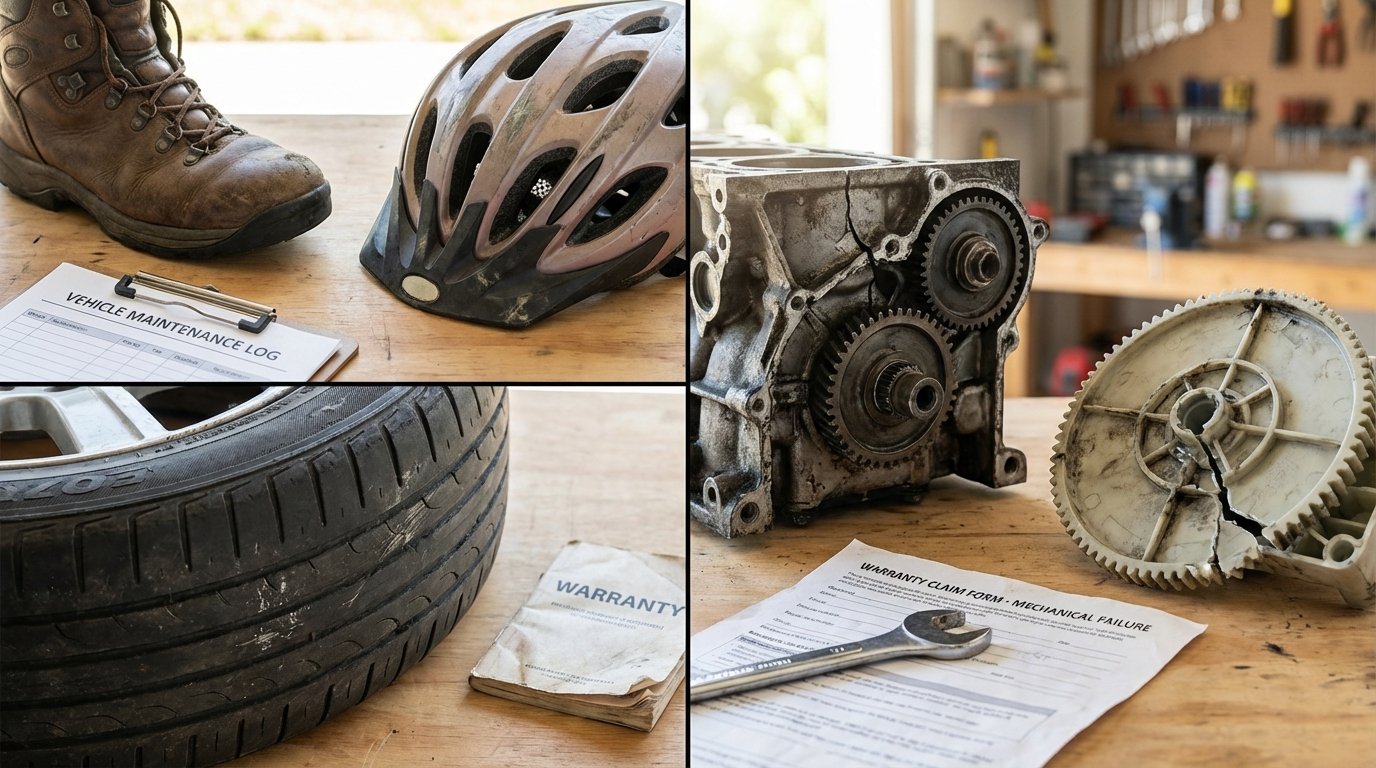
Normal Wear and Tear vs. Mechanical Breakdown
What Counts as a Mechanical Breakdown?
A mechanical breakdown is different from wear and tear. It happens when a part fails before its time — without warning, and not from gradual aging. Your engine just stops working at 30,000 miles when it should last 100,000. That’s a breakdown, not wear and tear.
I once had a friend whose car’s transmission died at just 40,000 miles. The dealer tried to call it wear and tear. But since it failed way earlier than expected, it was ruled a mechanical failure — and the extended warranty covered it. Knowing the difference saved him over $3,000.
The difference often comes down to timing and cause. Wear and tear is slow and expected. A breakdown is sudden and unexpected.
Side-by-Side Comparison
| Type of Damage | Example | Covered by Warranty? |
| Wear and Tear | Brake pads worn after 40,000 miles | ❌ Usually not covered |
| Mechanical Breakdown | Engine failure at 35,000 miles | ✅ Usually covered |
| Accidental Damage | Cracked screen from a drop | ❌ Not covered (unless special plan) |
| Manufacturing Defect | The fan motor fails due to poor build quality | ✅ Covered under standard warranty |
Common Wear and Tear Items in Warranty Contracts
Parts That Are Almost Always Excluded
Most vehicle service contracts and home warranty plans have a list of parts they simply will not cover. These are the parts that are designed to be replaced regularly. They’re called consumable parts or wear items.
For cars, the most common excluded wear and tear items include:
Tires — rubber loses grip over miles. Brake pads and rotors — friction from braking wears them thin. Wiper blades — rubber dries and cracks. Oil and filters — these need regular changes. Clutch plates (in manual cars) — friction wears them down. Shock absorbers — they soften road bumps until they can’t anymore.
For home appliances, common excluded items include: light bulbs, air filters, water heater elements that fail after many years, and surface scratches on appliances from daily use.
Parts That May Still Be Covered Despite Normal Aging
Here’s something most people miss. A part can be affected by wear and still get covered — if it fails before the manufacturer’s expected lifespan. This is called failing “beyond manufacturer’s tolerance.”
For example, if your car’s alternator bearing starts squeaking and breaking down at 30,000 miles when it should last 80,000 miles — that might still be covered. The part wore out, yes. But it wore out too fast, which points to a possible defect or premature failure.
According to autopom.com, most vehicle protection plans will cover a repair on a component that has worn beyond “manufacturer’s tolerance” — meaning the part did not last as long as the manufacturer designed it to.
How Warranty Companies Define “Normal” — And Why It Matters
The Fine Print Is Where It Gets Tricky
Every warranty contract uses the word “normal,” but what is normal? That’s where things get blurry. Two different warranty companies can read the same situation in two completely different ways.
One company might say your washing machine drum wore out from normal use and cover the fix. Another company might say you overloaded it and call it misuse. Same problem. Two different answers.
This is why you should always read the exclusions list in your contract before you buy. Most contracts have a section called “What Is Not Covered” — and that’s the most important section in the whole document.
Misuse, Neglect, and Accidental Damage — Not the Same Thing
Warranty contracts separate four types of situations. Understanding these four can save you a lot of confusion — and money.
Normal wear and tear: Slow, expected degradation from regular use. Not your fault. Still usually not covered.
Misuse or abuse: You used the product in a way it wasn’t designed for. Like putting diesel in a petrol engine or dropping a washing machine down the stairs. Definitely not covered.
Accidental damage: Something unexpected happened — a storm, a power surge, a pet chewing through wires. Usually not covered unless you have a special accidental damage plan.
Manufacturing defect: The product was built badly from the start. This is almost always covered under a manufacturer’s warranty.
Pro tip: When you make a warranty claim, describe the problem as clearly as possible. Never use words like “I think I may have overused it” — that can turn a covered claim into a denied one.
Home Warranties and Wear and Tear — What’s the Real Story?
When Home Warranties DO Cover Wear and Tear
This surprises a lot of people. Unlike car warranties — which mostly exclude wear and tear — home warranties are actually designed to cover it. That’s their whole purpose.
If your HVAC blower motor wears out after years of running daily, a home warranty steps in. If your refrigerator develops a slow refrigerant leak that builds over time — that’s covered too. The idea is that home systems and appliances will naturally break down from daily use, and your home warranty is there to handle those costs.
According to American Home Shield (AHS), a home warranty covers “the everyday, inevitable aging of your home’s systems and appliances” — from plumbing pipes carrying water to light switches getting flipped thousands of times.
What Home Warranties Still Won’t Cover
Even with a home warranty, there are limits. If you caused the damage — like over-tightening a toilet bolt until the base cracks — that’s on you. If a storm sends lightning into your electrical system, that’s accidental damage from an external event, not wear and tear.
The key rule with home warranties: if it broke because it got old from regular use, it’s likely covered. If it broke because of something you did, something external happened, or it was already broken when you signed up — it won’t be.
How to Protect Yourself When Making a Warranty Claim
Read the Contract Before You Need It
Most people only read their warranty contract after something breaks. By then, it’s too late to be surprised. The smart move is to read it before you ever need it — especially the exclusions section.
Look for these specific things: the definition of “normal wear and tear” in the contract (yes, some contracts define it), the full list of excluded parts, and any language about “pre-existing conditions” that could affect your claim.
Keep Service Records and Stay on Top of Maintenance
Here’s something people often overlook. If a warranty company suspects you didn’t maintain the product properly, they can deny your claim — even for something that looks like a clear mechanical failure. Regular maintenance records are your best defense.
For your car, keep oil change receipts. For home appliances, note when you replaced air filters or cleaned coils. For any product under warranty, document what you’ve done to take care of it. If a claim dispute ever comes up, those records could be the difference between approval and denial.
Real example: A car owner’s engine fails. The warranty company checks service history — no oil changes for 18 months. They deny the claim, calling it “neglect.” Had the owner kept even basic maintenance records, the outcome could have been very different.
Conclusion
“Wear and tear” is one of the most used — and most misunderstood — phrases in any warranty contract. At its core, it simply means the natural aging of a product from everyday use. No blame, no accident, just time doing its thing.
The problem is that most people only discover what this phrase means after a claim gets denied. For vehicle warranties, wear and tear items like brake pads, tires, and wiper blades are almost always excluded. For home warranties, the opposite is often true — normal aging from daily use is exactly what they’re built to cover.
The best thing you can do? Read your contract now — not when something breaks. Know your exclusions. Keep your maintenance records. And if something fails earlier than expected, push back and ask whether it qualifies as a failure “beyond the manufacturer’s tolerance.” You might be more covered than you think.
I’d love to hear your thoughts — have you ever had a warranty claim denied over wear and tear? Drop a comment and share what happened.
Frequently Asked Questions (FAQs)
Q1. Is normal wear and tear always excluded from warranty coverage?
Not always. For vehicle warranties and most product warranties, wear and tear items are typically excluded because they are expected to wear out. But home warranties are different — they are specifically designed to cover things that break down from everyday use. Always check your specific contract’s exclusions list to know what is and isn’t covered.
Q2. What is the difference between wear and tear and a manufacturing defect?
Wear and tear happens over time from normal use — like brake pads thinning after thousands of stops. A manufacturing defect means the product was built incorrectly from the start and fails because of that poor build quality, not because of use. Manufacturing defects are covered under most standard warranties; wear and tear usually is not.
Q3. Can I get a warranty that actually covers wear-and-tear items?
Yes, but they are not common. Some specialty plans — often called prepaid maintenance plans or wear and tear warranties — cover parts like wiper blades, tires, and brake pads. These plans work differently from standard extended warranties, which focus on unexpected mechanical breakdowns rather than scheduled replacements.
Q4. What happens if my product fails earlier than expected — is that wear and tear?
Not necessarily. If a part fails much sooner than the manufacturer’s expected lifespan, it may be considered a failure “beyond the manufacturer’s tolerance” — which could still qualify for coverage under your warranty. For example, if a part designed to last 80,000 miles breaks at 25,000 miles, that may be covered even though wear was involved. Always ask your warranty provider before accepting a denial.
Q5. Does neglecting maintenance affect my warranty coverage?
Yes, it can. If you fail to do basic maintenance — like skipping oil changes or not replacing air filters — a warranty company may deny your claim and call the damage a result of neglect rather than a covered failure. Keeping simple service records is one of the easiest ways to protect your warranty coverage and make sure your claims don’t get denied.