
Your car’s engine is making weird noises. The check engine light just popped on. You smell something odd near the hood. Sound familiar? These could all be PCV valve failure symptoms — and most drivers have no idea what that even means until the repair bill shows up.
I get it. The PCV valve sounds like some complicated, mysterious car part. But honestly? It is tiny. It costs almost nothing. And when it goes bad, it causes a surprising amount of chaos inside your engine.
What Is a PCV Valve and What Does It Do?
PCV stands for Positive Crankcase Ventilation. That’s a fancy name for a very simple job.
Your engine burns fuel. When it does, some gases sneak past the piston rings and get trapped in the crankcase. If those gases just sit there, they build up pressure, mix with your engine oil, and create a nasty sludge that can destroy your engine over time.
The PCV valve fixes this. It pulls those gases out of the crankcase and sends them back into the intake manifold, where they burn up cleanly during the next combustion cycle. Think of it like a little exhaust system just for the inside of your engine.
The system has been used in cars since the 1960s. It is simple, cheap, and important. But when that little valve breaks, things go wrong fast.
How Does the PCV Valve Work?
The valve has a small spring and a plunger inside. When you start your engine, the manifold vacuum pulls the plunger open. Fresh air flows in through a breather tube, sweeps through the crankcase, picks up the blowby gases, and carries them into the throttle body or intake manifold.
At idle, the valve is partly closed. When you press the gas pedal, it opens more to handle the extra pressure. If a backfire happens in the intake, the valve slams shut to protect the crankcase from catching fire.
When the valve gets stuck open or stuck closed, all of that careful balance falls apart.
7 PCV Valve Failure Symptoms You Should Watch For
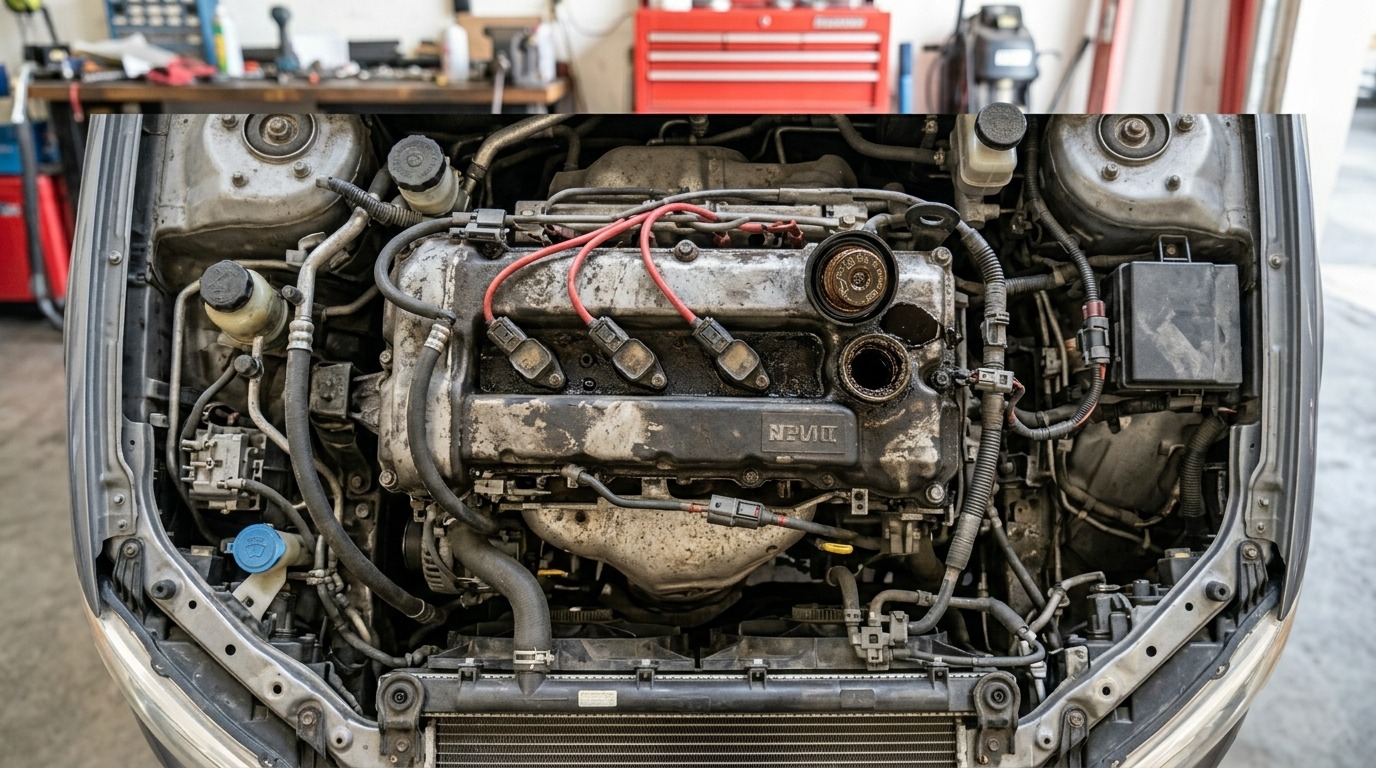
1. Check Engine Light Turns On
This is usually the first thing people notice. The check engine light comes on and you have no idea why.
A bad PCV valve can throw trouble codes like P0171 (engine running lean) or P052E (PCV regulator valve performance). Your car’s computer notices the air-fuel mixture is off and flags it right away.
To read the exact code, you need an OBD2 scanner. You can buy one for under $30, or most auto parts stores will scan it for free. Do not just clear the code without finding the cause. If it is a faulty PCV valve, the light will come back.
2. Rough Idle or Engine Stalling
This one surprised me the first time I saw it. I was helping a friend diagnose his old pickup, and it kept shaking at red lights like it wanted to stall. We checked everything. Spark plugs looked fine. Fuel was okay. Turns out, the PCV valve was stuck open.
When the valve sticks open, too much air gets pulled into the intake manifold. This messes up the air-fuel mixture and makes the engine run lean. The result? A shaky, rough idle that feels like the car might die at any second.
If you have any strange idle problems, always check the PCV valve before spending money on bigger repairs.
3. Increased Oil Consumption and Oil Leaks
This is one of the most damaging PCV valve failure symptoms if you ignore it.
When the valve gets clogged or stuck closed, pressure builds up inside the crankcase. That pressure has to go somewhere. So it pushes against the engine seals and gaskets. Oil starts leaking out.
You might find oil puddles under your car. You might notice your oil level drops faster than it should. You might even see an oily film on the inside of your oil filler cap, which is a classic sign of too much crankcase pressure.
If the valve sticks open instead, it can suck too much oil up and burn it inside the engine. Either way, you are losing oil. And losing oil means engine wear.
4. Blue, White, or Black Smoke from the Exhaust
Blue smoke from the exhaust is one of the clearest signs that oil is burning inside your engine. When the PCV valve fails and crankcase pressure builds up, it forces oil up into the combustion chambers. That oil burns and comes out as blue or gray smoke.
White smoke can happen when the valve creates a lean mixture. Black smoke shows up when the mixture runs too rich. Any strange color of smoke from your exhaust pipe is a reason to check the PCV system right away.
I have seen people drive for months with blue smoke coming out the back, thinking it was just normal. It is not normal. It means oil is being burned, and that leads to fouled spark plugs, catalytic converter damage, and worse.
5. Engine Misfires
A bad PCV valve can cause the engine to misfire. This feels like a sudden jerk or stumble while you are driving, especially at low speeds or during acceleration.
Here is why it happens. When the air-fuel mixture gets off balance because of a faulty valve, some cylinders do not fire correctly. Too lean? Not enough fuel to ignite well. Too rich? Too much fuel drowns the spark.
Trouble code P0300 (random or multiple cylinder misfire) often shows up alongside a bad PCV valve. If your car is misfiring and you have already checked the spark plugs and ignition coils, the PCV system is the next thing to look at.
6. Engine Sludge Buildup
This is the slow, sneaky killer. You might not notice it right away, but it is doing real damage.
When the PCV valve fails, moisture and blowby gases start mixing with your engine oil. Over time, this turns into a thick, dark sludge that coats the inside of your engine. Sludge blocks oil passages. It starves engine parts of lubrication. It can seize up parts of your engine entirely.
According to the U.S. Environmental Protection Agency (EPA), crankcase emissions are a regulated pollutant precisely because of the harmful compounds in blowby gases. A working PCV system keeps those compounds from contaminating your oil. A broken one does the opposite.
If you open your oil cap and see a brown, foamy, mayonnaise-like mess on the inside, that is sludge. Get your PCV system checked immediately.
7. Poor Fuel Economy and Sluggish Acceleration
Your car feels slower. You are filling up the gas tank more often than you used to. These are quieter PCV valve failure symptoms, but they matter.
When the air-fuel mixture is off, the engine works harder to do the same job. A valve stuck open causes a lean mix. A valve stuck closed causes a rich mix. Both hurt fuel efficiency and make acceleration feel sluggish.
If your car used to feel quick off the line and now it hesitates or drags, and your fuel economy has dropped, do not just assume it is age. A $20 PCV valve might be the fix.
How to Diagnose a Bad PCV Valve at Home
You do not need a shop to do a basic check. Here is a simple way to test it.
Start your car and let it warm up. Then find the PCV valve — it is usually on top of the valve cover, connected to a rubber hose. Pull the hose off the valve while the engine is running. Hold your finger over the end of the hose. You should feel a clear suction pulling against your finger.
No suction? The valve or hose is clogged. Too much suction and the idle drops way down? The valve might be stuck open. If the engine idle drops just a little and then steadies, that means everything is working correctly.
You can also shake the valve. If you hear a rattle inside, the spring and plunger are working. No rattle? The valve is likely stuck and needs to be replaced.
A smoke test or pressure test at a shop can confirm things if you are not sure. Mechanics use these tools to spot leaks and pressure problems in the crankcase ventilation system quickly.
PCV Valve Location and Replacement Cost
The PCV valve is usually found on the valve cover on top of the engine. Follow the rubber hose from the valve cover and you will find it. On some newer cars, it is integrated into the valve cover itself, which makes it a bit harder to find.
Most PCV valves cost between $10 and $50 for the part itself. Labor runs from $30 to $200 depending on how hard it is to reach. On older cars, it often takes less than 15 minutes to swap out. On some modern engines, you might need to remove the intake manifold first, which pushes the time and cost up.
According to a study published on Gates TechZone, most manufacturers recommend replacing the PCV valve every 20,000 to 50,000 miles. Some valves last longer, but if your car has over 80,000 miles and you have never changed it, now is a good time.
Most guides will tell you to simply clean the valve if it is clogged. And yes, spraying it with a brake cleaner or contact cleaner can help temporarily. But the spring inside the valve wears out over time in ways you cannot see just by looking. It is cheap enough that replacing it makes more sense than gambling on a clean.
Conclusion
PCV valve failure symptoms are easy to miss because they start small. A little rough idle here. A bit more oil usage there. But left alone, a bad PCV valve turns into expensive engine damage — blown gaskets, sludge buildup, fouled spark plugs, and worse.
The good news? The fix is usually cheap and fast. If you notice a rough idle, blue smoke from the exhaust, oil leaks, check engine light, engine misfires, sludge under the oil cap, or sluggish acceleration — check the PCV valve first. It could save you hundreds, or even thousands, of dollars in bigger repairs.
I would love to hear from you. Have you ever dealt with a bad PCV valve in your car? Drop a comment and tell me how it went.
Frequently Asked Questions
Can I drive with a bad PCV valve?
You can, but you really should not. Driving with a faulty PCV valve puts stress on your engine seals and gaskets. Over time, this causes oil leaks and can blow out gaskets completely. Short trips might be okay in an emergency, but get it checked and fixed as soon as you can.
How do I know if my PCV valve is stuck open or stuck closed?
If the valve is stuck open, you will often notice a very rough idle and the engine may run lean, causing misfires. If it is stuck closed, you will see oil leaks, possible sludge buildup, and blue smoke from the exhaust as crankcase pressure builds up and pushes oil into the combustion chamber.
What happens if I never replace my PCV valve?
If you never replace a failing PCV valve, the crankcase pressure keeps building. This leads to oil leaks, sludge formation inside the engine, damaged piston rings, fouled spark plugs, and even a blown head gasket. What starts as a $15 part can turn into a $1,500 repair.
Can a bad PCV valve cause my car to fail an emissions test?
Yes. The PCV system is a key part of your car’s emissions control. A failed valve can increase harmful crankcase emissions and cause your car to run rich, both of which can cause a failed emissions inspection.
How often should I replace the PCV valve?
Most manufacturers suggest replacing the PCV valve every 20,000 to 50,000 miles. If your car is older or you do a lot of short-distance driving, you may need to replace it sooner. Check your owner’s manual for the schedule specific to your car model.