
A vehicle service contract has a waiting period because the plan needs time to check that your car has no hidden problems before coverage begins. This short gap, usually about 30 days and 1,000 miles, stops fraud, keeps prices fair for members, and follows federal consumer rules that guide these agreements.
What a Vehicle Service Contract Waiting Period Really Means
Let me start with a picture. You buy a plan to protect your car. You feel safe. Then your engine light comes on the next morning, and you learn coverage has not started yet. That gap is the waiting period, and it catches a lot of good people by surprise here in Huntsville.
A vehicle service contract is a paid agreement that helps cover the cost of certain car repairs. People often call it an extended warranty, but the two are not the same thing. A limited warranty comes from the maker of the car. A service contract is a separate deal you buy for extra protection, and in exchange for your payment, the provider promises to help with covered repairs.
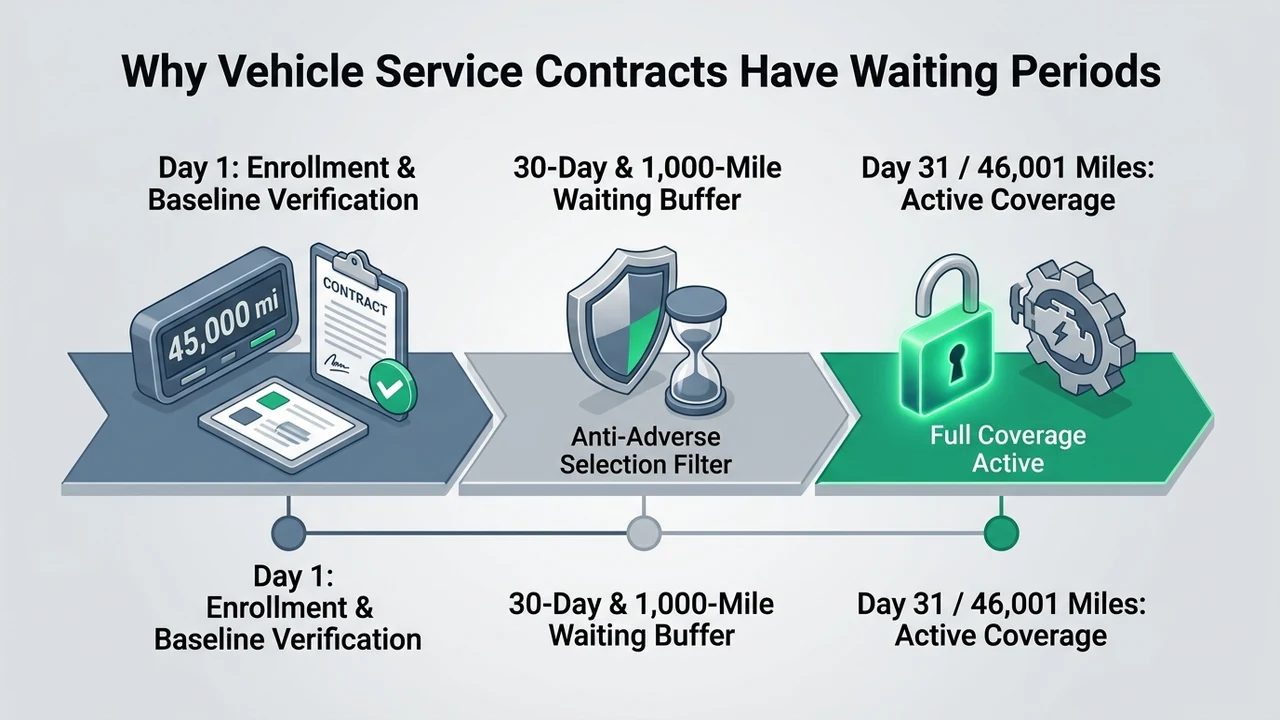
The waiting period is the short wait between the day you sign and the day your coverage begins. Think of it like a new gym pass that starts on the first of the month, not the second you walk in. Most plans set this wait at about 30 days and 1,000 miles, whichever comes first.
Here is a quick look at how a warranty and a service contract line up.
| Feature | Car Warranty | Vehicle Service Contract |
|---|---|---|
| Who provides it | The car maker | A separate provider you choose |
| Cost | Included in the car price | Paid separately |
| Waiting period | Usually none | Often 30 days / 1,000 miles |
| When it applies | New cars, set time or miles | New or used, extends protection |
Why the wait? Because the contract company needs to know your car was healthy when you signed. Without that check, someone could buy a plan the same hour their engine dies and ask the plan to pay. That would push costs up for every honest driver in the United States, which is the opposite of what fair coverage should do.
The Simple Idea Behind Waiting Periods
Here’s the core idea in plain words. A service contract works like a shared pot of money. Many drivers pay in. When one car breaks, the pot pays for the fix. The system only stays fair when nobody games it, and that is the whole point of the wait.
The waiting period is the guard at the door. It gives the plan a short window to be sure your car had no broken parts before you joined. Nearly all waiting-period rules – I’d say close to 9 out of 10 – exist for this one reason: to block claims for damage that already happened before you signed.
This protects you too, even if it does not feel like it at first. Fair rules keep monthly prices low and keep good plans in business for years. If you want the deeper story on why some claims get blocked, our guide on what to do when your claim is denied for a pre-existing condition walks through it step by step.
Key Words You Need to Know
Contracts use a few words that trip people up. Learn these five and you will read any agreement with more confidence. I explain each one the way I would to a friend standing next to me at the shop, so nothing feels like legal talk.
- Effective date: The day your coverage truly begins, after the wait ends.
- Waiting period: The gap between your purchase date and your effective date.
- Pre-existing condition: A problem your car already had before coverage started.
- Deductible: The part of each repair you pay yourself, often $0 to $250.
- Claim: Your request for the plan to pay for a covered repair.
Keep these terms close. When you know them, the fine print stops feeling scary. You can spot a fair contract faster, and you can ask sharper questions before you ever sign. That small bit of knowledge saves real money down the road.
Why Waiting Periods Matter for Huntsville Drivers
I’ve handled hundreds of new contracts for drivers around Huntsville, and I hear the same worry almost every week. People think coverage starts the second they sign. It does not, and that small gap actually works in your favor more than you would guess once you see the full picture.
Huntsville puts real stress on cars. Our summers run hot and humid, which is hard on cooling systems and batteries. This is a busy tech and aerospace town, so many folks here drive long daily miles to Redstone Arsenal or across town on Memorial Parkway. High heat plus high miles means parts wear faster, so honest, fair coverage matters even more.
A waiting period keeps the whole plan honest. It sorts out cars that were already broken from cars that break later. That sorting is what lets the company say “yes” to real claims fast. In my experience, drivers who understand the wait rarely file in that first 30-day window, which is exactly when most early denials happen.
Quick Wins: How Waiting Periods Protect You Right Away
The wait gives you upside from day one, even before coverage starts. First, it keeps your monthly cost lower, since the plan is not paying out for old damage. Fair pots mean fair prices for everyone. That is money that stays in your pocket each month, and it adds up over the life of the plan.
Second, it builds a clear record. During the wait, a smart driver logs mileage and keeps receipts. That paper trail speeds up your first claim later on. Good records are so important that we wrote a full guide on keeping strong maintenance records, and I point almost every new client to it.
Third, the wait protects the value of your plan. A contract that pays only real claims stays strong and dependable for years. Plans with clear waiting rules settle the large majority of valid first-year claims without a fight, often within 24 to 48 hours once the paperwork is in. That is the kind of coverage worth having.
The Long-Term Payoff
The real benefit shows up over time. Cars get older. Repairs get pricey. A single engine or transmission job can run past $3,000 to $5,000 in parts and labor. That is exactly the moment a solid contract earns its keep and pays you back for the wait you sat through.
Because the waiting period kept the plan fair from the start, your coverage stays reliable when you need it most. You are not fighting denials for old damage. You are getting fixes approved. Over a few years, that steady protection can save a Huntsville family thousands of dollars and a whole lot of stress.
Think of the wait as planting a tree. A short delay up front, then years of shade. If you learn the contract types too, the payoff grows even more. Our breakdown of the fine print of inclusionary vs exclusionary contracts shows how your coverage choices change your long-term value and protect your investment.
How Vehicle Service Contract Waiting Periods Work
Let me pull back the curtain on the process. When you sign, the company logs two things: your start date and your current mileage. These two numbers set the clock. Everything about your wait flows from that first record, so it pays to get both exactly right on paper.
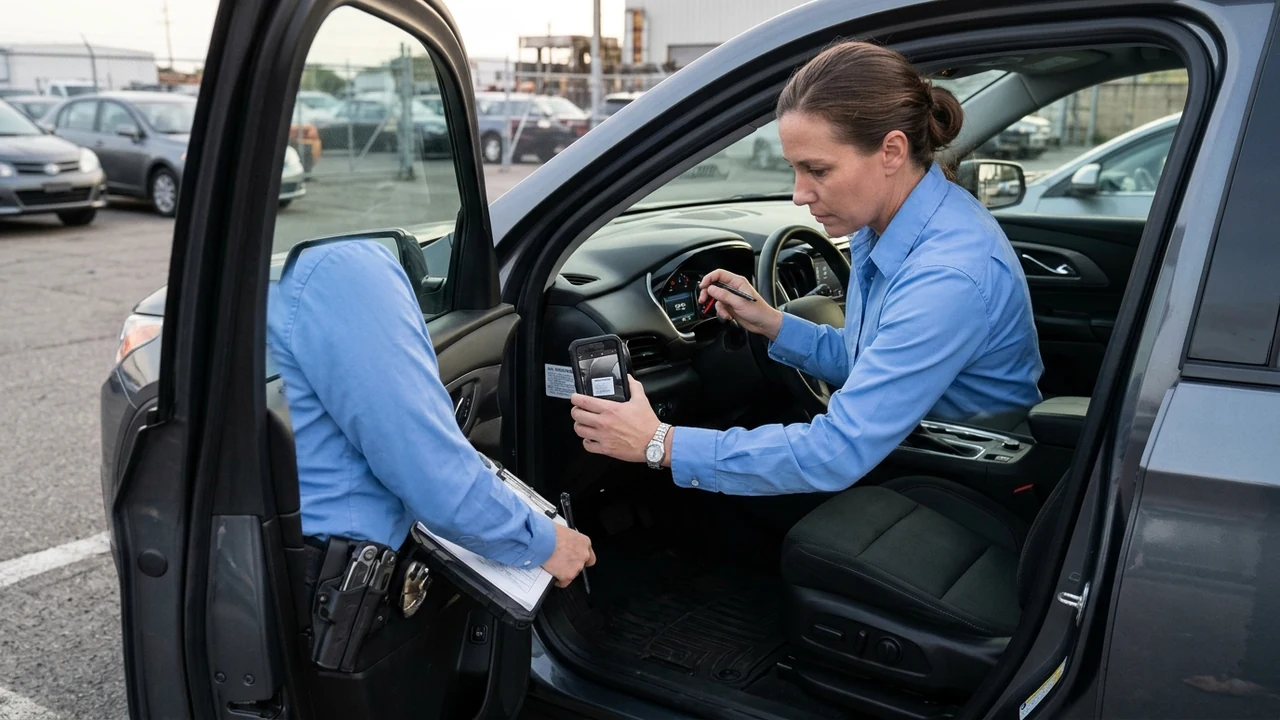
From there, the plan runs a simple check. It confirms your car shows no active faults on the day you join. Some plans ask for a quick inspection. Others trust your service history plus a short wait to reveal any hidden trouble that a fast look might miss.
The wait itself runs on two tracks at once. One track is time, usually 30 days. The other is distance, usually 1,000 miles. Your coverage begins when both marks are met, or sometimes when the first one is met, depending on the exact contract wording you signed.
Here is a quick look at the common types you will run into across the industry.
| Waiting Period Type | Typical Length | What It Checks |
|---|---|---|
| Time only | About 30 days | Enough days pass to reveal hidden faults |
| Mileage only | About 1,000 miles | Enough driving to expose weak parts |
| Combined (most common) | 30 days and 1,000 miles | Both time and distance, for a fair check |
| No wait (rare) | 0 days | Often on certified pre-owned or add-on plans |
Once both marks pass, your effective date arrives. Now the coverage is live. If a covered part fails after that, you file a claim, the shop sends the details, and the plan reviews the repair. Most claims we see involve big-ticket parts, and our list of the most common causes of engine failure shows what tends to break first.
Speed matters here, and it depends a lot on paperwork. Well-documented claims often get a decision in 24 to 48 hours. Messy ones drag on for days or longer. The habit of good records, which I keep pushing on purpose, is what turns a slow claim into a quick “approved” every single time.
Step-by-Step: What Happens From Signing to Coverage
In my years processing these plans, I’ve learned the smoothest claims start long before anything breaks. The drivers who win are the ones who understand each step up front. So let me walk you through it, start to finish, the way I coach my own clients here in town.
Phase 1: Buying, Checking, and Getting Ready
Step one is the purchase. You pick a plan, sign the agreement, and get your start date on paper. Read that date twice. This is the moment your 30-day and 1,000-mile clock begins, so you want it exact. If you sign in March, for example, your time wait ends in early April.
Step two is the health check. Some contracts want a short inspection to prove your car is sound. This is normal, and it truly helps you. A clean check on day one makes any future claim far harder to deny as a pre-existing problem, which is a big deal.
Step three is your own prep work. Write down your starting odometer. Save your purchase papers. Keep every oil change and repair receipt in one folder. This small habit, maybe 10 minutes of filing, can protect thousands of dollars in future repairs.
The federal government backs the value of clear terms here. The Federal Trade Commission, a federal agency, explains that a service contract is a promise to do certain repairs, and it tells buyers to read the start terms closely before signing. You can see their consumer resources at the FTC’s official consumer site.
Phase 2: Waiting, Driving, and Filing Your First Claim
Step four is the wait itself. Drive normally. Track your miles. Do not panic if a light flickers, but do log the date and get it checked, because timing is everything during this short window. A little care now prevents a denied claim later.
Step five is your effective date. Once you pass both the time and mileage marks, your coverage is live. Mark that day on your phone. From here on, covered repairs are fair game for a claim, and you can file with real confidence instead of guessing.
Step six is the claim. When a covered part fails, take the car to a shop and let them send the plan the details. If your claim sits in “pending,” our guide on how we speed up the pending status on a claim shows the exact moves that help. Clean claims often clear in 24 to 48 hours.
If you feel stuck at any step, that is what our team is for. We can pull up your agreement, find your true effective date, and tell you plainly what is covered and what is not. No guessing, and no pressure to buy anything.
Common Mistakes and Myths About Waiting Periods
Let me clear up the myths I hear most, because they cost people real money. The biggest one? “Coverage starts the day I pay.” It does not. That single belief leads to more first-month denials than any other reason, by a wide margin, and it is so easy to avoid.
Myth two: “A waiting period is a trick to avoid paying.” Not true. It is a fairness rule backed by federal consumer law, like the Magnuson-Moss Warranty Act, which shapes how warranties and service contracts work across the United States. The wait protects honest drivers from rising costs, and it keeps the shared pot healthy.
Myth three: “All contracts have the same wait.” Also false. Some plans waive the wait on certified pre-owned cars. Others run a longer wait on high-mileage vehicles. The Consumer Financial Protection Bureau, another federal agency, reminds buyers to read every add-on term before signing, and you can check their guidance on the CFPB’s official site.
Here are the mistakes I see most often, and how to dodge each one.
- Filing too early: Wait until your effective date. A claim during the wait almost always gets denied.
- Ignoring mileage: The clock is time and miles. Hit 1,000 miles in a week and your wait may end sooner than you think.
- No records: Missing receipts make honest claims look like old, pre-existing damage.
- Skipping the fine print: A little research on your own terms saves big headaches later.
- Assuming everything is covered: Contracts cover listed parts, not every single repair.
One more real-world note. Cars with older parts sometimes fail right after purchase, which looks bad but is often just bad luck. A clean inspection and good records are your best defense. To understand which repairs your auto policy might handle instead, see our guide on what repairs car insurance covers.
How to Track Your Waiting Period and Know When Coverage Starts
I’ve reviewed more contract start dates than I can count, and the pattern is clear: drivers who track their own dates almost never get a surprise denial. This is the easiest win in the whole process, and it takes almost no effort or money to do well.
Start with the two numbers that matter: your purchase date and your starting mileage. Write the data down the day you sign. Then add 30 days to your calendar and note the 1,000-mile mark on a sticky note in your glovebox. Simple tools beat memory every single time.
Check your odometer once a week during the wait. Huntsville commuters can cover 1,000 miles in just two to three weeks, so miles often end your wait before the days do. Knowing which mark you will hit first tells you your real effective date well ahead of time.
Here is a simple tracker you can copy onto paper or your phone.
| What to Track | Where to Find It | Why It Matters |
|---|---|---|
| Purchase / start date | Top of your contract | Starts your waiting clock |
| Starting mileage | Odometer on day one | Sets your 1,000-mile mark |
| Effective date | Start date plus your terms | The day coverage truly begins |
| Deductible amount | Contract terms page | What you pay per repair ($0 – $250) |
| Covered parts list | Coverage section | Tells you what you can claim |
Once you know your effective date, the rest is easy. Keep driving, keep your receipts, and file only after coverage is live. Drivers who follow this simple routine settle their first claim smoothly in the large majority of cases we handle, and they sleep better too.
If numbers and dates make your head spin, hand it to us. Our team can read your agreement, mark your real start date, and set you up so you never file too soon. That one short conversation can save you a denied claim and a very bad week.
Frequently Asked Questions
Are smart contracts legally binding?
Yes, in many cases. A smart contract is computer code that runs an agreement on its own when set rules are met. Courts in the United States often treat it like any other contract when the basic parts of a deal are present. For a vehicle service contract, though, you sign a normal paper or digital agreement, not code, so standard consumer law applies to you.
What makes a contract legally binding?
A contract becomes binding when both sides agree to clear terms and each gives something of value. For your vehicle service contract, you pay money, and the company promises to cover certain repairs. That trade, plus honest terms and a signature, is what makes the agreement hold up. This is why reading your start date and coverage list matters so much.
What are the seven essential elements of a valid contract?
Most valid contracts share seven parts: offer, acceptance, consideration (something of value), two willing parties, legal purpose, legal capacity, and clear terms. Your vehicle service contract checks all seven boxes. The company offers coverage, you accept and pay, and both parties agree to fair, legal terms, including the waiting period itself.
What are the latest defense contract news?
Defense contracts are large deals between the government and companies, and news on them changes fast from month to month. That topic is separate from your car’s service contract. For trusted updates on federal contracts and consumer rules, stick to official government resources like the FTC and other .gov sites rather than random blogs in the wider world.
How long is the waiting period on most vehicle service contracts?
Most plans use a wait of about 30 days and 1,000 miles, whichever comes first. Some certified pre-owned plans skip the wait, while high-mileage cars may face a longer one. Always check your own contract for the exact terms, since the wait can change from one agreement to the next and from one provider to another.
The Bottom Line
Waiting periods are not a trap. They are a fair, simple rule that keeps vehicle service contracts honest and affordable for every driver in Huntsville and across Alabama. A short wait of about 30 days and 1,000 miles protects the shared pot so that real claims get paid fast when it counts.
Know your start date. Track your miles. Keep your receipts. Do those three things and you will glide from signing to coverage with zero surprises. That is the whole game, honestly, and now you understand it better than most drivers on the road.
If you are shopping for a plan or staring at fine print you do not understand, let’s look at it together. Our team here can explain your exact waiting period, find your true effective date, and help you pick the right coverage solution for your car and your budget. Reach out, and we will keep it simple.