
Your car felt a little off last week. Nothing big. Just a small cloud of smoke from the exhaust and the temperature gauge going up a bit. You ignored it. Two weeks later, your mechanic says the words nobody wants to hear: “Your head gasket is blown.” Ouch. If you had caught the head gasket failure signs early, you could have saved yourself thousands. This guide will help you spot the warning signs fast, so you never end up there.
What Is a Head Gasket and Why Does It Matter?
The Job the Head Gasket Does Every Day
The head gasket sits between two big parts of your engine. One part is the engine block, where the pistons and cylinders live. The other part is the cylinder head, which holds the valves, spark plugs, and camshaft. The head gasket seals everything together.
It has three main jobs. First, it keeps the combustion pressure inside the cylinders so your engine has power. Second, it stops engine oil from leaking into places it should not go. Third, it keeps coolant from getting into the cylinders. If the gasket fails at any of these three jobs, you have a problem.
Honestly, it is one of the hardest-working parts in your whole engine. It deals with intense heat and huge pressure, and it never gets a break while your car is running.
Why Head Gaskets Fail in the First Place
Overheating is the number one cause of head gasket failure. When your engine gets too hot, the metal parts around the gasket expand too much. The cylinder head and the engine block are made of different metals. They expand at different rates. This creates stress that cracks or warps the gasket.
Other causes include detonation inside the engine, old age, and bad installation. If someone put in the gasket incorrectly, it may fail much sooner than it should. Cars with aluminum cylinder heads are also more likely to have this issue because aluminum warps faster under heat than cast iron.
I once saw a perfectly healthy car get a blown head gasket after the owner drove it for just 10 minutes with the coolant warning light on. They thought it was fine. It was not. The point is, do not ignore those little warning lights.
Head Gasket Failure Signs You Should Know Right Now
Sign #1
White Smoke From the Exhaust Pipe
This is one of the most obvious head gasket failure signs. When coolant leaks into the combustion chamber, it gets burned with the fuel. The result is thick, white smoke coming out of your exhaust pipe. It may have a slightly sweet smell. That sweet smell comes from the antifreeze burning.
Normal white puffs on a cold morning are fine. Those go away in a minute or two. But if the white smoke stays even after your engine warms up, that is a red flag. A big one.
Some drivers confuse this with steam. Steam is thin and disappears fast. This smoke is thick and keeps coming. There is a real difference once you see both side by side.
Sign #2
Engine Overheating Again and Again
Your temperature gauge should stay in the normal range. If it keeps going up or you see the overheating warning light a lot, something is wrong with your cooling system or your head gasket.
When the gasket fails, it can let combustion gases leak into the coolant passages. This creates pressure that pushes coolant out. Less coolant means less cooling, which means your engine gets hotter. It is a bad cycle that gets worse fast.
The safe thing to do? Pull over. Turn off the engine. Let it cool. Do not open the radiator cap when the engine is hot. The cooling system is under pressure and can spray scalding hot coolant on you.
Quick Tip: If your engine overheats even once, get it checked. One overheating event can be enough to warp the cylinder head or damage the head gasket. Do not wait.
Sign #3
Milky or Frothy Engine Oil
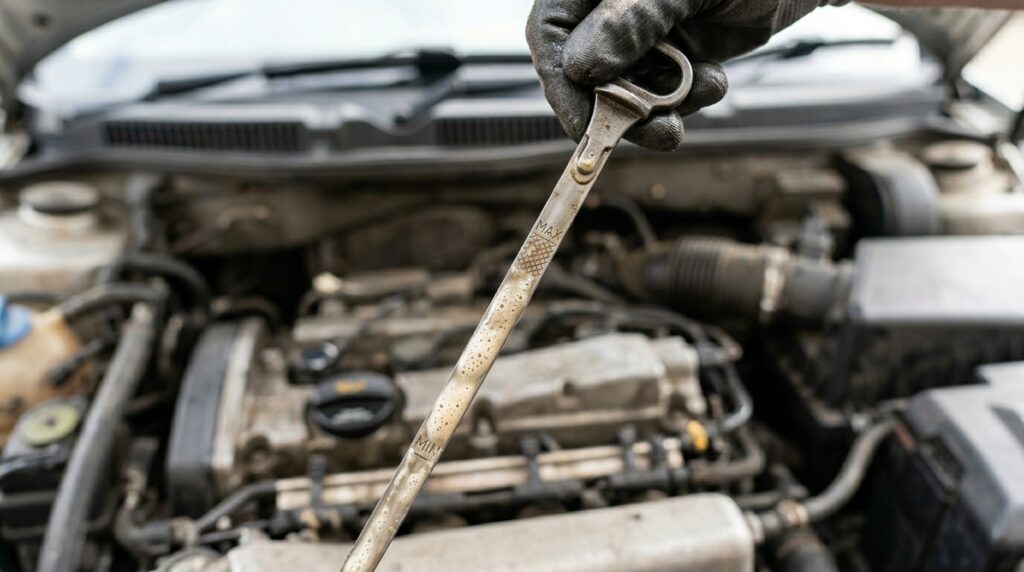
Pull out your oil dipstick. The oil should be brown or black. If it looks creamy, milky, or like a milkshake, that is a serious sign. It means coolant is mixing with engine oil. This happens when the head gasket fails between a coolant passage and an oil gallery.
You can also check the underside of your oil filler cap. If there is a grayish, frothy gunk there, coolant has been getting into your oil. This mix is very bad for your engine because oil mixed with coolant cannot lubricate properly. Your engine parts will rub against each other and wear out fast.
To be fair, this sign can also point to a PCV valve problem in some cars. But when combined with other signs on this list, the head gasket becomes the most likely cause.
Sign #4
Coolant Loss With No Visible Leak
You keep topping up your coolant reservoir, but you never see any puddle under the car. Where is it going? If the head gasket has failed, coolant may be leaking into the cylinders and getting burned. So it disappears as steam or white smoke.
This kind of internal coolant loss is sneaky. You may not notice it until the coolant level drops enough to cause overheating. Check your coolant level every week if you suspect something is off.
Sign #5
Bubbles in the Coolant Reservoir
Pop the hood and look at your coolant reservoir. If you see bubbles forming in there, that is a strong sign of a head gasket problem. The bubbles are actually exhaust gases pushing into the coolant through the failed gasket.
These air pockets in the coolant are very harmful. They stop the coolant from reaching all parts of the engine. Areas that do not get enough coolant overheat. And you already know what overheating does to a head gasket.
A mechanic can confirm this using a simple tool called a combustion leak tester. It checks if exhaust gases are present in your coolant. The test is fast and quite affordable.
Sign #6
Engine Misfires and Rough Idle
When the head gasket leaks between two cylinders, compression drops. Less compression means the engine cannot burn fuel properly. The result is a rough idle, shaking, or engine misfires. Your car may feel like it is struggling, especially at low speeds or when stopped at a light.
Your check engine light may also come on. If you plug in an OBD-II scanner, you may see misfire codes or low compression codes. These codes give you a good clue that the head gasket could be to blame.
Sign #7
Oil Leaking Down the Side of the Engine
If the head gasket fails between an oil gallery and the outside of the engine, you will see oil dripping or streaking down the side of your engine block. This is called an external oil leak. It is not the most severe type of failure, but it is still a problem that will get worse over time.
Look for oily streaks starting from the area where the cylinder head meets the engine block. You might also notice a burning smell if the oil drips onto hot engine parts.
Sign #8
Loss of Engine Power
Does your car feel weak? Does it struggle going uphill or when you press the gas hard? A leaking head gasket lets cylinder pressure escape. Less pressure means less power. Your car may feel slower than usual or take longer to pick up speed.
This loss of engine power often comes along with other signs on this list. It is rarely the only symptom. But if you notice it together with white smoke or milky oil, do not delay getting your car checked.
How to Tell If It Is Really the Head Gasket
Signs That Point Specifically to a Blown Gasket
Many other engine problems look like head gasket failure. A bad thermostat, a leaking radiator hose, or a failing water pump can all cause overheating. A cracked engine block or a bad intake manifold gasket can cause coolant mixing with oil, too.
The best way to know for sure is to look for a combination of signs at once. For example, if you have overheating, milky oil, and white smoke together, that is almost certainly a head gasket issue and not a simple hose leak.
According to Firestone Complete Auto Care, unexplained coolant loss with no visible leak is a key indicator of head gasket failure that many drivers overlook.
Quick Home Checks You Can Do
You do not need to be a mechanic to do a basic check. Here are a few things you can look at yourself:
| What to Check | What to Look For | What It Could Mean |
| Oil dipstick | Milky or frothy oil | Coolant mixing with oil |
| Oil filler cap underside | Grayish, foamy gunk | Coolant in the oil system |
| Coolant reservoir | Bubbles or oily film on top | Exhaust gases in coolant |
| Exhaust pipe | Thick white smoke that stays | Coolant burning in cylinders |
| Engine exterior | Oily streaks near the head | External oil leak from the gasket |
If two or more of these checks point to a problem, stop driving and call a mechanic. The longer you drive, the worse the damage gets.
What Happens If You Keep Driving With a Blown Head Gasket?
The Damage Gets Worse Very Fast
This is where it gets serious. A lot of drivers know something is wrong but keep driving because they hope it will be okay. It will not be okay. The damage from a blown head gasket grows fast when you keep driving.
Coolant and oil mixing will destroy your engine bearings. The contaminated oil cannot be lubricated properly. Parts rub. Parts wear. Parts break. You may end up with a seized engine, which means the engine is completely dead and must be fully replaced.
Fluid Life, a professional oil analysis company, notes that when coolant mixes with engine oil, it drastically reduces the oil’s ability to lubricate, leading to rapid engine failure if not fixed promptly.
How Much Does a Head Gasket Repair Cost?
Here is the hard truth. Fixing a head gasket early might cost you between $1,200 and $2,500, depending on your car and mechanic. But if you keep driving and the engine block or cylinder head warps or cracks, repair costs can shoot up to $5,000 or more. In some cases, a full engine replacement is the only option.
Catching the head gasket failure signs early is literally the best money-saving move you can make as a car owner.
Warning: Never remove the radiator cap when your engine is hot. The cooling system is under pressure. Opening the cap can spray hot coolant and cause serious burns. Always wait for the engine to cool completely first.
How to Prevent Head Gasket Failure
Simple Maintenance Habits That Protect Your Engine
The good news is that most head gasket failures are preventable. The main cause is overheating, and overheating is usually preventable with basic car care.
Keep your coolant level topped up and use the right mix of coolant and water that your car maker recommends. Flush and replace your coolant at the interval your owner’s manual says. Old coolant breaks down and loses its ability to protect your engine.
Watch your temperature gauge every time you drive. If it moves toward hot, pull over right away. Even one overheating event can be enough to damage the head gasket. Do not wait to see if it goes back to normal.
Other Smart Steps to Take
Get your cooling system inspected regularly. Ask your mechanic to check the thermostat, the radiator hoses, the water pump, and the radiator itself. Any one of these failures can lead to overheating and then gasket failure.
Use high-quality engine oil and change it on time. Some synthetic oils handle high heat better and keep your engine running cooler. If you are towing heavy loads or driving in very hot weather, pay extra attention to your temperature gauge.
I make it a habit to quickly glance at my temperature gauge every time I stop at a red light. It takes one second and has saved me from trouble more than once. Small habits like that really do make a big difference over the long run.
Conclusion
The head gasket failure signs are not hard to spot once you know what to look for. White smoke from the exhaust, milky oil, overheating, coolant loss with no visible leak, bubbles in the coolant reservoir, engine misfires, oil streaks down the engine side, and loss of power are all warnings your car is giving you. Listen to them.
Act fast when you see these signs. Stop driving if you can. Get the car checked by a professional. A repair done early costs much less than a repair done after you have caused serious engine damage.
Your car is trying to tell you something. The question is, will you listen before it is too late?
I’d love to hear if any of these signs helped you catch a problem early. Drop a comment and share your experience!
Frequently Asked Questions About Head Gasket Failure Signs
Can I drive my car with a blown head gasket?
Technically, you can, but it is very risky. Every mile you drive with a blown head gasket makes the damage worse. Coolant and oil can mix, your engine can overheat again, and you could end up with a completely dead engine. It is best to stop driving as soon as you notice the signs and get it fixed fast.
How do I know if it is really a head gasket problem and not something else?
Look for a combination of signs happening together. If you see milky oil AND white smoke AND overheating at the same time, a blown head gasket is very likely. A single sign-on on its own could be caused by other issues. Your mechanic can use a combustion leak tester to confirm if exhaust gases are in your coolant, which is a strong confirmation of head gasket failure.
What does white smoke from the exhaust smell like if the head gasket is blown?
The white smoke from a blown head gasket often has a slightly sweet smell. That sweet odor comes from the antifreeze burning in the combustion chamber. Normal exhaust does not have this smell. If you notice thick white smoke with a sweet scent that stays even after the engine warms up, that is a clear sign coolant is burning in your engine.
How much does it cost to fix a blown head gasket?
The cost depends on your car model and how bad the damage is. A basic head gasket repair typically costs between $1,200 and $2,500 for labor and parts. But if the cylinder head is warped or cracked, you may need additional machine work which adds to the cost. Catching the problem early almost always saves you money.
Can low coolant cause head gasket failure?
Yes, it can. If your coolant level is too low, your engine cannot stay at the right temperature. The engine overheats, which puts stress on the head gasket and can cause it to fail. Always keep your coolant at the level your car maker recommends and check it regularly.