
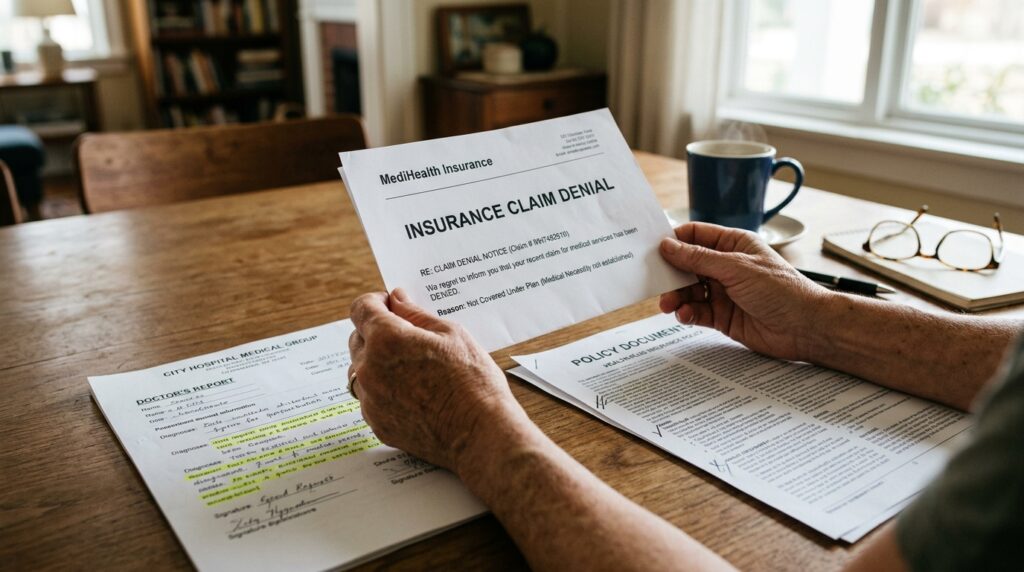
Getting a claim denial in the mail is one of the worst feelings. You are already dealing with a health problem, and now the insurance company is telling you they will not pay. If your claim was denied for pre-existing conditions, do not panic. This does not have to be the end of the road. Many denials like this can be challenged and overturned. I have seen it happen many times.
What Does Pre-Existing Condition Actually Mean?
A pre-existing condition is any health problem you had before your insurance coverage started. This could be something like diabetes, asthma, heart disease, cancer, mental health conditions, or even an old back injury.
Insurance companies look at your medical history to find any condition that was present before your policy’s effective date. If they find one and think it is connected to your current claim, they can use it as a reason to deny you.
But here is the important thing: just because you have a medical condition on your record does not mean every claim you make can be denied. There are strict rules about when this exclusion can actually be applied.
Why Insurance Companies Deny Claims for Pre-Existing Conditions
Honestly, insurance companies are businesses. Their goal is to limit what they pay out. Using pre-existing condition exclusions is one of the most common ways they do this.
They will dig through your medical records and look for anything during a time period called the lookback period. This is usually 3 to 12 months before your coverage starts. If they find even a small doctor visit or a prescription that could be linked to your current disability claim, they will try to use it.
They also use tactics like blurring the line between an old condition and a new one. For example, if you had mild anxiety two years ago and now have serious depression, some insurers will still call it pre-existing. That kind of overreach is often wrong and can be challenged.
Your Rights When a Claim Is Denied for Pre-Existing Conditions
When your claim is denied for pre-existing conditions, you have real rights. You do not have to just accept the denial letter and walk away. The law is on your side in many cases.
What the Affordable Care Act Says About Pre-Existing Conditions
For health insurance, the Affordable Care Act (ACA) changed everything. According to the U.S. Department of Health and Human Services (HHS), health insurers can no longer charge more or deny coverage because of a pre-existing health condition like asthma, diabetes, or cancer. They also cannot limit benefits for that condition once you have coverage.
This is huge. It means if you have an ACA-compliant health plan, your insurer cannot refuse to pay for treatment related to a pre-existing condition. However, this rule applies to health insurance only. It does not apply to disability insurance or life insurance.
How Disability Insurance Rules Are Different
This is where things get a little tricky. Disability insurance is not covered by the ACA. So disability insurers can still deny your long-term disability claim if they believe your disability is connected to a condition you had before your policy start date.
But even then, there are limits. According to legal standards applied in courts across the US, the pre-existing condition exclusion can only be used if you were actually treated specifically for that condition during the lookback period. Treatment that only turned out to be related later does not count. Courts have been very clear about this.
Step-by-Step: What to Do When Your Claim is Denied for Pre-Existing Conditions
If you have just received a claim denial for pre-existing conditions, here is what you should do right away. Take it one step at a time.
Read Your Denial Letter and Insurance Policy Carefully
The first thing you need to do is read your denial letter very carefully. This letter must explain the exact reason your claim was denied. It should mention which policy clause was used and what condition they are calling pre-existing.
Then pull out your actual insurance policy and read the section on pre-existing condition clauses. Look for the definition they use for pre-existing conditions and the exact length of the lookback period mentioned. Every policy is different. Some policies only exclude a condition for the first 12 months of coverage. After that, even a pre-existing condition may be covered.
I once helped a friend go through this exact process. She had been denied because of a knee issue she had years before. But when we read the policy closely, the exclusion period had already ended. She appealed and won.
Gather All Your Medical Evidence
Your medical records are your strongest tool. Collect everything. Get records from all your doctors showing the history of your condition, when it started, how it was treated, and what happened after your policy began.
You want to show a clear timeline that proves either (1) your current condition is completely different from the old one, or (2) the condition was not actually diagnosed or actively treated during the lookback period. Doctor notes, test results, prescription records, and attending physician statements all matter here.
If your medical evidence shows that your condition got much worse after an accident or new event, that also helps. Showing that your health changed significantly after your coverage started is powerful proof.
How to Appeal a Pre-Existing Condition Denial
Most people do not realize they have the right to appeal a claim denial. Many insurance companies count on people just giving up. Do not give up.
Filing an Internal Appeal with Your Insurer
Almost every insurance company has an internal appeal process. This is your first step. You usually have 30 to 60 days from the date of the denial to file your appeal. Do not miss this appeal deadline because it can take away your right to challenge the decision.
In your appeal, explain clearly why the denial was wrong. Use your medical records to show that the condition in question is not pre-existing or is not related to your current disability claim. Ask your doctor to write a letter supporting your case. A strong letter from your treating physician explaining the difference between the old and new condition can really change things.
Keep copies of everything you send. Write down the dates of every call and keep records of every letter. This protects you if the dispute goes further.
When to Get a Disability Insurance Attorney
If your internal appeal gets denied or if the case is complex, it is time to talk to a disability insurance attorney or a long-term disability lawyer. This is not something you should try to handle alone.
An experienced attorney knows how insurance companies think and what arguments work. They can review your policy language, find errors in how the insurer applied the pre-existing condition exclusion, and build a case that can be held up in court.
Many disability attorneys work on a contingency fee basis. That means you do not pay them unless you win. So there is really no reason not to at least have a free consultation.
Common Mistakes That Hurt Your Claim
When fighting a pre-existing condition denial, a few simple mistakes can really hurt your chances. Here is what to watch out for.
Accepting the Denial Without Fighting Back
This is the biggest mistake. A lot of people get a denial letter and think it is final. It is not. Insurance companies know that most people will just give up. They are counting on it. Every denial letter should be treated as the start of a process, not the end of one.
Even if the denial looks solid, it may be based on a wrong interpretation of your policy terms, a loose reading of your medical history, or a simple mistake. You will never know until you look closely and push back.
Not Getting a Doctor’s Support for Your Appeal
Your appeal without a doctor’s backing is much weaker. Your treating physician can write a letter that explains the medical facts in plain language. They can confirm whether your current condition was actually caused by a previous one or whether this is something entirely new.
According to guidance published by the Centers for Medicare and Medicaid Services (CMS), patients have the right to appeal insurance decisions and get external reviews. Having your doctor involved makes your appeal far more persuasive to both internal reviewers and outside experts.
Conclusion
If your claim is denied for pre-existing conditions, remember one thing: you have options. Read your denial letter closely. Review your insurance policy. Gather your medical records and build a timeline. File your internal appeal before the deadline. And if you need more help, speak to a disability insurance attorney.
Insurance companies make mistakes. They overuse pre-existing condition exclusions all the time. Many of these denials are overturned every year when people fight back the right way. You deserve the coverage you paid for. Do not let one letter stop you from getting it.
Have you gone through a claim denial like this before? I would love to hear your experience in the comments.
Frequently Asked Questions (FAQs)
1. Can my health insurance company deny my claim because of a pre-existing condition?
Under the Affordable Care Act (ACA), health insurers cannot deny your claim or charge you more because of a pre-existing condition. Once you have an ACA-compliant health plan, it must cover treatment for your condition. However, this rule does not apply to disability insurance or life insurance.
2. What is a lookback period, and how does it affect my claim?
The lookback period is a set time before your insurance coverage started. This is usually 3 to 12 months, depending on your insurance policy. Insurers check this period to see if you were treated for a condition that could now be labeled pre-existing. If no treatment occurred during this window, the exclusion usually cannot apply.
3. How do I appeal a claim denial for pre-existing conditions?
Start by reading your denial letter and insurance policy carefully. Then gather your medical records and get a letter from your treating physician. File an internal appeal within the deadline, which is usually 30 to 60 days. If that fails, you can ask for an external review or speak to a disability insurance attorney.
4. What if my pre-existing condition got worse after an accident?
If an accident made your existing condition worse, you may still be entitled to compensation. Many states follow the eggshell plaintiff doctrine, which means the person who caused the accident is responsible for all the harm they caused, even if a pre-existing condition made your injuries worse. Your medical records can show how your condition changed after the event.
5. Should I hire a lawyer if my disability claim is denied for a pre-existing condition?
Yes, especially if your internal appeal is also denied. A long-term disability attorney knows how to read policy language, challenge the insurer’s reasoning, and present strong medical evidence on your behalf. Many disability lawyers work on a contingency fee basis, so you only pay if you win. It is worth at least a free consultation.