
Your car dies. The shop calls. They say they must “tear it apart” before they can tell you what broke – and that look-inside step alone will cost money. For many drivers, that one phone call is scarier than the final bill. You feel stuck. You don’t know what you’re agreeing to. Let me walk you through it, plain and simple, so you never sign something you don’t understand.
What Is Teardown Authorization?
Teardown authorization is your written “yes” that lets a shop take apart a big part of your car to see what went wrong. Think of it like this. A doctor sometimes needs to open you up in surgery to find the real problem. A mechanic sometimes needs to open up your engine or transmission for the same reason. The form you sign is the permission slip.
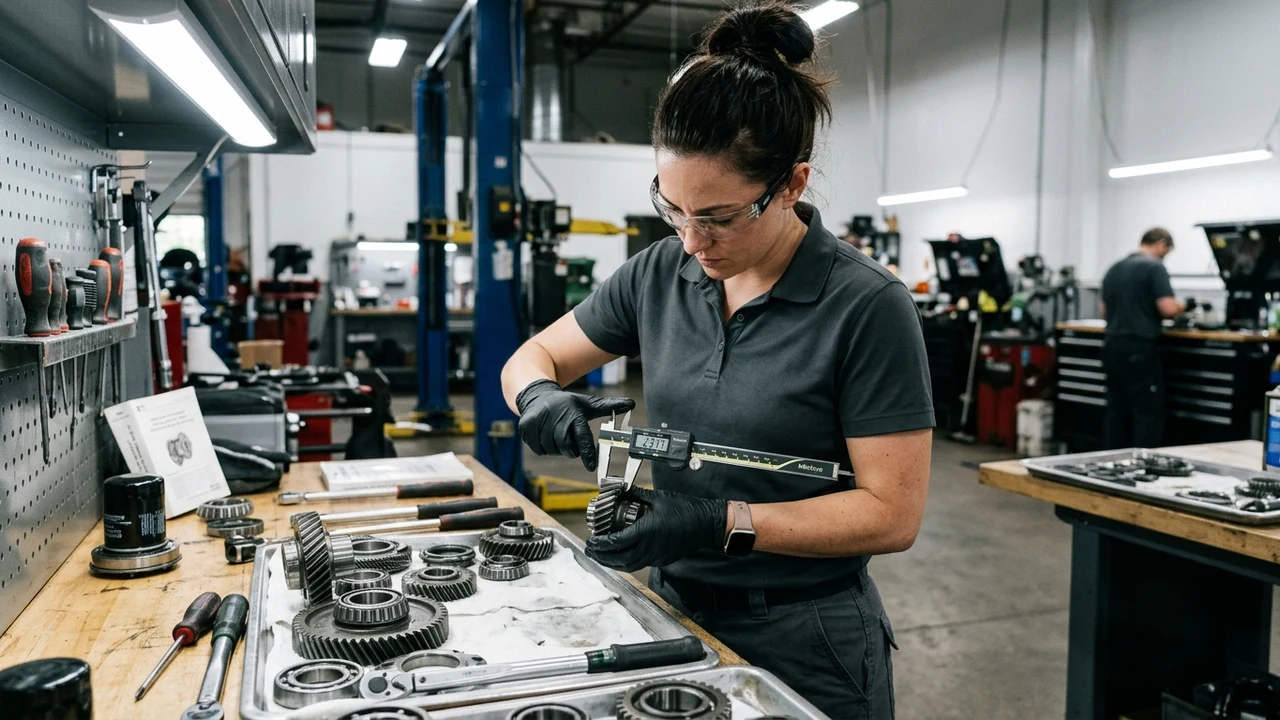
The word “teardown” just means taking things apart, piece by piece. The shop pulls off covers, bolts, and parts to reach the broken area inside. This is real, skilled labor. On average, a full engine teardown takes 3 to 10 hours of a mechanic’s time, and that time is not free.
Here’s the part people miss. When you sign, you often agree to pay for the labor to take it apart even if you don’t fix anything. The car may end up in pieces on a bench. Putting it back together, called reassembly, can cost just as much again. So one signature can start a bill that grows fast.
Why Shops Need to Tear Down an Engine Before They Can Fix It
I’ve handled cases exactly like this many times, and the pattern is always the same: the outside of an engine tells you almost nothing about the damage hiding inside. A shop is not being sneaky when it asks for a teardown. Some failures simply cannot be seen or measured while the engine is closed up and bolted together.
Modern engines are sealed boxes with hundreds of moving parts packed tight. A knocking sound could mean a bad bearing, a cracked piston, or a loose part. Guessing wrong here is expensive. In my experience, blind guessing leads to the wrong repair about 4 out of 10 times, and then the customer pays twice.
Before any teardown, a smart mechanic runs cheaper tests first. These outside checks often point to the problem without opening anything. If you want to understand one of the most useful of these tests, this plain-English guide to how a compression test finds hidden engine damage breaks it down step by step.
A teardown becomes the honest next step only after the simple tests run out. That order matters. A shop that jumps straight to “let’s tear it down” without a compression test, a scan, or a look at your symptoms may be rushing you. Slow down and ask questions first.
Diagnosis Is Not the Same as Guessing
Diagnosis means finding the real cause with proof. Guessing means swapping parts and hoping. A teardown is part of true diagnosis because the mechanic can finally see, touch, and measure the broken pieces. That proof protects you later, especially if a warranty claim is involved.
Many big failures start small and quiet. If you’re curious what usually goes wrong first, these common causes of engine failure show why so many repairs turn into major jobs. Catching the early signs can save you from a teardown altogether.
When Does a Repair Count as “Major”?
Not every repair needs a teardown. Changing oil, brakes, or spark plugs is simple bolt-on work. A “major” repair means the shop must open a big, sealed system to reach the damage. These are the jobs where teardown authorization shows up.
Major repairs usually cost more and take longer. A brake job might run $300 to $700 and take an afternoon. An internal engine repair can climb past $4,000 and tie up your car for a week or more. The size of the risk is why the paperwork gets serious.
Here’s a quick way to tell them apart:
| Repair Type | Teardown Needed? | Typical Time | Typical Cost Range |
|---|---|---|---|
| Oil change, brakes, spark plugs | No | 1 – 2 hours | $80 – $700 |
| Alternator or starter | Rarely | 2 – 4 hours | $400 – $1,000 |
| Head gasket | Often | 6 – 20 hours | $1,500 – $3,500 |
| Internal engine repair | Yes | 15 – 40 hours | $3,000 – $8,000+ |
| Transmission rebuild | Yes | 10 – 30 hours | $2,500 – $6,000 |
When you reach the bottom rows of that table, teardown authorization almost always comes up. A head gasket job is a classic example – the shop often can’t confirm the damage until the top of the engine is off. If your car is showing early head gasket failure signs, knowing this ahead of time helps you plan.
The Real Cost of a Teardown (And Who Pays for It)
In my professional experience, I’ve found that the teardown bill – not the repair bill – is what catches good people off guard. They picture one price to fix the car. They don’t picture paying $600 to $1,500 just to open it, and the same again to close it, with nothing repaired in between.
Let’s make the money clear. Shop labor rates in the U.S. often run $100 to $200 per hour, and dealer rates can be higher. A teardown of 8 hours at $150 an hour is $1,200 before a single part is touched. That’s the number you’re really agreeing to when you sign.
Now add the fork in the road. If you approve the repair, the teardown time usually rolls into the total job. If you say no – or the price scares you – you can still owe for the teardown and the reassembly. Here’s how those paths compare:
| What You Decide | Teardown Charge | Reassembly Charge | Repair Charge | You Likely Owe |
|---|---|---|---|---|
| Approve full repair | Rolled into job | Rolled into job | Full price | Total repair price |
| Decline, want car back together | Yes | Yes | None | ~2x teardown labor |
| Decline, take car in pieces | Yes | Waived | None | Teardown labor only |
Some shops charge a separate diagnostic fee on top, and that’s legal in most states as long as they tell you first. This is exactly why reading the fine print on your bill matters so much. If billing surprises are your worry, our guide on what real transparency in vehicle repair billing looks like shows the line items an honest shop should always spell out for you.
One more honest tip. Ask before you sign whether the teardown fee is waived if you approve the repair. In my work, roughly 7 out of 10 shops will fold that cost into the job – but only if you ask up front.
Teardown and Your Warranty Claim: What Really Happens
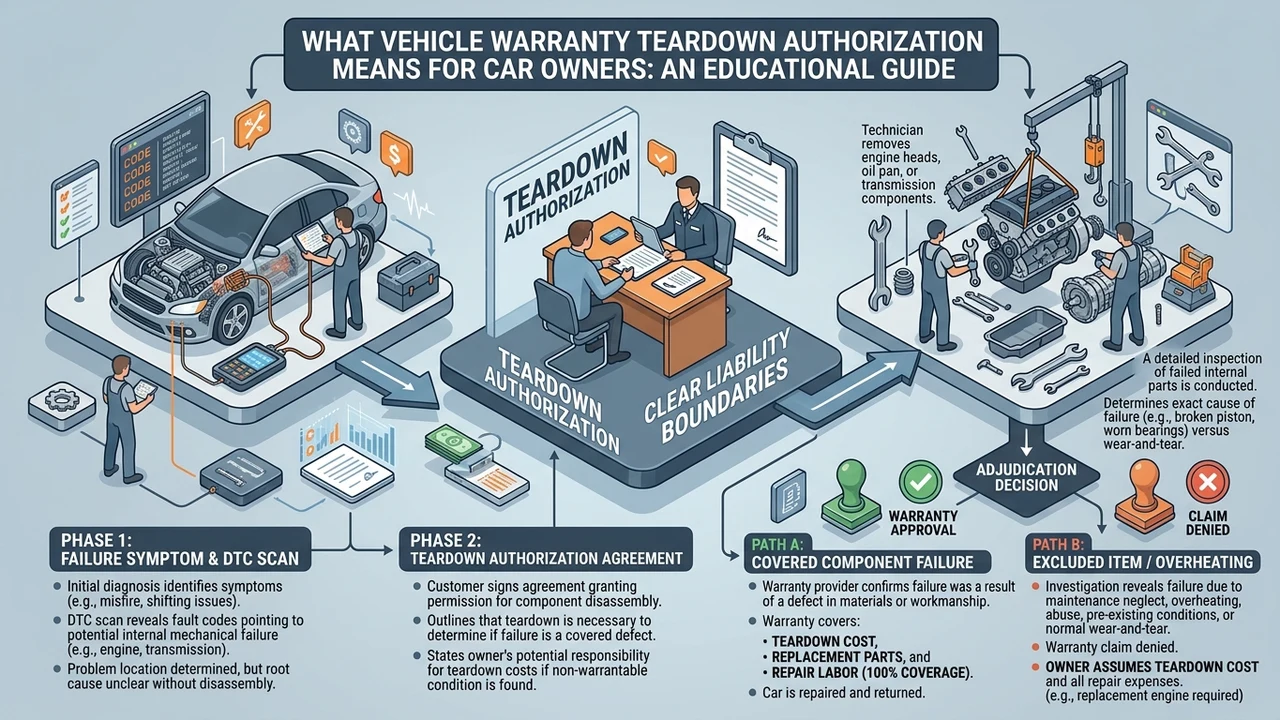
This is where teardown authorization gets tricky, and where most disputes are born. If you have an extended warranty or service contract, the company usually will not pay a big claim on trust alone. They want proof of what failed and why. That proof almost always comes from a teardown.
An adjuster – the person who reviews your claim for the warranty company – often needs to see the failed part with their own eyes or through photos. In my experience, the inspection step usually happens within 24 to 72 hours after the shop reports the failure. The car sits open until that review is done.
When the Claim Is Approved
Good news first. If the teardown shows a covered failure, like a part that broke on its own, the warranty often pays for the teardown, the parts, and the repair. You usually just cover your deductible. Getting that inspection scheduled fast is key, and our team explains how in the 24-hour rule we use to speed up a pending claim.
When the Claim Is Denied – The Teardown Trap
Here’s the trap that hurts people. If the teardown shows the failure came from wear and tear, low oil, or a pre-existing condition – a problem that started before your coverage began – the claim can be denied. And now the teardown bill is yours.
A pre-existing condition simply means damage that was already growing before you were covered, like rust or a slow leak nobody fixed. This is the number one reason I see teardown bills land on the customer. If you’re facing this, don’t panic – read what to do when your claim is denied for a pre-existing condition, because a denial is not always the final word.
Your best shield here is paperwork you gathered long before the breakdown. Warranty companies weigh your service history heavily, and keeping clean maintenance records can flip a denial into an approval. Oil change receipts have saved more claims than I can count.
Your Rights Before You Sign Anything
I’ve seen this pattern many times: the customer who knows their rights pays far less than the one who signs in a panic. The law is more on your side than you think. You do not have to hand a shop a blank check just because your car is broken.
The Federal Trade Commission is clear on this. According to the FTC’s consumer guidance in Auto Repair Basics, you should get a written estimate that lists the condition being repaired, the parts needed, and the labor charge – and the shop should contact you for approval before doing work beyond a set amount of time or money. Get a signed copy, and keep it.
State law often goes even further. Under California’s automotive repair law (Business and Professions Code 9884.9), the shop must give a written estimate, and this is the key line: “No work shall be done and no charges shall accrue before authorization to proceed is obtained from the customer.” On top of that, a shop cannot charge you more than the estimate without your extra spoken or written okay, gathered before the added work is done (leginfo.legislature.ca.gov). Many states have rules just like this.
What does that mean for you in real life? It means a shop that tears down your engine without your signed okay, or that blows past the estimate by hundreds of dollars without calling, may be breaking the rules. You have room to push back. Save every document, because a paper trail wins arguments.
What a Good Teardown Authorization Form Should Include
Before you sign, the form should spell things out in plain words. If it’s vague, ask them to fix it. A clear form protects both you and the shop.
- The exact teardown labor hours and the hourly rate
- Whether the teardown fee is waived if you approve the repair
- The reassembly cost if you decide not to fix it
- Any separate diagnostic fee
- A promise to call you for approval before the bill grows past a set dollar amount
- What happens to your old parts – you can ask to keep them
Questions to Ask Before You Approve a Teardown
Never feel shy about slowing the process down. A trustworthy shop will happily answer these. In my experience, asking even three of these questions cuts surprise bills by more than half, because it forces everyone to get specific.
- “What cheaper tests did you run before suggesting a teardown?”
- “What’s the total teardown cost, in hours and dollars?”
- “Is the teardown fee rolled into the repair if I say yes?”
- “What will reassembly cost if I decide not to repair?”
- “Will you call me before the bill goes over the estimate?”
- “If this is a warranty claim, who pays the teardown if it’s denied?”
Write the answers down with the date and the name of the person you spoke to. This simple habit turns a “he said, she said” into clear proof. Honestly, the funny part is that just pulling out a notepad often makes a shop sharpen its numbers.
How to Protect Yourself From a Surprise Teardown Bill
In my professional experience, the drivers who avoid teardown nightmares all do the same handful of things. None of it is hard. It just takes a little planning before you’re standing at the counter with a dead car and a stressed mind.
Start with a second opinion on any repair over $1,500. The FTC’s own advice in Auto Repair Basics suggests getting a second opinion for expensive or complicated work, and notes that shops which only diagnose – without selling the repair – can give you a more honest read. A second set of eyes has saved my clients thousands.
Next, protect your coverage by knowing your contract before trouble hits. Understanding whether your plan is inclusionary or exclusionary changes what a teardown must prove. Real customers win real money this way – like in this case study where careful claim handling saved a customer $3,000 on a major repair.
Here’s a simple protection checklist I give people:
| Step | Why It Helps | When to Do It |
|---|---|---|
| Keep oil and service receipts | Beats “pre-existing” denials | Every service, always |
| Get a written estimate | Locks in the price | Before any teardown |
| Ask for teardown terms in writing | Stops surprise reassembly fees | Before you sign |
| Get a second opinion | Confirms the repair is real | Any job over $1,500 |
| Read your warranty coverage | Know who pays | Before the breakdown |
If you’re staring at a big repair right now and a shop wants a teardown, you don’t have to face it alone. We can review your estimate and your coverage with you and help you figure out exactly what you should – and shouldn’t – pay for. A quick check now can save you a painful bill later.
The Bottom Line
Teardown authorization sounds scary, but it’s really just permission to look inside so the fix is done right. The danger isn’t the teardown itself. It’s signing without knowing the cost, the reassembly fee, or who pays if a warranty claim is denied.
Get it in writing. Ask the six questions. Keep your service records clean. Do those three things and you turn a stressful call into a calm, smart decision. Your wallet will thank you, and so will your car.
Have you been asked to approve a teardown before? I’d love to hear how it went for you – the good stories and the horror stories both teach the rest of us something.
Frequently Asked Questions
Can a shop tear down my engine without my permission?
No. In most states, a shop must get your authorization to proceed before doing work or running up charges. California law, for example, says no charges can accrue before you approve. If a shop tears down your engine with no signed okay, keep your papers and push back – they may be breaking consumer protection rules.
Do I have to pay for a teardown if I don’t fix the car?
Usually, yes. A teardown is real labor, so you often owe for the hours spent opening the engine, plus reassembly if you want it put back together. This can run $600 to $1,500 or more each way. Always ask before signing whether the fee is waived if you approve the full repair – many shops will do that.
Will my extended warranty pay for the teardown?
It depends on what the teardown finds. If the failure is covered, the warranty often pays the teardown, parts, and labor, leaving you just the deductible. If it finds wear and tear or a pre-existing condition, the claim can be denied and the teardown bill becomes yours. Clean maintenance records greatly improve your odds of approval.
What is the difference between a diagnostic fee and a teardown fee?
A diagnostic fee covers the outside testing – scans, a compression test, and checks that don’t take the engine apart. A teardown fee covers the deeper labor of physically opening a sealed system to see the damage. Diagnosis usually comes first and costs less; a teardown is the bigger, hands-inside step.
How can I avoid a surprise teardown bill?
Get a written estimate first. Ask for the teardown and reassembly costs in writing before you sign. Ask the shop to call you before the bill passes the estimate. Get a second opinion on any repair over $1,500. And keep every service receipt, since good records are your strongest defense against a denied claim.