Buying a used car in Huntsville can feel exciting and a bit scary at the same time. You want a good car that won’t break down, but you also worry about repair bills. That’s where warranties come in.
Last year, I helped my sister buy her first car in Huntsville. She found a great deal on a used Honda, but then the dealer started talking about warranties. She looked at me with confused eyes and asked, “Do I really need this?” Honestly, I wasn’t sure either at that moment.
Here’s the thing: when you buy a used car, the original protection from the maker might already be gone. Or it might run out soon. A warranty gives you a safety net. If something breaks, you don’t have to pay the whole bill yourself.
What is a Used Car Warranty?
Think of a warranty like an insurance plan for your car’s parts. When something stops working, the warranty company pays to fix it. Simple as that.
There are two main types you’ll see in Huntsville:
Dealer warranties come from the place where you buy your car. These are often connected to the car maker. They cover things that break because of how the car was made.
Third-party warranties come from separate companies. These are not linked to the dealer or car maker. They offer their own protection plans.
Both types promise the same basic thing: if covered parts break, they’ll help pay for repairs. But they work differently, which we’ll talk about in a minute.
According to a study published by Consumer Reports, many car owners don’t fully understand what their warranty covers until they need it. This is why reading the fine print matters so much.
Why Huntsville Drivers Need Warranty Protection
Huntsville has hot summers and cold winters. This weather can be hard on cars. Parts wear out faster when they deal with big temperature changes.
I drive around Huntsville all the time. The roads near Research Park, the routes to Madison, the drives to downtown – they all put stress on vehicles. More driving means more chances for things to break.
Here’s what surprised me: a report from the Federal Trade Commission shows that most Americans can’t pay for surprise car repairs (source: FTC Consumer Advice). When your car breaks and you need $2,000 for a new transmission, that’s a huge problem if you’re not ready.
A warranty helps you avoid this stress. Instead of worrying about big bills, you know you’re covered. You pay a small amount each month, and the warranty company handles expensive fixes.
In Huntsville specifically, having reliable transportation matters. You might need to get to work at the Arsenal, drive kids to school, or make it to appointments on time. A broken car can mess up your whole life. Protection gives you peace of mind.
Dealer Warranties Explained
When you walk into a car dealer in Huntsville, they’ll probably offer you their warranty. This is standard practice at most places.
How Dealer Warranties Work
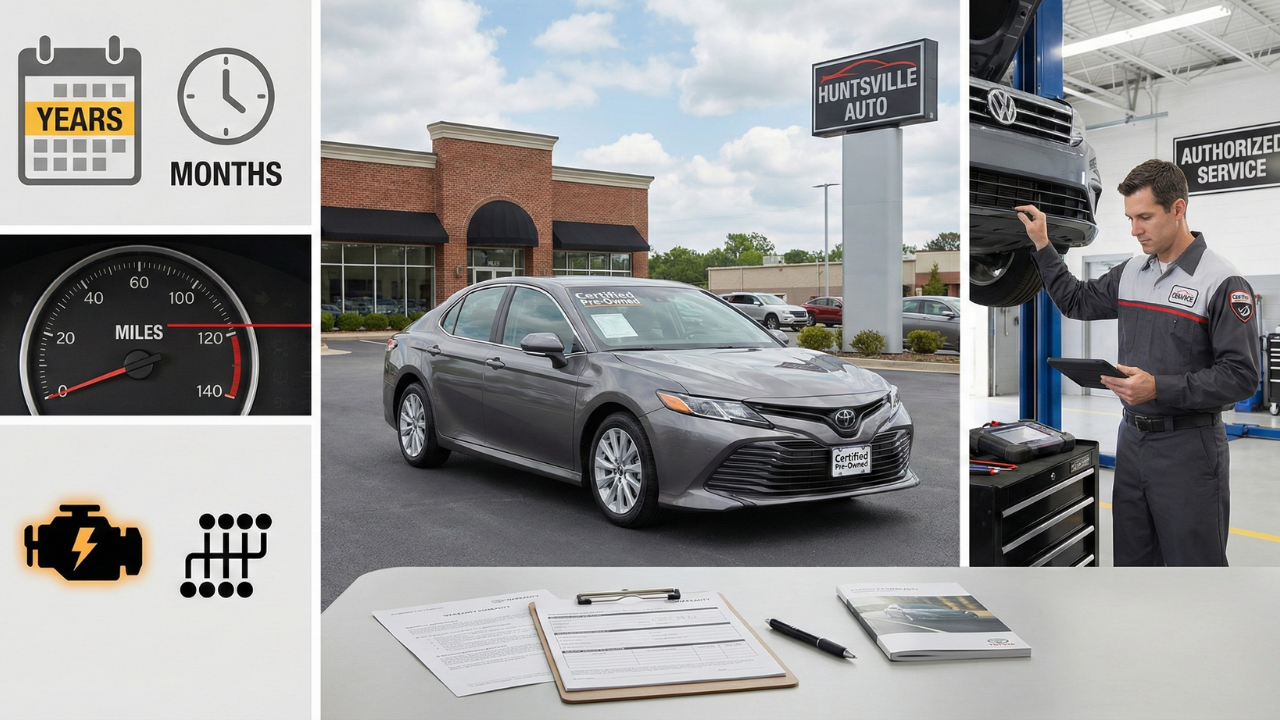
Dealer warranties are connected to the car manufacturer. If you buy a used Ford, the dealer might offer you a Ford-backed warranty. If you buy a Toyota, you might get Toyota coverage.
These warranties usually start working right after you buy the car. They take over when the original factory protection runs out. The coverage lasts for a set time – maybe one year or two years. It also has a mileage limit, like 36,000 miles.
Let me give you an example. Say you buy a 2020 Chevrolet from a Huntsville dealer. The original bumper-to-bumper coverage already expired. But the dealer offers you their extended plan. This new plan might cover the engine, transmission, and other major parts for the next 12 months or 12,000 miles.
If something breaks during that time, you take the car back to an authorized dealership. Their trained technicians look at it. If the problem is covered, they fix it using original equipment manufacturer (OEM) parts. You might pay a small deductible, but the warranty covers the rest.
The paperwork for dealer warranties can look confusing. They have lots of terms about what’s included and what’s not. Always read everything before you sign.
Benefits of Dealer-Offered Coverage
Dealer warranties have some real advantages. Let me share what makes them appealing.
Peace of mind is the biggest one. When you buy from a dealer, you’re working with a business that has been around for years. They have a reputation to protect. If they promise to fix your car, they usually do it.
I remember when my cousin bought a car from Bentley Hyundai here in Huntsville. Six months later, his electrical system started acting weird. He called the dealer, brought the car in, and they fixed it the same day. No arguments, no problems. That’s the kind of convenience you get.
Trained technicians know your car’s make and model really well. They work on the same type of vehicles every day. This means they can find problems faster and fix them correctly the first time.
You also get dealership reputation working for you. Big dealers don’t want bad reviews. They want you to be happy so you come back next time you need a car. This pushes them to take care of you.
Another benefit: dealer warranties often come with extra perks. You might get free roadside assistance, a rental car while yours is being fixed, or help if you get locked out. These little things add up.
Third-Party Warranties Explained
Now let’s talk about the other option: third-party warranties. These work differently from dealer plans.
What Are Third-Party Extended Warranties?
A third-party warranty comes from an independent company. This company is not connected to the car dealer or the car maker. They create their own protection plans and sell them to car owners.
Companies like Endurance, CARCHEX, and many others offer these plans. You can buy them when you buy your car, or even months later. Some people buy them online without ever visiting a dealer.
Here’s how it works: You pick a plan that fits your needs. Maybe you want full coverage that protects almost everything. Or maybe you only want to cover the powertrain (engine and transmission). You pay a monthly fee, and the company promises to help with covered repairs.
When something breaks, you call the warranty company. They approve the repair. Then you can take your car to almost any licensed repair shop or mechanic – not just the dealer. After the fix is done, the warranty company pays the shop directly. You might pay a deductible, but that’s usually it.
The flexibility here is really nice. I have a friend who lives in a small town outside Huntsville. The nearest dealer is 30 miles away. With his third-party plan, he can use the local mechanic he trusts. That saves him time and makes his life easier.
According to information from Endurance Warranty, third-party plans work great for older vehicles and cars with high mileage. Dealers often won’t cover cars that are too old, but third-party companies will.
Benefits of Third-Party Extended Car Warranties
Third-party warranties have their own strong points. Let me break them down for you.
Cost is usually lower. Third-party companies often charge less than dealers for similar coverage. They have less overhead expenses. They don’t have fancy showrooms or big lots to maintain. Those savings get passed to you.
Customizable plans give you control. You can choose exactly what you want covered. If you don’t care about the radio or air conditioning, don’t pay for coverage on those. Just protect the expensive stuff like the engine. This flexibility helps you stay within your budget.
Broader coverage for all types of vehicles is another big plus. Got an older car? A truck with 100,000 miles? A vehicle with a salvage title? Third-party companies often say yes when dealers say no.
Repair shop flexibility matters a lot. You’re not stuck going to one specific dealer. You can use the mechanic you already know and trust. Any ASE certified mechanic or licensed shop usually works. This is super helpful in Huntsville where you have lots of local repair shops to choose from.
Most third-party plans are transferable. If you sell your car before the warranty runs out, the new owner can keep the coverage. This can actually help you sell the car faster and for more money. Buyers like knowing they’re protected.
The claims process with good third-party companies is often smooth and simple. They want to keep you happy so you recommend them to others. Many have 24/7 customer support, so you can call anytime if you need help.
Key Differences Between Dealer and Third-Party Warranties
Now that you understand both types, let’s compare them side by side. This will help you see which one fits your situation better.
Coverage Comparison
Dealer warranties usually stick to what the manufacturer recommends. They cover production problems and major breakdowns. But they often don’t include regular wear and tear items. Things like brake pads, windshield wipers, and tires usually aren’t covered.
The coverage area can be limited too. Some dealer warranties only work if you get repairs done at their brand’s dealerships. If you’re traveling and break down in another state, you might have trouble finding an approved location.
Third-party warranties offer more variety. You can find inclusionary plans that list exactly what’s covered. You can also find exclusionary plans (bumper-to-bumper style) that cover almost everything except what’s specifically listed as excluded. This second type gives you way more protection.
Third-party plans often include things dealer warranties skip. Some cover routine maintenance like oil changes. Others include special benefits like trip interruption help if you break down far from home. You might even get coverage for things like key fob replacement or tire repair.
From what I’ve seen around Huntsville, the repair network matters a lot. Dealer warranties might limit you to 2-3 dealerships in the area. But third-party plans let you choose from dozens of local mechanics and national chain shops. That’s a big difference when you need quick service.
Cost and Pricing Differences
Money matters. Let’s talk about what you’ll actually pay.
Dealer warranties tend to cost more upfront. Why? Because dealers add their own fees and profit margins. They’re also covering the cost of using OEM parts and dealership labor rates, which are usually higher.
I’ve seen dealer warranties in Huntsville priced anywhere from $1,500 to $3,500 for a used car, depending on the vehicle and coverage length. Sometimes they roll this cost into your car loan, which means you’ll pay interest on the warranty too. That makes it even more expensive over time.
One thing to watch for: dealers might offer a warranty at a high price, then “negotiate” it down to make you feel like you got a deal. But the lower price might still be more than you’d pay elsewhere.
Third-party warranties usually cost less. Prices start around $800-$1,200 per year for basic coverage. You can find good comprehensive plans for $1,500-$2,000 per year. That’s often cheaper than dealer options.
You also have more payment flexibility with third-party companies. Some let you pay monthly instead of all at once. Others offer different plan lengths – maybe 2 years, 3 years, or even longer. You can pick what works for your wallet.
Deductibles matter too. Dealer plans might have low deductibles or none at all. Third-party plans often have deductibles ranging from $50 to $200 per visit or per repair. Make sure you understand how this works before you buy.
According to the Federal Trade Commission, you should compare at least 3-4 different quotes before making your choice. This helps you find the best value.
Making the Right Choice for Your Huntsville Vehicle
So which warranty should you pick? Honestly, it depends on your specific situation. Let me help you figure it out.
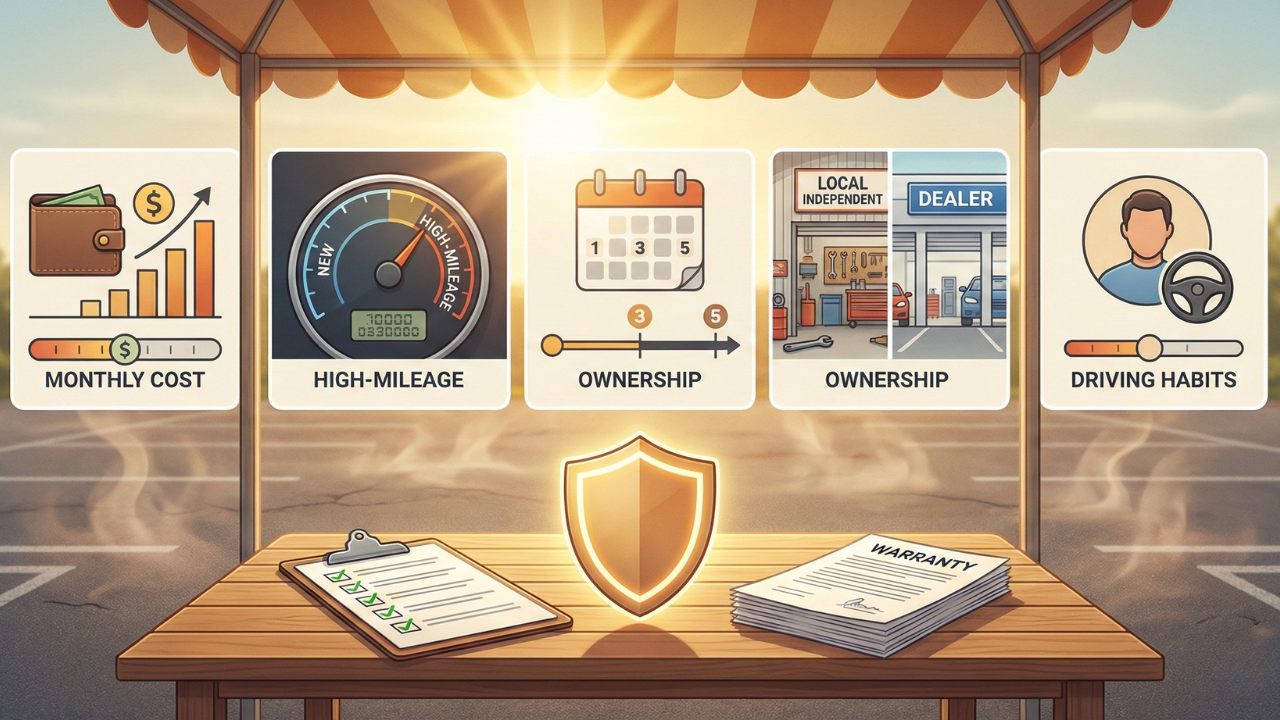
Factors to Consider Before Buying
Think about your budget first. How much can you comfortably spend each month? Don’t stretch yourself too thin. A cheaper third-party plan that you can actually afford is better than an expensive dealer plan that stresses you out financially.
Look at your vehicle’s age and mileage. If you bought a newer used car with low miles, a dealer warranty might make sense. The car is probably still reliable, and you’re mainly protecting against random problems. But if your car is older or has a lot of miles, third-party coverage gives you more options.
How long do you plan to keep the car? If you’re the type who trades cars every 2-3 years, a shorter warranty works fine. But if you want to drive this car for 5-7 years, look for longer coverage that matches your plans.
Think about where you get your car serviced. Do you have a trusted mechanic you’ve been going to for years? A third-party warranty lets you keep using them. If you prefer dealership service, then dealer coverage might fit you better.
Your driving habits matter too. Do you drive a lot for work? Lots of miles means more chances for problems. You might want comprehensive coverage. If you only drive on weekends, basic protection might be enough.
Consider the warranty provider’s reputation. Research online reviews. Check the Better Business Bureau. Ask friends in Huntsville who they use. A cheap warranty from a shady company will cause you headaches. Pay a bit more for a company that actually honors their promises.
Tips for Huntsville Car Buyers
Let me share some practical advice based on what I’ve learned.
Don’t decide on the spot. When you’re at the dealer buying your car, you’re tired and excited. The salesperson knows this. They’ll try to add the warranty to your purchase right then. It’s okay to say “Let me think about it” and take the paperwork home. You can always buy a warranty later if you want.
Shop around. Get quotes from the dealer, but also check third-party companies online. Call 2-3 different providers. Compare what you get for the price. This takes maybe an hour of your time but can save you hundreds of dollars.
Read everything carefully. I know warranty contracts are boring and full of legal language. But you need to understand what’s covered and what’s not. Pay special attention to the exclusions section. That tells you what they won’t pay for.
Ask specific questions. Don’t be shy. Ask things like: “If my car breaks down on a Sunday, what do I do?” or “How long does the approval process usually take?” or “Can I cancel if I’m not happy?” Good companies will answer clearly.
Check if the warranty is transferable. Even if you plan to keep the car forever, things change. If the warranty can transfer to a new owner, your car becomes more valuable if you decide to sell.
Understand the waiting period. Some warranties, especially third-party ones, have a 30-day or 1,000-mile waiting period before coverage starts. This prevents people from buying a warranty right before a known problem gets fixed. Make sure you know when your protection actually begins.
Here’s something I learned the hard way: keep all your maintenance records. If you don’t change your oil on time or skip important service, the warranty company can deny your claim. Save every receipt. Take photos of the paperwork. This proof protects you.
For Huntsville drivers specifically, think about the weather. Our summers can hit 95 degrees. This is hard on air conditioning systems and cooling parts. Make sure your warranty covers these if you want full protection during those hot Alabama months.
Conclusion
Buying a used car in Huntsville is a big step. Choosing the right warranty shouldn’t make it more stressful. Now you understand the difference between dealer and third-party options.
Dealer warranties offer peace of mind, manufacturer backing, and dealership convenience. They cost more but give you that official feeling of protection.
Third-party warranties provide flexibility, lower costs, and broader vehicle coverage. They work great for older cars and let you choose your own mechanic.
Neither choice is wrong. It all depends on what you need and what you can afford. Take your time. Do your research. Ask questions. Read the contract before you sign.
Remember, the goal is simple: protect yourself from big, unexpected repair bills. Whether you choose dealer coverage or third-party protection, having a warranty gives you confidence on Huntsville roads. You can drive knowing that if something breaks, you won’t be stuck with a huge bill you can’t pay.
Your car is probably one of the biggest things you’ll buy besides a house. It deserves good protection. Make the smart choice for your situation, and you’ll thank yourself later.
FAQs
Can I use my warranty at any repair shop in Huntsville?
It depends on which type you buy. Third-party warranties usually let you go to any licensed mechanic or ASE certified shop in Huntsville. This gives you lots of choices. Dealer warranties often require you to use authorized dealerships. Always check your contract to know exactly which shops are approved.
What’s the average cost of a used car warranty in Alabama?
Most used car warranties cost between $1,000 and $2,000 per year in Alabama. Dealer warranties tend to be on the higher end at $1,500-$3,500 total. Third-party plans start around $800-$1,200 per year for basic coverage. The exact price depends on your car’s age, mileage, and how much coverage you want.
Are dealer warranties better than third-party warranties?
Neither is automatically better. It depends on what you need. Dealer warranties work great if you want manufacturer-backed coverage and don’t mind using dealership service. Third-party warranties are better if you want lower costs, more flexibility, and can use any mechanic. Think about your budget, your car’s age, and where you like to get service. That will tell you which type fits you best.
Can I transfer my warranty if I sell my car?
Most third-party warranties are transferable. This means if you sell your car before the warranty ends, the new owner can keep the coverage. This can help you sell faster and get more money. Dealer warranties sometimes transfer, but not always. Check your specific contract. Some charge a small fee to transfer, while others don’t allow it at all.
How long does the claims process usually take?
This varies by company. Good warranty providers approve claims within 24-48 hours. Once approved, the actual repair time depends on what’s broken and if parts need to be ordered. Simple fixes might take a day or two. Big repairs like engine work could take a week or more. The warranty company usually provides a rental car while you wait, so you can still get around Huntsville.