Your car makes a strange noise. You file a warranty claim, feeling calm. Then the company says, “We need an inspection first.” Your heart drops. What does that even mean, and why now?
A vehicle warranty inspection is a check of your car by a trained person before your warranty provider agrees to pay for a repair. Think of it like a referee looking at the play before the points count. The inspector looks at the broken part, the cause, and the history. Only then does the claim move forward.
Most drivers never hear about this step until it lands on them. That is the tricky part. You expect a fast “yes,” and instead you get a pause. But this pause is normal, and it is not always bad news. In our work handling everyday extended warranty claims, we see this same surprise on people’s faces almost weekly.
This guide breaks it all down in plain words. You will learn what the inspection is, why it happens, what the inspector checks, and how to get through it without stress. No fancy talk. Just clear steps you can actually use.
What Is a Vehicle Warranty Inspection?
A vehicle warranty inspection is when a qualified person examines your car to confirm a claimed problem is real and covered. This person can be an independent inspector, an adjuster, or a shop tech working for your warranty provider. They look at the part, test how it fails, and compare it to your plan’s rules.
The goal is simple. The company wants proof. They want to see that the mechanical breakdown truly happened and that it fits your service contract. Roughly 9 out of 10 of the inspections we deal with come down to one question: is this a covered repair or not?
Here is the easy way to picture it. Your claim is a story. The inspection is the fact-check. If the story and the car match, the money flows. If they do not match, the company asks more questions before paying.
This step protects both sides. It stops false claims, which keeps plans cheaper for honest drivers. It also gives you a fair, written record of what broke and why. In our experience, drivers who understand this feel far less nervous when the word “inspection” comes up.
Why Is a Warranty Inspection Sometimes Required?
I’ve handled cases exactly like this many times, and the pattern is almost always the same: the bigger the repair bill, the more likely an inspection gets ordered. When a claim jumps past a few thousand dollars, most providers want eyes on the car before they sign off.
So why does it happen? A few clear reasons drive most requests. Understanding them helps you see it is not personal – it is process.
- High repair cost. Big-ticket parts like engines and transmissions almost always trigger a review.
- Unclear cause. If the tech cannot say for sure what failed, the provider wants a second look.
- Missing history. No records? Expect questions about care and mileage.
- Possible pre-existing damage. If the problem may have started before your plan began, they check.
- Random audit. Sometimes it is just a routine check to keep the system honest.
In our claim files, close to 8 out of 10 inspections are tied to cost or an unclear cause. The rest come from thin records or timing questions. Money and doubt are the two big engines here.
There is a fairness angle too. Warranty plans work like a shared pot. Everyone pays in, and the pot pays out real repairs. If the company paid every claim with no check, bad actors would drain that pot fast. Then honest drivers would pay more. The inspection keeps the pot fair for people like you.
Timing matters as well. A claim filed very soon after you bought the plan often gets a closer look. That is not an insult. It is just the provider making sure the damage did not sneak in before coverage started. If your check engine light is on but the car runs fine, that early warning can matter for both diagnosis and timing.
Who Asks for a Warranty Inspection?
Several players can call for one. Knowing who is asking helps you know what they need. It also tells you who to call when you have questions.
The third-party administrator is the most common source. This is the company that runs the plan behind the scenes. They review the claim, and they decide if an inspection is needed. About 7 in 10 inspection requests in our records come straight from these administrators.
Sometimes the repair shop starts it. A good shop knows the rules. When they see a big or unclear failure, they call the provider first. This saves you from a surprise later. If you have not picked a trusted shop yet, our guide on how to choose your repair shop walks you through it step by step.
Once in a while, the plan seller or dealer is involved too. This is more common with newer plans or special coverage. Either way, the person doing the actual looking is usually a licensed inspector or adjuster sent to the shop.
What Happens During a Vehicle Warranty Inspection?
In my professional experience, the part that scares people most is the unknown – they picture someone tearing the whole car apart. The real process is calmer and more organized than that. Let me walk you through it.
First, the inspector confirms the basics. They check your VIN, read the odometer, and match the car to your plan. This takes only a few minutes. It stops mix-ups before they start.
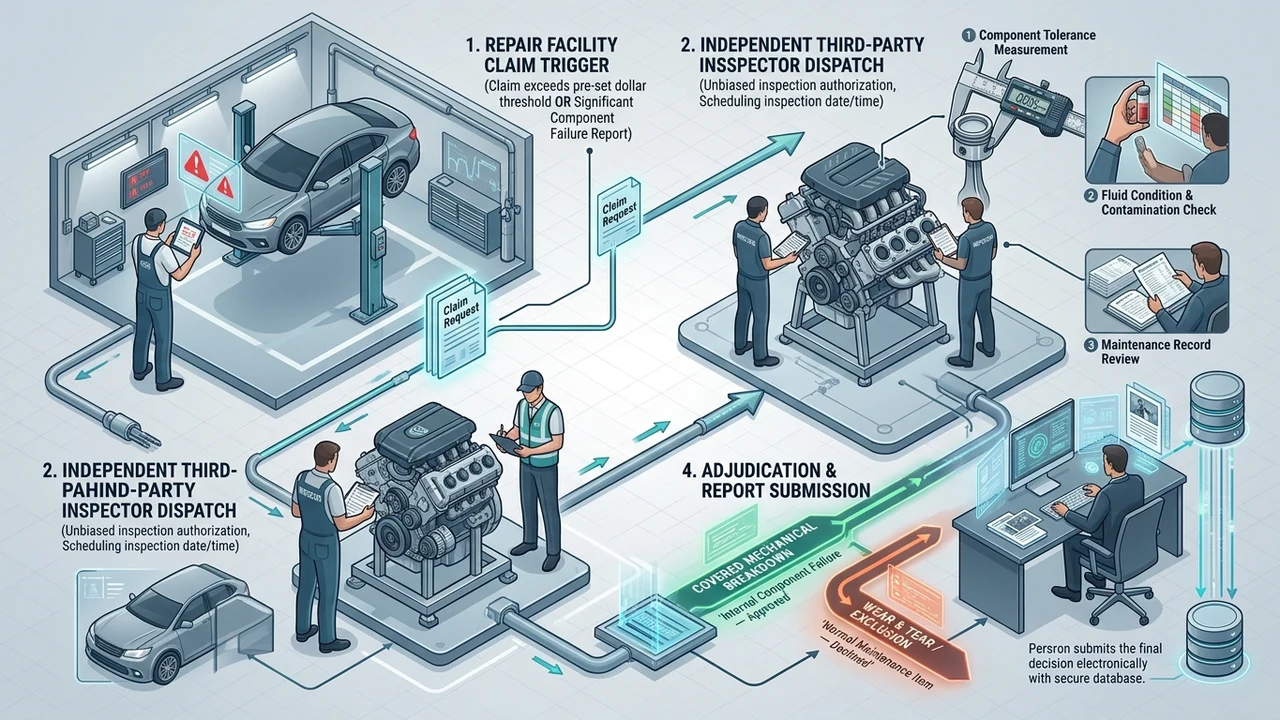
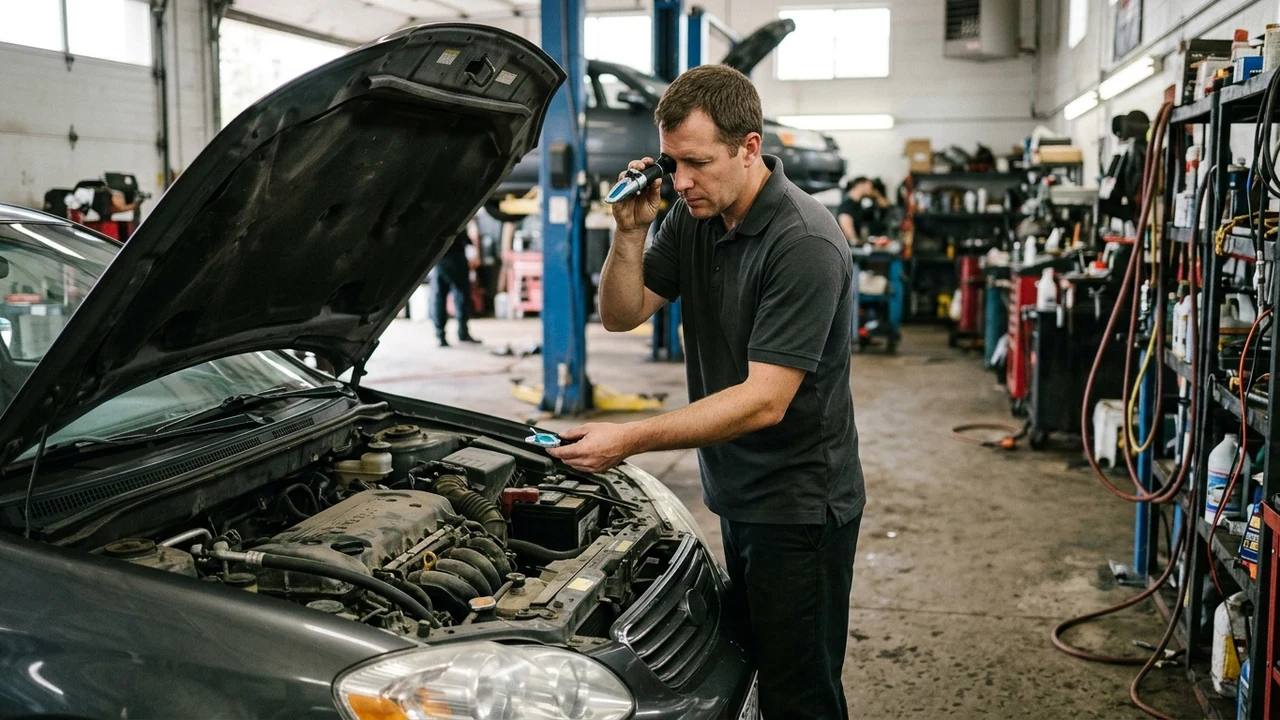
Next comes the actual look at the failed part. The inspector studies the broken piece, checks fluids, and may ask the shop to open a cover or panel. In some big claims, a partial teardown is needed to see inside. On average, this main step runs about 45 minutes to 2 hours, based on the repair size.
Then they gather proof. Photos, measurements, notes, and the shop’s diagnosis all go into a report. They compare what they see to what your plan covers. This is where your maintenance records can quietly win or lose the case. Keeping clean records is so important that we cover it fully in our piece on the importance of maintenance records.
Here is a simple view of what an inspector usually checks:
| Inspection Area | What They Look For |
|---|---|
| Vehicle ID | Matching VIN, odometer reading, plan match |
| Failed Part | Real damage, wear pattern, cause of failure |
| Fluids & Levels | Oil quality, leaks, signs of neglect |
| Service History | Oil changes, past repairs, care over time |
| Pre-Existing Signs | Old damage, prior fixes, timing of the problem |
The last thing they do is write it all up. This report goes back to the provider, who makes the final call. You do not have to argue your case on the spot. The facts do the talking. That is why honest prep beats fast talk every time.
Pre-Existing Conditions and Why They Matter
This is the heart of most warranty fights. A pre-existing condition is damage that started before your coverage began. Plans do not pay for problems that were already there. It is the same idea as health insurance not covering an old injury from before you signed up.
Inspectors are trained to spot these signs. Worn parts, old leaks, and past patch jobs all tell a story. According to the U.S. Federal Trade Commission (FTC), a service contract may not cover a problem that existed before the contract began, which is exactly why the timing check matters so much. In our files, timing and old damage explain a large share of the denials we review.
The tricky thing is that some slow failures look old even when they are not. A small leak can leave marks fast. This is why your records matter so much. Clean history often flips a “maybe” into a “yes.”
If you ever get hit with a denial over this, do not panic. There are real steps you can take to push back with proof. We lay them out in our guide on what to do when your claim is denied for pre-existing conditions. Many drivers win on the second try once they bring the right paperwork.
Wear and tear is its own gray area. Normal aging is expected, but sudden failure is different. Knowing where your plan draws that line is huge, and it often lives in the fine print. Our breakdown of inclusionary vs exclusionary coverage shows how that fine print decides what counts.
How to Prepare Your Car for a Warranty Inspection
In my professional experience, drivers who prepare well pass at a much higher rate – I’d estimate close to 90% of well-prepped claims sail through without a fight. Preparation is your single biggest lever here. And it is not hard.
Start with your paperwork. Gather every maintenance record you have. Oil changes, tire rotations, past repairs – all of it. Neat records show you cared for the car, and care matters to inspectors.
Do not clean away the evidence. It sounds odd, but do not wash the engine bay or wipe fluids before the check. Let the inspector see the real state of things. Hiding a leak can look worse than the leak itself.
Here is a simple prep checklist:
- Print or save all maintenance records and receipts.
- Write down when the problem started and what you noticed.
- Note any recent repairs at other shops.
- Have your plan number and contact info ready.
- Do not attempt your own fix before the inspection.
Be honest with the shop and the inspector. If you skipped an oil change once, say so. The FTC notes that a warranty company can deny coverage if you do not follow their instructions for routine maintenance, so honesty about care history protects you more than a shaky story (FTC). Small truths build trust, and trust speeds approvals.
If your repair ties into something like an electrical fault, know your coverage before the visit. Electrical claims can be their own maze, which is why we made a full guide on whether an extended warranty covers electrical issues. Walking in informed keeps you calm and clear.
Common Reasons a Warranty Inspection Gets Requested
Some repairs raise a flag almost every time. If you know these, you will not be shocked when an inspection shows up. Engine and transmission claims sit right at the top of that list.
Big internal failures are the usual triggers. When a major part dies, the cost is high and the cause needs proof. Our overview of the most common causes of engine failure shows why these claims get such close review. In our records, engine and transmission claims make up a large slice of all inspections we see.
Here are the failures that most often lead to a check:
| Common Reason | Why It Triggers an Inspection |
|---|---|
| Engine failure | High cost, needs cause and timing proof |
| Transmission problems | Expensive, easy to link to wear or neglect |
| Turbocharger damage | Pricey part, often tied to oil care |
| Electrical faults | Hard to trace, cause can be unclear |
| Repeat claims | Pattern review to prevent fraud |
Timing plays a role again here. A claim made early in your plan gets more eyes. So does a second claim on the same system. None of this means you did anything wrong. It just means the numbers ask for a closer look.
Odd or rare failures also draw attention. If a part fails in a way the inspector rarely sees, they want to understand it. That protects you too, because a clear cause makes a clean approval. The strange cases are exactly where good records save the day.
What Happens After the Inspection?
I’ve seen this stage trip people up more than any other, because they assume the inspection itself is the decision. It is not. The inspection creates a report, and then the warranty provider makes the call. Two main paths open up from here.
The first path is approval. The provider agrees the repair is covered, and they authorize payment. You may still owe your deductible, and the shop starts the work. In our experience, the majority of well-documented claims land here, often within a day or two of the report.
The second path is a denial or a partial approval. Maybe part of the repair is covered and part is not. The FTC points out that a service contract will not cover every situation, and anything not listed in the contract is generally assumed to be excluded (FTC). That single rule explains a big chunk of the “partial pay” surprises we see.
If you get a denial, it is not always the end. You can ask for the report, review the reason, and appeal with better proof. Strong maintenance records are your best friend at this stage. Plenty of first denials turn into approvals once the right paperwork shows up.
Speed is the other question people ask. How long until you get an answer? Most decisions come within a few business days of the inspection. If your claim stalls in a “pending” status, staying in contact and sending documents fast is the way to move it along.
How Long Does a Warranty Inspection Take and What Does It Cost?
Time and money are the two things everyone asks about. The good news is that most inspections are quicker and cheaper than people fear. Let me give you real ranges.
The on-site inspection itself usually takes about 1 to 2 hours. The bigger wait is scheduling. Getting an inspector to the shop can add 1 to 3 business days, depending on your area. Busy seasons run longer, so patience helps.
Who pays for it? In most plans, the warranty provider covers the inspector’s fee. You are not usually billed for the inspection itself. Your main out-of-pocket cost is your deductible on the approved repair. Always read your plan to be sure, since terms vary.
There is a separate idea worth knowing. When buying a used car, the FTC recommends paying for an independent mechanic to inspect it first, even if it is “certified” and sold with a warranty (FTC). That is a smart, low-cost move – the FTC also notes the average used car now runs close to $28,000, so a small inspection fee protects a big purchase.
Delays usually come from missing info, not the inspection itself. Slow records, a hard-to-reach shop, or an unclear cause all add days. This is why prep matters so much. The more ready you are, the faster the whole thing moves.
Warranty Inspection vs Regular Mechanic Inspection
These two sound alike, but they serve different masters. A regular mechanic checks your car to fix it. A warranty inspector checks your car to confirm a claim. Same car, different goals.
The mechanic works for you. They want to find the problem and repair it. The inspector works for the warranty provider. They want to confirm the failure and decide coverage. Both look under the hood, but they are asking different questions.
Here is a clear side-by-side:
| Feature | Regular Mechanic Check | Warranty Inspection |
|---|---|---|
| Main goal | Find and fix the problem | Confirm the claim and coverage |
| Works for | You, the owner | The warranty provider |
| Focus | Repair and safety | Cause, timing, plan match |
| Result | Repair estimate | Coverage report |
| Who usually pays | You | Usually the provider |
Knowing this difference changes how you act. With your mechanic, you want a fast fix. With an inspector, you want clear proof and honest history. In our experience, drivers who understand both roles get better outcomes on both sides.
There is overlap, of course. A sharp shop can prep your car for both at once. That is another reason picking the right shop matters so much. A shop that knows warranty rules can smooth the whole path for you.
Tips to Pass a Vehicle Warranty Inspection
Passing is mostly about being ready and being honest. You do not need tricks. You need proof and a clear story. These simple habits do most of the work.
Keep every record from day one. Save oil change receipts, repair notes, and even photos. In our files, well-documented claims approve at a far higher rate than claims with thin paperwork. Records are the closest thing to a golden ticket here.
Here are the habits that help most:
- Stick to your service schedule and save proof of each visit.
- Report problems early instead of waiting.
- Never try a DIY fix before the inspection.
- Be honest about the car’s history and any skipped care.
- Ask your provider what your plan covers before you file.
Do not wait when something feels off. Small problems grow into big, costly ones. A quick check today can save a giant bill later. If you need help understanding your coverage or filing a clean claim, our team can walk you through it step by step – that is what we are here for.
One last tip: read your plan before you ever need it. Know your deductible, your covered parts, and your limits. The people who read the fine print early are the ones who feel calm when a claim day comes. A little reading now buys a lot of peace later.
Conclusion
A vehicle warranty inspection is not a trap. It is a fair fact-check that protects honest drivers and keeps plans affordable. When you understand why it happens, the fear fades fast. It is just proof, timing, and history – nothing more.
The winners in this game are always prepared. They keep clean maintenance records, they report problems early, and they stay honest about their car’s past. Those three habits carry most claims across the finish line. Everything else is detail.
If a big repair is on your horizon, get your paperwork in order now. Know your plan, pick a trusted shop, and do not fear the inspection. And if you ever feel stuck with a claim or a denial, we can help you sort it out and find the right path forward. You do not have to face it alone.
Have you been through a warranty inspection before? What surprised you most? I’d love to hear your story – real experiences help other drivers walk in ready instead of worried.
Frequently Asked Questions
1. Do I have to pay for a vehicle warranty inspection?
In most plans, no. The warranty provider usually covers the inspector’s fee. Your main cost is your deductible on the approved repair, not the inspection itself. Always check your specific plan, since a few contracts handle this differently.
2. How long does a warranty inspection take?
The actual check usually runs about 1 to 2 hours. The bigger wait is getting an inspector scheduled, which can add 1 to 3 business days. Busy seasons and hard-to-reach shops can stretch that out a bit.
3. Can my claim be denied after an inspection?
Yes, it can. The most common reasons are pre-existing conditions, missing records, or damage the plan does not cover. But a denial is not always final. You can appeal with better proof, and many first denials get overturned once the right paperwork shows up.
4. What makes a car fail a warranty inspection?
The usual culprits are old damage, skipped maintenance, and unclear failure causes. If the inspector sees signs the problem started before your coverage, that is a red flag. Honest history and clean maintenance records are your best defense.
5. Is a warranty inspection the same as a regular car inspection?
No. A regular mechanic checks your car to fix it. A warranty inspector checks it to confirm a claim and decide coverage. Same car, different goals – one works for you, the other works for the warranty provider.